Views: 0 Author: Site Editor Publish Time: 2026-09-29 Origin: Site
Whether preparing for unexpected power outages, planning an off-grid deployment, or investing in heavy-duty industrial power solutions, one critical question always arises. How much gas does a generator use? Understanding fuel consumption is essential for budgeting operational costs and ensuring sufficient supply during emergencies. It is the absolute cornerstone of choosing the right unit for specific mechanical needs.
In this comprehensive guide, we break down generator fuel efficiency from a field engineering perspective. We will explore exact fuel usage rates per hour, mechanical factors impacting efficiency, and actionable tips to make equipment run longer on less fuel.
Recent field data and market analyses reveal a significant shift in how facilities approach backup power. Driven by increasing grid instability and the rising logistical costs of liquid fuel storage, both commercial and residential sectors are prioritizing continuous pipeline-fed or highly efficient diesel generation. The industry is moving away from volatile, short-term gasoline solutions toward high-voltage natural gas infrastructure and advanced diesel sets. This transition underscores the importance of evaluating long-term volumetric fuel efficiency rather than just looking at initial equipment costs. Engineers are now focusing heavily on thermal efficiency and load-matching capabilities to drive down the lifetime operating expenses of power systems.
Before analyzing specific numerical rates, operators must understand that no internal combustion engine burns fuel at a single fixed rate. Several mechanical and environmental variables intricately impact overall efficiency. A system's fuel economy is a delicate balancing act between engine design, electrical demand, and external operating conditions.
The physical size of the engine serves as the primary baseline for fuel usage. A larger displacement engine draws in more air and fuel with every piston stroke. A massive industrial unit will naturally consume more fuel than a compact portable model even when simply idling with zero electrical load plugged in.
Generators convert mechanical energy into electrical energy. They work harder as more appliances connect to the circuit. When an alternator faces increased electromagnetic resistance from high-draw devices like well pumps or industrial compressors, the engine governor opens the throttle to allow more fuel into the combustion chamber. Most manufacturers standardize fuel consumption ratings at a 50 percent load. Operating near maximum output places the engine under severe stress and causes fuel consumption to spike dramatically.
Thermodynamics and ambient airflow play a crucial role in operational efficiency. At higher elevations, the air is visibly thinner. Less oxygen means the engine runs rich, wasting unburned fuel and reducing power output unless the carburetor is properly re-jetted. Extreme heat can cause fuel expansion and vaporization issues. Furthermore, a clogged air filter restricts oxygen flow and forces the engine to burn fuel inefficiently to compensate.
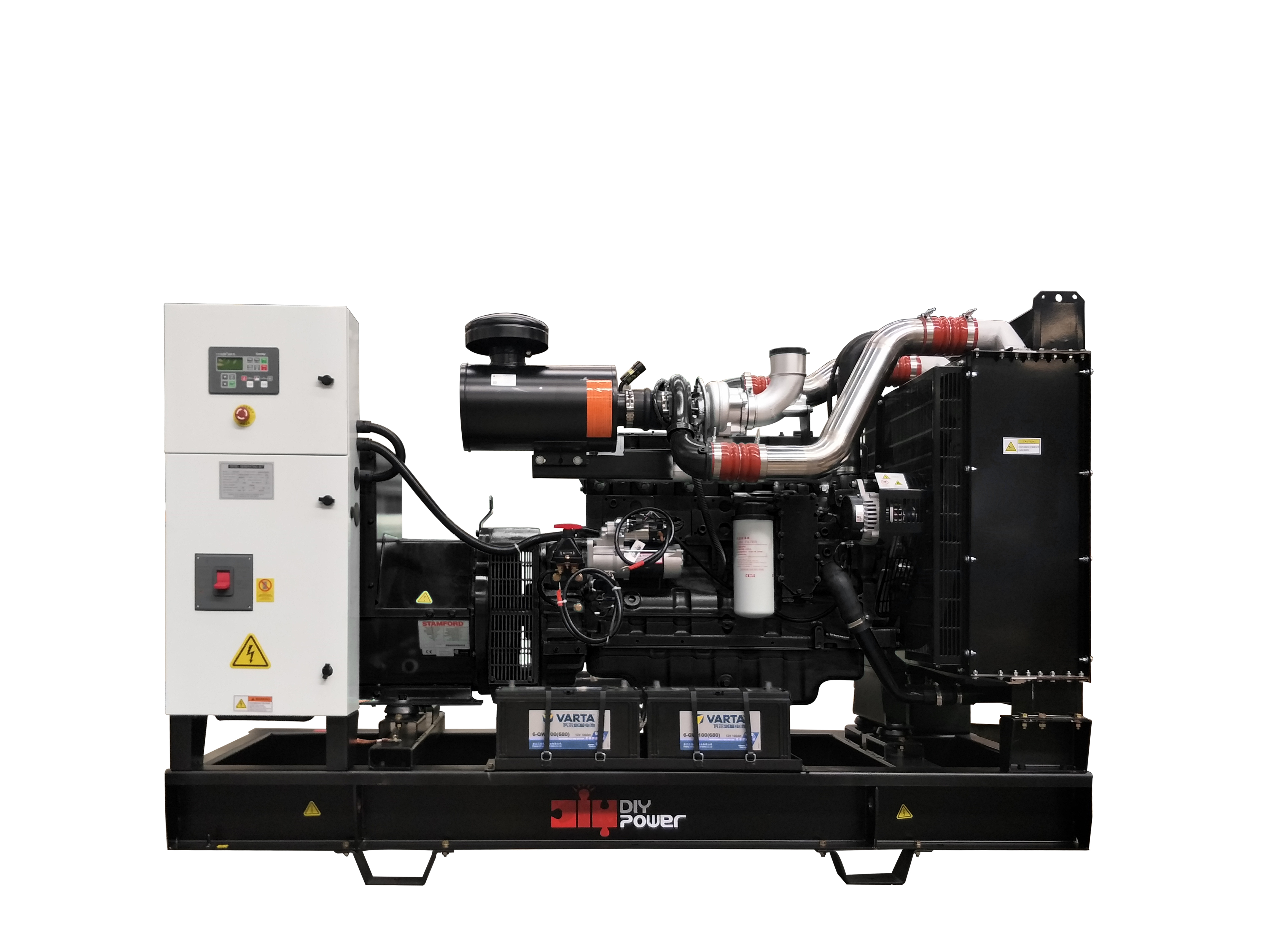
Gasoline remains accessible for portable needs, but industrial applications rely heavily on diesel and natural gas. To understand how consumption varies, we must examine the fundamental energy density of each fuel measured in British Thermal Units.
| Fuel Type | Approximate Energy Density | Typical Consumption Rate at 50 Percent Load | Best Application Scenario |
|---|---|---|---|
| Gasoline | 114,000 BTUs per gallon | 0.5 to 1.5 gallons per hour | Portable residential backup and recreational off-grid use. |
| Diesel | 139,000 BTUs per gallon | Scales with size, highly efficient per kilowatt | Commercial construction, prime power, and heavy machinery. |
| Natural Gas | 1,000 BTUs per cubic foot | 200+ cubic feet per hour for residential | Continuous base-load power and industrial grid-tie systems. |
Compact 2,000-watt to 3,000-watt units are favored for recreational use. They typically use 0.2 to 0.4 gallons per hour at a 50 percent load. Mid-sized 5,000-watt to 7,500-watt portable generators, standard for emergency residential backup, burn roughly 0.5 to 0.7 gallons per hour.
For commercial applications requiring robust torque and longevity, diesel is a proven standard. Diesel fuel is incredibly energy-dense. Specifically, deploying a 94kVA Diesel Generator Set powered by the renowned Cummins 6BT5.9-G2 engine provides exceptional load acceptance. At a continuous prime load, highly engineered diesel systems optimize fuel injection to deliver maximum kilowatts per gallon. This makes them ideal for demanding construction sites and manufacturing facilities where fuel efficiency directly impacts the bottom line.
Data centers and large-scale independent power operations represent the absolute gold standard for continuous base-load power. Industrial applications increasingly rely on specialized equipment designed for grid-level scale. A robust JiChai Nature Gas Generator Set engineered with massive displacement engines like the L20V190ZLT-2 series provides unparalleled stability. These high-voltage systems utilize advanced lean-burn technology and precise electronic fuel injection to perfectly optimize the air-to-fuel ratio. Consequently, they yield highly predictable and cost-effective gas consumption metrics over thousands of continuous running hours.
Minimizing a generator fuel appetite requires selecting the correct alternator technology alongside the right fuel. The market divides into conventional open-frame generators and modern advanced electronic control generators.
A standard conventional generator ties directly to engine speed. To produce a stable 60Hz alternating current, the engine must run at a constant 3,600 RPM regardless of the electrical load. Whether powering a single LED bulb or a heavy-duty air compressor, the engine screams at full speed. This structural limitation results in significant fuel waste during periods of low electrical demand.
Inverter generators utilize a fundamentally different electronic architecture by decoupling engine speed from electrical frequency. The engine throttles down to a quiet idle under low loads, sipping fuel.
Scaling up to industrial operations, facility managers look toward advanced electronic fuel management found in grid-level equipment. Upgrading a commercial facility to a modern high-voltage natural gas generator provides smart-load benefits at a macro scale. These massive units adjust fuel delivery precisely to match commercial power demands and effectively eliminate the massive fuel waste associated with older fixed-throttle heavy machinery.
Relying on broad manufacturer estimates provides a helpful baseline. However, calculating the exact fuel consumption of specific equipment yields the empirical data needed for accurate budget forecasting.
To determine a baseline fuel consumption per hour, operators need the total fuel tank capacity and the estimated runtime at a specific load.
Formula: Total Fuel Tank Capacity divided by Runtime equals Fuel Consumption Per Hour.
Instead of guessing, use these direct engineering standards for selection:
Operators are not entirely at the mercy of their equipment fuel appetite. Implementing proven operational habits significantly reduces fuel waste.
Generators operate most efficiently between 30 percent and 70 percent of their maximum capacity. Pushing a system to a 100 percent load causes fuel consumption to spike exponentially. Stagger the startup of high-draw items like well pumps or industrial chillers. This simple behavioral shift prevents massive electrical surges that force the engine to gulp excess fuel.
Internal combustion engines require a precise mixture of oxygen and fuel to fire correctly. A dirty air filter restricts airflow, forcing the fuel injection system to run rich. A degraded spark plug produces a weak spark leading to incomplete combustion where unburned fuel is expelled as exhaust waste. Routine maintenance is the lowest-cost method to maintain optimal fuel efficiency.
Gasoline begins to chemically degrade and lose volatility within a few months. Stale fuel causes the engine to misfire and consume more gas just to maintain required RPMs. For commercial setups, maintaining clean diesel through fuel polishing systems or migrating to pipeline natural gas eliminates these degradation issues entirely.
Understanding generator fuel consumption is the absolute cornerstone of efficient power management. Knowing your exact fuel usage allows you to budget accurately and prepare safely. By carefully factoring in equipment size, applied electrical load, and specific fuel type, facility managers and homeowners alike can optimize performance and extend runtime.
If you are upgrading your facility infrastructure or seeking reliable prime power, exploring heavy-duty industrial power solutions is the best path forward. Evaluate your load requirements and consult with professionals to select a system that delivers maximum efficiency for your specific operational demands.
A typical 5,000-watt gasoline generator uses about 0.5 to 0.7 gallons of gas per hour at a 50 percent load. Over a 24-hour period of continuous operation, empirical data suggests it will consume between 12 and 17 gallons of gasoline, depending heavily on environmental factors and engine maintenance conditions.
It does not use more gas than under load, but a conventional generator still wastes a significant amount of fuel at zero load. Because standard open-frame generators must maintain 3,600 RPM constantly to produce a stable frequency, they consume roughly 0.2 to 0.4 gallons per hour even when powering absolutely nothing.
Runtime is entirely dependent on engine displacement and the applied electrical load. In a highly efficient 2,000-watt inverter generator running at a light 25 percent load, 5 gallons could easily last 20 to 25 hours. Conversely, in a heavy-duty 10,000-watt conventional generator operating under a 50 percent load, that same volume will typically be depleted in just 4 to 6 hours.
Yes. In the vast majority of regions, natural gas is significantly more cost-effective per kilowatt-hour than liquid gasoline. Although natural gas has a lower energy density, the relatively low utility rates of municipal pipelines make it the most economical choice for long-term residential standby and continuous industrial operations.
Diesel consumption scales linearly with engine size and load. A commercial 94kVA diesel generator operating at a 50 percent load typically consumes around 3 to 4 gallons per hour. Diesel engines benefit from high thermal efficiency, making them far more economical for heavy-duty applications compared to equivalently sized gasoline engines.
For basic residential backup covering essentials like a refrigerator and lights, a 5,000 to 7,500-watt unit is sufficient. However, whole-house standby systems usually require 20kW. Small commercial facilities typically start at 50kW to 100kW to safely manage HVAC systems and server loads without causing severe voltage drops.


 Energy Storage System