Views: 0 Author: Site Editor Publish Time: 2026-09-29 Origin: Site
Natural gas generators typically convert only part of the fuel's chemical energy into electricity, while the remaining energy leaves the system mainly as heat. For industrial buyers, however, generator efficiency should not be judged by a single percentage. Engine size, load factor, fuel quality, ambient conditions, operating mode, and whether waste heat is recovered can all affect overall performance.
For natural-gas reciprocating engines, electrical efficiency generally increases with engine size and optimized operation. When the generator is integrated into a Combined Heat and Power (CHP) system, useful heat from the engine and exhaust can also be recovered, significantly increasing total system efficiency.
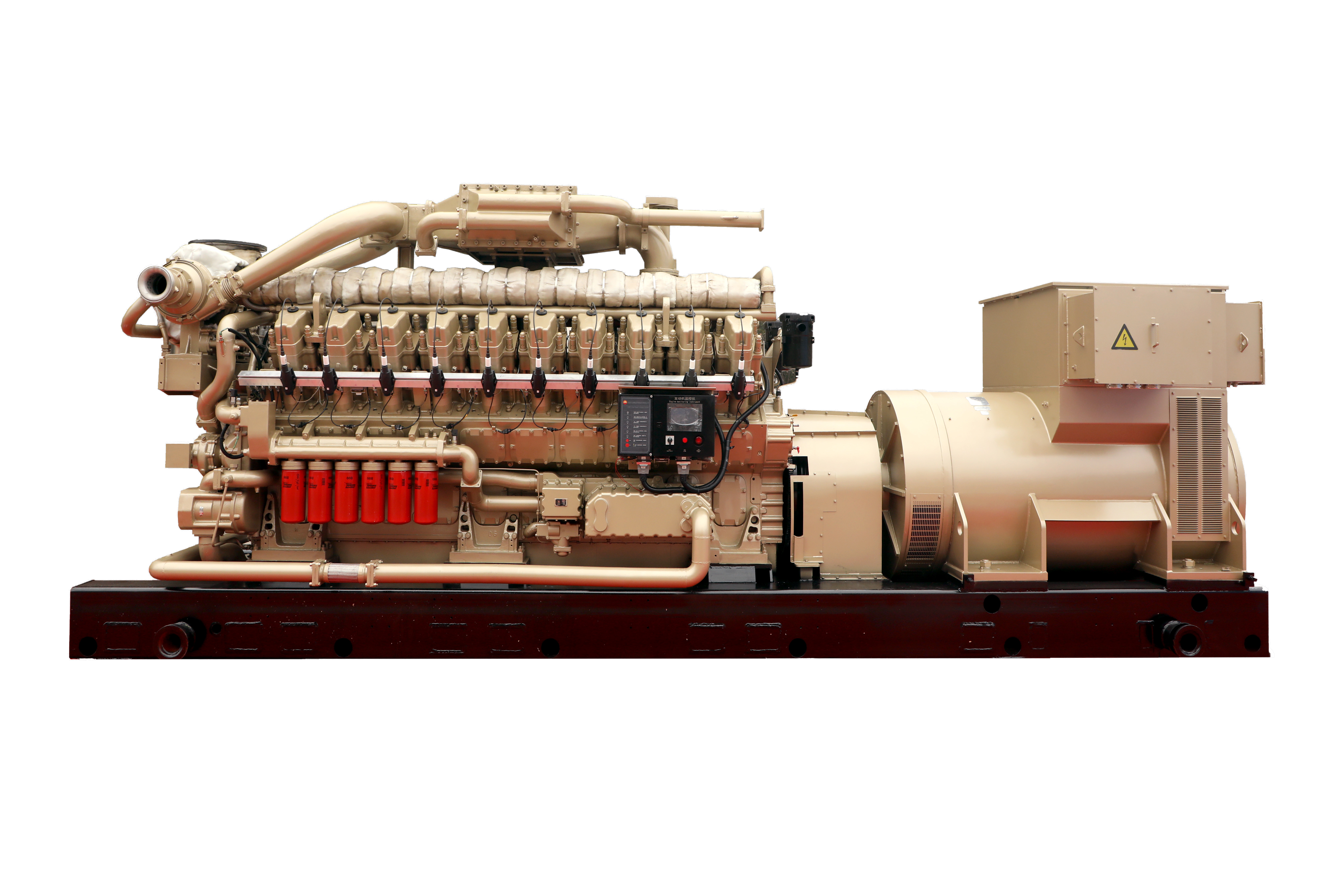
DIYPOWER provides industrial natural gas generator sets and power-generation solutions for continuous, prime, standby, and distributed-energy applications. This guide explains how natural gas generator efficiency is measured, what affects it, and how industrial users can improve fuel utilization.
Table of Contents
There are two different efficiency figures buyers should understand:
Efficiency Type | What It Measures | Typical Consideration |
|---|---|---|
Electrical Efficiency | Fuel energy converted into electricity | Generator-only performance |
Thermal Efficiency | Fuel energy recovered as useful heat | CHP/cogeneration applications |
Total CHP Efficiency | Electricity + useful recovered heat | Overall energy utilization |
According to the U.S. EPA Combined Heat and Power Partnership, CHP total system efficiency is calculated from useful electrical and thermal output divided by total fuel energy input. EPA notes that CHP systems commonly achieve total efficiencies of approximately 60% to 80%, depending on technology and system design.
This distinction is important: a generator's electrical efficiency and a CHP system's total efficiency are not the same metric.
Generator efficiency describes how effectively the engine-generator converts fuel energy into usable electrical power.
A simplified electrical-efficiency calculation is:
Electrical Efficiency = Electrical Energy Output ÷ Fuel Energy Input × 100%
For example, if an engine receives 100 units of fuel energy and produces 40 units of electrical energy, its electrical efficiency is approximately 40%.
The remaining energy is primarily released through:
Exhaust gases
Engine cooling system
Lubrication system
Radiation
Mechanical losses
For a conventional generator, much of this thermal energy is rejected.
For an industrial CHP system, some of it can be recovered and used for hot water, process heating, steam production, or other thermal loads.
This is one of the most important distinctions when evaluating a natural gas generator.
Electrical efficiency measures electricity production only.
Natural-gas reciprocating engines can achieve different efficiencies depending on generator capacity, engine design, compression ratio, combustion strategy, turbocharging, load, and operating conditions.
U.S. Department of Energy data for representative natural-gas reciprocating engine CHP systems shows electrical efficiencies ranging from approximately 30% for smaller systems to above 40% for larger systems on a higher-heating-value basis.
Therefore, rather than assuming that every natural gas generator is “30–45% efficient,” buyers should compare the actual manufacturer's fuel-consumption or heat-rate data for the specific engine and rating.
A generator engine produces substantial heat in addition to electricity.
CHP systems recover part of this heat from sources such as:
Engine jacket water
Exhaust gas
Lubrication system
Intercooler
The recovered energy can then support:
Process hot water
Space heating
Industrial drying
Steam production
Facility heating
Other thermal processes
EPA reports that CHP systems typically achieve total system efficiencies around 65% to 80%, with some configurations approaching higher levels.
For industrial facilities that need electricity and heat simultaneously, this can make CHP substantially more energy-efficient than producing electricity and thermal energy separately.
There is no single efficiency percentage that applies to every generator.
Several variables influence actual fuel-to-electricity conversion.
Larger industrial reciprocating engines often achieve higher electrical efficiencies than small standby engines because they can use more advanced:
Combustion systems
Turbocharging
Engine controls
Lean-burn technology
Air-fuel management
Heat-management systems
For this reason, efficiency comparisons should be made between generators of similar power ratings and duty cycles.
DIYPOWER's natural gas generator range includes equipment intended for larger commercial and industrial power applications where operating efficiency becomes an important lifecycle-cost factor.
Load factor has a major impact on efficiency.
A generator operating far below its rated output must still overcome internal friction, run cooling systems, drive auxiliaries, and maintain operating temperature. As a result, fuel consumption per kWh can increase at low load.
Instead of applying one universal “ideal load percentage,” industrial buyers should review the manufacturer's fuel-consumption curve at several operating points, such as:
25% load
50% load
75% load
100% load
This provides a much more reliable picture of expected operating cost.
Correct generator sizing is therefore essential.
An oversized generator that operates at low load for most of its life may deliver worse fuel utilization than a properly sized unit operating closer to its intended duty point.
Generator efficiency should also be evaluated according to duty.
Standby generators operate primarily during utility outages and normally accumulate relatively few annual operating hours.
Prime-power generators operate for longer periods where grid power is unavailable or insufficient.
Continuous-power systems may operate for extended periods at relatively stable loads.
For high-hour industrial applications, even a small difference in heat rate or electrical efficiency can significantly affect annual fuel consumption.
DIYPOWER categorizes generator solutions by Prime Power, Emergency Standby Power, and Continuous Power, allowing the generator configuration to be matched more closely to the required duty.
Fuel consumption should not be estimated from generator capacity alone.
The actual natural gas requirement depends on:
Generator kW output
Engine efficiency
Load percentage
Natural gas heating value
Gas pressure
Engine tuning
Ambient conditions
Auxiliary loads
A useful engineering relationship is:
Fuel Energy Input = Electrical Output ÷ Electrical Efficiency
For example, a generator producing 1,000 kW at 40% electrical efficiency requires approximately 2,500 kW of fuel-energy input before accounting for the exact basis and auxiliary loads.
For purchasing decisions, however, use the engine manufacturer's official fuel-consumption table rather than a generic online calculator.
Compare fuel consumption at the load points that best represent your actual facility profile.
Industrial generator buyers should also understand heat rate.
Heat rate describes how much fuel energy is required to produce a unit of electrical energy.
In simple terms:
Lower Heat Rate = Better Fuel-to-Electricity Efficiency
Efficiency and heat rate are therefore closely related.
When comparing two industrial natural gas generators of similar output, review:
Rated electrical efficiency
Heat rate
Fuel consumption at 50% load
Fuel consumption at 75% load
Fuel consumption at 100% load
Parasitic/auxiliary loads
This provides a more useful comparison than relying only on a marketing efficiency percentage.
For many industrial applications, CHP is where natural gas becomes particularly interesting.
A conventional generator produces electricity while rejecting substantial thermal energy.
A CHP system instead captures usable heat.
The energy flow becomes:
Natural Gas → Engine → Electricity + Recoverable Heat
Rather than:
Natural Gas → Engine → Electricity + Wasted Heat
EPA explains that CHP reduces fuel requirements by producing electricity and useful thermal energy from the same fuel input while also avoiding some transmission and distribution losses associated with centrally generated electricity.
Industrial CHP applications can use recovered heat for:
Process water
Steam
Drying
Space heating
Boiler feedwater preheating
Manufacturing processes
Hospital hot water
Commercial building heating
CHP makes the most sense where electrical and thermal demand occur simultaneously for substantial periods.
A facility with little usable thermal demand may gain much less from heat recovery.
Natural gas and diesel generators should not be compared using efficiency alone.
Diesel engines are widely used for standby and heavy-duty power because of their high energy density, strong transient response, onsite fuel storage, and proven industrial durability.
Natural gas systems offer different advantages, particularly where reliable pipeline infrastructure exists.
Factor | Natural Gas Generator | Diesel Generator |
|---|---|---|
Fuel Supply | Pipeline or dedicated gas system | Onsite liquid storage |
Electrical Efficiency | Engine/model dependent | Engine/model dependent |
CHP Potential | Strong | Possible |
Onsite Fuel Storage | Often reduced with pipeline supply | Required |
Fuel Degradation | No stored liquid fuel when pipeline-fed | Stored fuel requires management |
Transient Response | Engine dependent | Generally strong |
Best Application | High-hour/CHP applications where gas is available | Standby, remote and high-load applications |
Emissions System | Depends on engine/regulations | Depends on engine tier/regulations |
DIYPOWER provides a more detailed comparison in Diesel vs. Gas Generator: Which Is Better?.
The important point is that natural gas is not automatically more efficient than diesel, and diesel is not automatically the better generator.
The correct choice depends on duty cycle, fuel availability, load profile, emissions requirements, resilience strategy, maintenance capability, and total cost of ownership.
One advantage of a pipeline-fed natural gas generator is that it can reduce dependence on onsite liquid-fuel storage and scheduled fuel deliveries.
However, pipeline supply should not be described as “unlimited” or guaranteed during every emergency.
Industrial resilience planning should consider:
Local gas-network reliability
Required gas pressure
Peak-demand restrictions
Earthquake or flood exposure
Utility curtailment policies
Local emergency planning
Dual-fuel or backup-fuel requirements
For critical facilities, fuel-source resilience should be evaluated alongside generator efficiency.
Generator output can change with ambient conditions.
High altitude reduces air density. High ambient temperatures can also reduce engine and cooling-system performance.
Depending on the engine, this may require derating.
Industrial projects should therefore provide the generator supplier with:
Installation altitude
Maximum ambient temperature
Minimum ambient temperature
Humidity
Indoor/outdoor installation
Ventilation conditions
Gas composition
Gas pressure
These factors allow the generator to be selected for site conditions, rather than only nameplate power.
Gas quality is another important factor that is often overlooked.
Natural gas composition and heating value can vary by location.
Industrial generator selection should consider:
Methane content
Lower/upper heating value
Supply pressure
Pressure stability
Contaminants
Gas temperature
Required pressure regulation
If gas pressure falls outside the engine manufacturer's specified range, generator output and stability may be affected.
For large industrial installations, the gas-supply system should therefore be engineered together with the generator system.
Natural gas generators can be particularly relevant where pipeline gas is available and the facility expects substantial operating hours.
Typical applications include:
Facilities with simultaneous electricity and thermal demand may be suitable for CHP.
Recovered heat can potentially support process water, drying, heating, or steam requirements.
Natural gas generators can form part of a broader onsite energy strategy where fuel infrastructure, emissions requirements, redundancy, and grid-interactive operation support their use.
Facilities with year-round electricity and hot-water demand can be candidates for CHP because recovered thermal energy may be used continuously.
Centralized natural gas generation can support distributed power architectures, especially where multiple facilities share energy infrastructure.
Where natural gas or associated gas is locally available, gas-engine generation may provide an alternative to transporting liquid fuels over long distances.
For larger projects, DIYPOWER also provides natural gas power station solutions.
Large industrial sites may require more than low-voltage standby generation.
For example, DIYPOWER's 2000kW JiChai high-voltage natural gas generator is designed for large industrial power applications.
For projects at this scale, generator evaluation should include:
Electrical efficiency
Heat rate
Gas consumption
Output voltage
Parallel operation
Load profile
Cooling requirements
Gas pressure
Protection system
Switchgear
CHP potential
Lifecycle operating cost
This is more meaningful than comparing generator efficiency as a single percentage.
Avoid unnecessary oversizing.
Start with a detailed facility load study covering:
Continuous load
Peak load
Motor starting
Load steps
Future expansion
Critical loads
The objective is to select equipment that operates efficiently across the facility's actual load profile.
Do not compare generators only at 100% rated output.
Compare manufacturer data at several load points that represent real operation.
Poor maintenance can reduce combustion quality and increase fuel consumption.
Follow the engine manufacturer's maintenance requirements for:
Air filters
Spark plugs
Lubrication
Cooling system
Ignition system
Gas regulation
Sensors
Valve clearances
Industrial control and monitoring systems can track:
Generator load
Fuel consumption
Gas pressure
Temperatures
Electrical output
Operating hours
Alarms
Trend data can reveal whether the generator is consistently underloaded or operating outside its intended conditions.
If a facility has simultaneous electrical and thermal demand, evaluate whether engine waste heat can be economically recovered.
CHP should be designed around actual thermal demand—not added solely to obtain a higher theoretical efficiency percentage.
Before purchasing a natural gas generator, define:
Requirement | What to Confirm |
|---|---|
Power | Required kW/kVA |
Duty | Standby, prime, or continuous |
Load Profile | Minimum, average, peak and motor starting |
Fuel | Gas composition, pressure and heating value |
Efficiency | Electrical efficiency and heat rate |
Consumption | Fuel use at relevant load points |
Site | Altitude and ambient temperature |
Voltage | Low or medium/high voltage |
CHP | Is useful thermal demand available? |
Grid | Standalone, parallel or microgrid operation |
Controls | Remote monitoring and synchronization |
Emissions | Applicable local requirements |
Maintenance | Local service and spare-parts capability |
For industrial buyers, the most efficient generator is not necessarily the unit with the highest advertised efficiency. It is the generator that delivers the required power reliably at the site's real operating conditions with acceptable fuel consumption and lifecycle cost.
DIYPOWER supplies power-generation equipment for industrial, commercial, standby, prime, and continuous-power applications.
For projects considering natural gas generation, DIYPOWER can help evaluate:
Generator power rating
Low- or high-voltage output
Gas supply conditions
Operating load
Prime or continuous duty
Parallel operation
Control systems
Cooling requirements
CHP potential
Site environment
Explore DIYPOWER Natural Gas Generators for available industrial solutions, or review Natural Gas Power Station solutions for larger distributed-generation projects.
Electrical efficiency varies with engine size, design, load, fuel, and operating conditions. Representative natural-gas reciprocating engines in U.S. DOE data range from around 30% electrical efficiency for smaller systems to above 40% for larger systems.
Always compare the manufacturer's data for the specific generator.
A generator producing electricity alone generally should not be described as 80% electrically efficient.
However, a CHP system can reach total efficiencies in the 60–80% range or higher in suitable configurations because useful engine heat is recovered in addition to electricity. The EPA reports typical CHP total efficiencies of approximately 65–80%.
There is no universal load percentage that applies to every engine.
Efficiency usually changes across the load curve, so buyers should review manufacturer fuel-consumption and heat-rate data at 25%, 50%, 75%, and 100% load where available.
An oversized generator that spends most of its operating time at low load can have poorer fuel consumption per kWh than a properly sized generator.
Correct sizing should therefore be based on the facility's real load profile.
Not necessarily in every location.
Operating cost depends on local natural gas and diesel prices, engine efficiency, annual runtime, maintenance, fuel infrastructure, emissions systems, and load profile.
Compare cost per generated kWh, not fuel price alone.
Natural gas can be attractive for high-hour generation where reliable gas infrastructure is available, particularly when CHP is feasible.
The final choice should also consider resilience, emissions, maintenance, load response, and local fuel economics.
Combined Heat and Power, or cogeneration, produces electricity while recovering useful thermal energy from the same fuel input.
For facilities requiring both electricity and heat, CHP can substantially increase total fuel utilization.
At minimum, provide required kW/kVA, voltage, frequency, load profile, largest motor loads, duty rating, altitude, ambient temperature, gas pressure, gas composition, installation environment, and expected annual operating hours.
Natural gas generator efficiency depends on much more than one advertised percentage. Engine size, generator load, operating duty, fuel quality, site conditions, and maintenance all affect how much useful electricity is produced from the fuel consumed.
For industrial projects, compare electrical efficiency, heat rate, fuel consumption across the expected load range, and total lifecycle cost.
Where a facility also has consistent thermal demand, CHP can recover engine heat and significantly improve overall fuel utilization.
DIYPOWER provides industrial natural gas generator and power-station solutions for different power ratings and operating requirements. Matching the generator to the actual load profile, gas supply, voltage, site conditions, and duty cycle is the most reliable way to achieve efficient long-term operation.


 Energy Storage System