Views: 0 Author: Site Editor Publish Time: 2026-07-09 Origin: Site
Unplanned power outages severely disrupt manufacturing lines and critical infrastructure. Facility managers must secure absolute power reliability while managing strict emissions compliance and long-term operational efficiency. Evaluating a Cummins Generator offers a proven pathway to solving these complex energy demands. This analysis explores the engineering merits, deployment realities, and performance metrics of these robust systems for heavy-duty applications. You will learn how to assess load requirements, navigate environmental regulations, and implement a resilient backup power strategy. Proper deployment ensures continuous operations during severe grid failures or off-grid prime power requirements. We will break down the mechanical advantages, site preparation mandates, and fuel management protocols necessary to keep your facility online when the utility grid fails.
Reliability vs. Risk: Cummins diesel generators are engineered for high-stakes environments, but achieving maximum uptime requires precise load sizing and rigorous maintenance protocols.
Compliance & Integration: Navigating EPA Tier emissions standards and local noise ordinances is critical; Cummins offers factory-certified configurations (e.g., QuietConnect™) to address these constraints seamlessly.
Implementation Realities: Successful deployment relies heavily on professional site audits, proper fuel storage management, and baseline load bank testing.
Table of Contents
Accurate load profiling forms the foundation of any reliable power system. Facility engineers must distinguish between running critical life-safety systems and supporting heavy industrial loads. Life-safety systems require immediate, stable power to keep emergency lighting, smoke evacuation fans, and fire pumps active. These loads are generally predictable and steady.
Conversely, heavy industrial loads involve large motor-starting currents. Motors draw massive inrush currents during startup, often causing severe voltage dips across the local grid. A properly sized Cummins Generator handles these transient spikes without tripping breakers or damaging sensitive electronics. You must calculate the locked rotor amps (LRA) of your largest motors and ensure the alternator pitch can absorb that hit without dropping frequency below acceptable thresholds.
The operational context dictates the generator configuration. Utility-backed backup systems sit idle for months, requiring block heaters and battery maintainers to ensure immediate startup. These standby units activate only when grid power fails, meaning they must go from cold iron to carrying full load in under ten seconds.
Remote off-grid operations function entirely differently. Mining sites, telecom towers, and oil fields rely on prime power configurations. In these harsh environments, the generator serves as the primary electricity source. Prime power units run continuously under variable loads, demanding exceptional durability, massive fuel storage capacities, and advanced filtration to handle dusty or humid ambient conditions.
Industrial downtime halts production lines, spoils raw materials, and damages sensitive machinery. When power drops, manufacturing facilities face severe operational bottlenecks. Restarting a complex assembly line often takes hours after power is restored. You have to clear jammed conveyors, reset programmable logic controllers, and scrap partially processed materials.
Investing in a commercial-grade backup system mitigates these catastrophic disruptions. A reliable power source keeps critical processes running, protects facility assets, and maintains strict production schedules during extended grid instability. You justify the equipment by calculating the hourly burn rate of a dead facility against the lifecycle reliability of the backup power plant.
Facilities rarely remain static. Expansion plans directly impact current generator sizing requirements. Purchasing a unit that barely meets today's load leaves no room for future growth. Engineers often implement parallel system capabilities to address scalability. Paralleling allows multiple generators to sync together on a common bus. As facility power demands increase, operators simply add another unit to the network. This modular approach provides redundancy and prevents the need to replace the entire power infrastructure. If one unit goes down for maintenance, the others share the load, keeping the most critical facility circuits energized.
Mechanical robustness defines heavy-duty power generation. Cummins diesel engines feature high-strength cast iron blocks and forged steel crankshafts. These components endure extreme thermal and mechanical stress. Engineers evaluate durability using B10 and B50 design life metrics, which project the running hours before a major overhaul is required. Furthermore, the alternators utilize advanced winding pitches to minimize harmonic distortion. This design allows the system to accept single-step block loads seamlessly. Voltage and frequency remain stable, protecting sensitive variable frequency drives (VFDs) and programmable logic controllers (PLCs) from destructive power anomalies.
Fuel consumption dictates the viability of long-term prime power operations. Cummins engines utilize high-pressure common-rail fuel injection systems. This technology atomizes diesel fuel precisely, maximizing combustion efficiency. During extended grid outages, lower specific fuel consumption significantly extends runtimes. Operators burn less fuel per kilowatt-hour generated. This efficiency reduces the frequency of fuel deliveries to remote sites, streamlining logistics and lowering overall operational burdens. You get more runtime out of your existing belly tanks, which is a massive advantage when regional fuel supply chains freeze during natural disasters.
Modern power generation relies heavily on intelligent digital controls. Integrated master controls, such as the PowerCommand system, provide comprehensive diagnostics. These interfaces monitor oil pressure, coolant temperature, and alternator output in real time. The digital controllers communicate seamlessly with automatic transfer switches. When grid voltage drops, the controller initiates the startup sequence, syncs the phase, and transfers the load within seconds. Operators can monitor the entire sequence remotely via cloud-based dashboards. You can pull historical fault logs, check battery float voltages, and verify fuel levels without stepping foot in the generator yard.
Understanding power ratings prevents catastrophic equipment failure. Applying the wrong rating leads to overheating and voided warranties. You cannot run a standby-rated machine at full load continuously without melting the alternator windings or scoring the cylinder walls.
Standby Power Parameters: This represents the maximum power available for the duration of a utility outage, capped at a maximum of 500 hours per year. It is custom-tailored for hospitals, data centers, and manufacturing backup networks, carrying no native overload capability.
Prime Power Parameters: This rating supports unlimited operational hours running variable loads, maintaining an average load factor usually around 70%. It is highly utilized in remote mining, oil and gas exploration, or off-grid sites, permitting a 10% overload for 1 hour in every 12-hour cycle.
Continuous Power Parameters: This option allows for unlimited running hours under a constant 100% load profile, typically deployed in base load power plants or utility paralleling networks without overload capabilities.
Selecting the correct physical size and output capacity requires meticulous planning. You have to look at the physical footprint, the exhaust routing, and the electrical tie-in points across distinct application ranges:
Light Industrial Applications (22kW to 60kW): Compact units serve small-scale manufacturing and agricultural operations. A 25 kW unit easily supports critical lighting, security systems, and small refrigeration loads.
Medium Industrial Applications (150kW to 500kW): Mid-range units support heavy conveyor systems, large HVAC chillers, and industrial welding bays. These require substantial concrete pads and dedicated fuel routing.
Heavy Multi-Megawatt Configurations: Large manufacturing plants utilize paralleled units to achieve massive power outputs. These systems require custom switchgear and dedicated generator buildings.
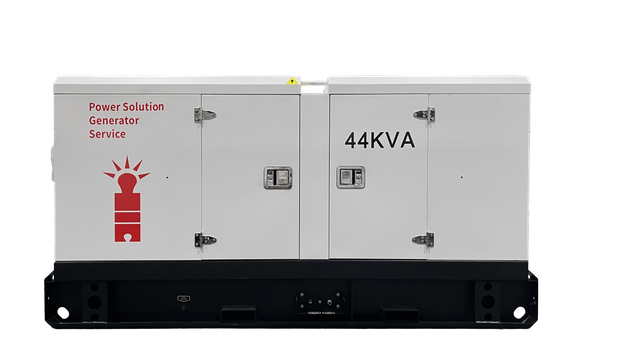
Specific environments demand specialized equipment configurations. The QuietConnect series features advanced sound-attenuated enclosures. These units utilize precision-engineered baffles and acoustic foam to drastically reduce decibel output. They are ideal for noise-sensitive environments like hospitals or urban manufacturing zones where property line noise ordinances are strictly enforced.
The PowerConnect series focuses on raw performance and rapid deployment. These units prioritize footprint optimization and straightforward installation for heavy commercial applications where noise is less of a concern but space is tight.
Environmental regulations strictly govern stationary diesel engines. Current EPA Tier standards mandate drastic reductions in nitrogen oxides and particulate matter. A modern Cummins Generator achieves Tier 4 Final compliance through advanced exhaust aftertreatment systems. These systems utilize selective catalytic reduction and diesel particulate filters.
The engine control module monitors exhaust gases and injects diesel exhaust fluid to neutralize harmful emissions. Facility managers must ensure local air quality permits align with the specific Tier rating of the chosen equipment. You cannot install a Tier 2 engine in a non-attainment zone without facing massive fines from the local environmental protection agency.
Local noise ordinances often dictate where equipment can be installed. Sound-attenuated enclosures mitigate noise, but they introduce engineering trade-offs. Acoustic baffling restricts airflow, which impacts thermal management. Radiators must push air through complex louvers, requiring larger cooling fans. This increases the overall physical footprint of the unit.
Site planners must account for these larger dimensions when designing concrete pads. Proper clearance is mandatory to ensure adequate ventilation and prevent the engine from overheating during peak summer loads. You also have to keep the exhaust discharge away from building HVAC intakes to prevent pulling diesel fumes into the facility.
Industrial facilities face increasing pressure to meet environmental, social, and governance goals. Modern diesel engines support the transition toward sustainable operations. Many units are fully compatible with hydrotreated vegetable oil (HVO). This renewable diesel alternative significantly lowers net carbon emissions. Operating on hydrotreated vegetable oil requires no engine modifications. It burns cleaner, produces less soot, and boasts a longer shelf life than traditional petroleum diesel. This flexibility allows facilities to improve their environmental footprint without sacrificing power reliability or replacing expensive capital equipment.
Proper site preparation prevents severe operational failures. Engineers must design reinforced concrete pads capable of supporting immense dynamic weights. A running generator produces significant torsional vibration. Vibration isolation mounts are essential to prevent structural damage to surrounding buildings and to keep the generator from walking off its pad.
Exhaust routing requires careful calculation to minimize backpressure while safely venting noxious gases. Factory-integrated packaging simplifies this process. Purchasing a complete, pre-tested system eliminates the risks associated with matching fragmented, third-party components on-site. You want the radiator, engine, alternator, and skid all engineered as a single cohesive unit.
Diesel fuel degrades over time, creating severe reliability risks. Water condensation inside storage tanks promotes microbial growth. This biological sludge clogs fuel filters instantly during an emergency startup, shutting down the engine when you need it most. Facilities must implement rigorous fuel maintenance protocols.
Automated fuel polishing systems circulate and filter the diesel, removing water and particulate matter. Regular biocide treatments prevent bacterial growth. Additionally, winterization additives are mandatory in cold climates to prevent fuel gelling, which starves the engine of fuel. You should pull fuel samples from the bottom of the tank annually to check for water separation.
Routine load bank testing is absolutely non-negotiable for diesel standby systems. Running a diesel engine continuously on light loads causes wet stacking. Unburned fuel and carbon accumulate in the exhaust system, destroying engine efficiency and creating fire hazards.
A load bank applies an artificial, full-capacity electrical load to the generator. This forces the engine to reach optimal operating temperatures, burning off carbon deposits and verifying the cooling system's integrity. Comprehensive commissioning ensures the unit is genuinely ready for a real-world emergency. You hook up the resistive load bank, step the load up to 100 percent, and watch the temperature gauges to ensure the thermostat and radiator are functioning perfectly.
To guarantee the success of your industrial power deployment, ensure your engineering team completes the following tactical items:
Conduct a comprehensive facility load study to identify exact peak power demands and motor-starting requirements.
Consult with a licensed electrical engineer to design safe integration with your existing automatic transfer switches.
Establish a strict, documented maintenance schedule that includes annual load bank testing and fuel polishing.
Verify local EPA emissions regulations and noise ordinances before finalizing your equipment selection.
Behind every high-availability backup network stands an array of heavy machinery that demands precise, high-integrity mechanical components to function. As a premier manufacturer of high-reliability auxiliary infrastructure components, DIYPOWER delivers the code-compliant structural solutions needed to isolate, secure, and protect the harsh physical pipelines and exhaust systems powering modern genset installations. By pairing robust engineering with global procurement support, they help operators secure critical joint integrity across demanding industrial setups.
Q: What is the expected lifespan of an industrial Cummins diesel generator? A: With rigorous maintenance, an industrial diesel generator typically lasts between 15,000 to 30,000 running hours. In a standby application running 50 hours annually for testing and outages, the equipment can easily remain operational for over 25 years. You must adhere to the manufacturer's fluid change intervals to hit these numbers.
Q: How do I accurately size a Cummins generator for a manufacturing facility? A: Accurate sizing requires a professional load study. You must calculate the total running wattage of all critical equipment and account for the high inrush currents required to start large electric motors and compressors. A licensed electrician will attach data loggers to your main feed to capture peak demand.
Q: What are the primary differences between the QuietConnect™ and PowerConnect™ series? A: The QuietConnect series features advanced acoustic enclosures designed to meet strict noise ordinances, making them ideal for urban areas. The PowerConnect series focuses on raw performance, smaller footprints, and rapid deployment for standard commercial applications where noise restrictions are less severe.
Q: What are the strict maintenance requirements to keep a standby generator warranty valid? A: Warranties require documented adherence to the manufacturer's maintenance schedule. This strictly includes regular oil and filter changes, cooling system flushes, battery replacements, and mandatory annual load bank testing to prevent wet stacking and verify alternator performance.
Q: Are Cummins diesel generators fully compliant with strict local emissions ordinances? A: Yes. Modern units utilize advanced exhaust aftertreatment systems, including selective catalytic reduction and diesel particulate filter technologies, to achieve EPA Tier 4 Final compliance. This meets the strictest local and federal air quality regulations for stationary power plants.
Q: Can a Cummins generator be retrofitted to operate on renewable diesel? A: Most modern industrial diesel engines can operate on hydrotreated vegetable oil without any mechanical retrofits. This fuel acts as a direct drop-in replacement for standard diesel, burning cleaner, reducing net carbon emissions, and offering superior long-term storage stability.


 Energy Storage System