Views: 0 Author: Site Editor Publish Time: 2026-07-09 Origin: Site
Power continuity is not optional for commercial facilities, industrial plants, or data centers. When utility power fails, downtime immediately translates to severe operational disruption and life-safety risks. Specifying the right backup power system requires precise engineering. You cannot afford to guess on load capacities or engine capabilities. Over-sizing a diesel unit leads to wet stacking and engine damage. Under-sizing causes catastrophic failure during load steps. You need a reliable, properly integrated system.
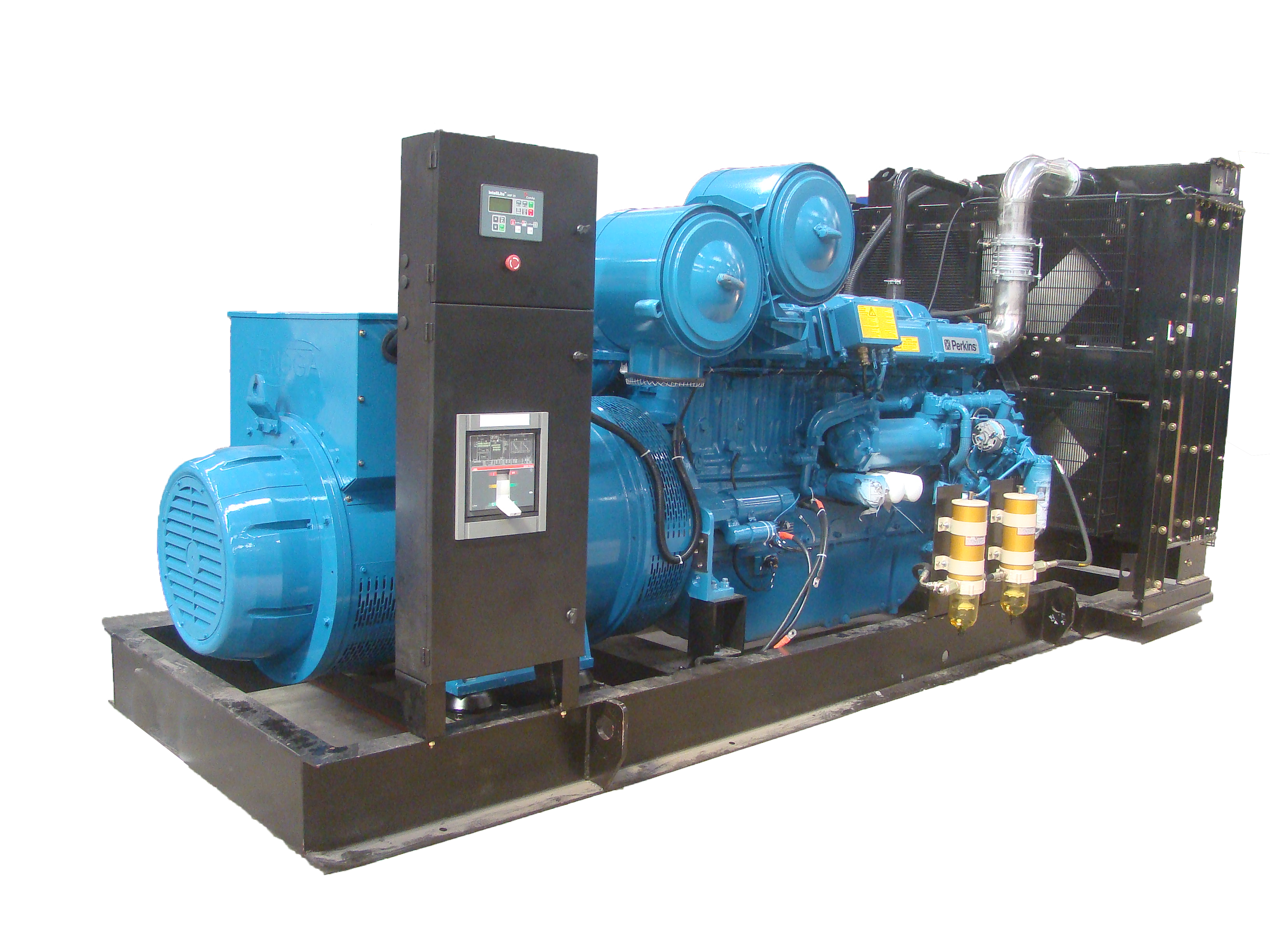
This guide serves as an objective, engineering-focused resource for evaluating a Perkins Generator. We will break down engine series capabilities, OEM packager configurations, and emissions compliance. You will learn how to match the right alternator and control panel to your facility requirements. By understanding these technical dimensions, you can confidently specify a power system that operates flawlessly when the grid goes dark.
Application Dictates Rating: Selecting between Standby (ESP), Prime (PRP), and Continuous (COP) ratings is the most critical first step; running a standby Perkins generator on a continuous load will void warranties and cause premature failure.
Fuel Versatility Matters: While diesel remains the industrial standard, Perkins gas and dual-fuel configurations offer significant emissions and operational advantages for specific facility profiles.
The OEM Factor: Perkins manufactures the engine; the final generator set's reliability relies heavily on the OEM packager's choice of alternator (e.g., Stamford, Leroy Somer) and control panel (e.g., Deep Sea Electronics).
Emissions Compliance is Mandatory: Local environmental regulations (e.g., EPA Tier 3, Tier 4 Final, or EU Stage V) will strictly dictate which Perkins engine series you can legally install and operate.
Installation Exceeds CapEx: Site preparation, sound attenuation, fuel delivery systems, and safe installation practices by certified technicians often account for 30-50% of the total project cost.
Table of Contents
Facility managers rely on Perkins engines for their rapid load acceptance. These engines consistently meet ISO 8528-5 transient response standards. When a facility loses power, the engine must start, synchronize, and accept the full electrical load in seconds. Block heater integration ensures cold-start reliability in freezing conditions. The jacket water remains warm, allowing the engine to reach optimal combustion temperatures immediately upon startup. This rapid response prevents voltage dips and protects sensitive downstream equipment. We see this in the field constantly. A cold block will stumble and cough white smoke when the transfer switch closes. A properly heated block takes the hit smoothly and keeps the frequency stable.
The mechanical governor or electronic control module (ECM) plays a massive role here. Older mechanical systems hunt for the right RPM under sudden loads. Modern electronic systems read the load demand instantly and adjust fuel delivery before the RPM drops. This means your UPS systems do not have to work as hard to filter dirty power. The transition from utility to generator power becomes seamless. You avoid the dreaded double-hit where the UPS batteries drain while waiting for the generator to stabilize.
Evaluating engine manufacturers requires looking at raw performance data. Perkins engines deliver exceptional power density. They provide industry-leading transient response times. You also benefit from a vast global support network. Parts compatibility across different OEM packagers simplifies maintenance. However, there are trade-offs. You must adhere to strict maintenance schedule requirements. Skipping routine filter changes or valve adjustments will void factory warranties. You must weigh these maintenance demands against the operational reliability the engine provides.
In the field, we notice that some budget brands tolerate dirty fuel better, but they sacrifice emissions compliance and load acceptance. Perkins demands clean fuel and rigorous maintenance. If you neglect the fuel polishing system, the high-pressure common rail injectors will fail. This is not a flaw; it is the reality of high-performance diesel engineering. You get what you maintain. If your facility team lacks the discipline for strict maintenance logs, you will face reliability issues regardless of the brand.
Logistics matter during an emergency. The Perkins global distribution network provides a distinct advantage. You can source replacement parts quickly in almost any region. Standardized consumables like filters, belts, and injectors reduce your mean time to repair (MTTR). You do not have to wait weeks for niche components to ship overseas. Local technicians already understand the engine architecture. This familiarity speeds up diagnostic procedures and gets your backup power system back online faster.
Consider a scenario where a water pump fails during a multi-day outage. With obscure brands, you might be fabricating a bypass or waiting for a freight shipment. With a widely supported engine, the local distributor likely has the pump on the shelf. Your technician drives over, grabs the part, and installs it before the day tank runs dry. This logistical footprint directly impacts your facility's resilience.
Different facilities demand specific performance profiles. Data centers require high kVA ratings, fault tolerance, and rapid transient response to maintain server uptime. Healthcare facilities need life-safety compliance and guaranteed ten-second start times to protect patients. Remote manufacturing sites often rely on prime power durability where utility grids do not exist. A properly configured Perkins Generator adapts to these distinct vertical requirements through precise OEM integration.
We install these units in harsh environments. A rock crusher in a quarry needs a prime power unit that can handle massive inductive loads when the motors start. A hospital needs a standby unit that sits quietly for months but fires up instantly when the grid drops. The engine block might be similar, but the alternator sizing, control panel programming, and fuel delivery systems differ wildly based on the application.
You must define your operational intent before selecting equipment. Emergency Standby Power (ESP) represents the maximum power available for a varying electrical load during a utility outage. You cannot run an ESP-rated unit continuously. Prime Power (PRP) allows for unlimited hours of usage on a variable load. PRP ratings include a 10% overload capability for one hour in every twelve. Applying the wrong rating leads to catastrophic engine failure and immediate warranty cancellation.
We see facilities make this mistake often. They buy an ESP unit because it offers a higher nameplate kW rating. Then they try to use it for peak shaving or continuous off-grid power. The cooling system and internal components are not designed for that duty cycle. The engine overheats, the oil breaks down, and the bearings fail. Always match the rating to your actual operational profile.
Fuel selection dictates site infrastructure. Diesel-powered Perkins engines provide high torque and rapid startup. They require on-site fuel storage, which demands regular fuel polishing to prevent degradation. Gas-powered models, utilizing natural gas or biogas, offer lower emissions. They draw from continuous pipeline fuel supplies, eliminating local storage requirements. However, gas engines typically have longer startup times. Dual-fuel setups work well for installations requiring peak-shaving capabilities alongside emergency backup resilience.
Diesel fuel goes bad. Microbes grow in the tank, and water condenses on the walls. If you do not polish the fuel and treat it with biocides, your engine will suck up sludge and die during an outage. Gas engines avoid this entirely. The pipeline delivers fresh fuel constantly. However, if an earthquake or severe storm severs the gas line, your generator is useless. You must evaluate your local threat matrix when choosing a fuel source.
Over-sizing a diesel engine creates severe operational hazards. Running a unit below 30% of its rated capacity causes wet stacking. Unburned fuel and carbon build up in the exhaust system. This accumulation degrades engine performance and creates fire risks. You must conduct a proper load study. Assess your starting kVA versus running kW. Account for motor starting currents, elevator drives, and UPS harmonics. Accurate sizing ensures the engine reaches its optimal operating temperature.
Wet stacking looks like thick black sludge dripping from the exhaust stack. It smells like raw diesel. When we see this on a site visit, we know the unit is oversized. The only way to clear it is to connect a load bank and run the engine at 80% capacity for several hours to burn off the carbon. Do not buy a 1000 kW unit if your facility only draws 200 kW. You are destroying the engine.
The 400 Series serves smaller operational footprints. Target use cases include telecom towers, small commercial retail spaces, and residential backup. These units feature a compact footprint and high power density. You can choose between naturally aspirated or turbocharged options. They fit easily into tight urban enclosures while delivering reliable standby power.
We install these frequently on rooftops or in tight alleyways. Their small size makes rigging and placement straightforward. Despite their size, they require the same rigorous maintenance as the larger blocks. Do not neglect the valve lash adjustments just because the engine is small.
Mid-range applications rely on the 1100 and 1200 Series. Target use cases span mid-range commercial buildings, agriculture, and light industrial facilities. These engines utilize electronic fuel injection for optimized fuel consumption. They also demonstrate a high tolerance for variable fuel quality, which proves essential in remote agricultural or construction environments.
These blocks are workhorses. We see them running irrigation pumps for days on end. The electronic fuel injection provides excellent fuel economy, which matters when you are hauling diesel to a remote site. The diagnostic capabilities of the ECM allow technicians to plug in a laptop and pinpoint sensor failures quickly.
Heavy duty operations require robust power delivery. The 1500 and 2000 Series target heavy industrial plants, commercial real estate, and regional hospitals. These units boast an exceptional power-to-weight ratio. Advanced electronic engine management systems provide precise control over combustion, ensuring stable voltage and frequency under dynamic load conditions.
When a hospital elevator starts, it draws a massive inrush current. These engines handle that block load without dropping frequency. The advanced ECM communicates directly with the digital control panel, providing real-time telemetry on oil pressure, coolant temperature, and fuel consumption.
Mission-critical facilities demand massive power output. The 4000 Series powers hyperscale data centers, grid-scale applications, and large municipal water treatment plants. Available in V12 and V16 configurations, they offer exceptional block loading capabilities. They are engineered specifically for parallel operation. These engines seamlessly integrate with Uptime Institute Tier III and Tier IV continuous rating standards for data center resilience.
Paralleling multiple 4000 Series units requires precise synchronization. The control panels must communicate over a dedicated network to share the load equally. If one unit fails, the others must instantly pick up the slack. We spend days commissioning these systems, testing every possible failure scenario to ensure the switchgear and engines respond correctly.
Engine Series | Power Range (kVA) | Primary Applications | Key Technical Feature |
|---|---|---|---|
400 Series | 10 - 50 | Telecom, Retail, Residential | Compact footprint, high power density |
1100 & 1200 Series | 30 - 250 | Light Industrial, Agriculture | Electronic fuel injection, fuel tolerance |
1500 & 2000 Series | 200 - 750 | Hospitals, Heavy Industrial | Advanced electronic engine management |
4000 Series | 750 - 2500+ | Data Centers, Grid-Scale | V12/V16 configuration, parallel operation |
You do not buy a complete system directly from the engine manufacturer. You purchase a generator set powered by Perkins. The final system reliability depends entirely on the OEM packager. You must evaluate the alternator pairing. Match the engine with a high-quality, brushless alternator like Stamford or Mecc Alte. Specify permanent magnet generators (PMG) for robust motor starting capabilities and isolated voltage regulation.
A weak alternator will drag down a strong engine. If the alternator cannot handle the reactive load of your facility's motors, the voltage will collapse. The PMG provides a dedicated power source for the automatic voltage regulator (AVR). This ensures the AVR can push maximum excitation current into the alternator rotor during a fault condition, allowing downstream breakers to trip and clear the fault without shutting down the entire generator.
The control panel acts as the brain of your power system. Assess the integration of digital controllers from brands like Deep Sea Electronics or ComAp. Look for specific functional features. You need remote telemetry for off-site monitoring. The panel must communicate seamlessly with your automatic transfer switch (ATS). Predictive maintenance alerts help facility teams identify abnormal engine parameters before a failure occurs.
We wire these panels to building management systems (BMS) using Modbus or SNMP protocols. This allows the facility manager to see fuel levels, battery voltage, and engine status from their desk. If the block heater fails on a Friday night, the panel sends an email alert. You fix it on Saturday morning instead of discovering a dead engine during a power outage on Sunday.
Physical placement dictates enclosure requirements. Open-skid units belong indoors inside dedicated, climate-controlled generator rooms. Outdoor installations require weather-protective and sound-attenuated canopies to meet local noise restrictions. Canopy design directly impacts airflow and cooling. Poorly designed enclosures restrict radiator airflow, leading to ambient temperature derating and engine overheating during summer months.
Sound attenuation requires massive amounts of acoustic foam and baffled air intakes. This restricts airflow. The OEM must upsize the radiator and cooling fan to compensate. If you buy a cheap enclosure, the engine will overheat when running at full load on a hot day. We always verify the airflow calculations before approving an enclosure design.
Environmental regulations dictate engine architecture. Unregulated engines feature simpler mechanical designs but are restricted to specific export regions. Highly regulated EPA Tier 4 Final or EU Stage V engines utilize complex aftertreatment systems. You must manage Diesel Exhaust Fluid (DEF), Selective Catalytic Reduction (SCR), and Diesel Particulate Filters (DPF). These systems reduce emissions but introduce strict maintenance requirements and additional failure points.
Tier 4 Final engines require active regeneration to burn off soot in the DPF. If the engine idles too much, the DPF clogs. The engine will derate its power output to protect itself. You must run the engine hard to keep the exhaust hot enough for regeneration. This adds a layer of operational complexity that facility teams must understand and manage.
Runtime requirements dictate fuel storage capacity. You must evaluate the trade-offs of sub-base fuel tanks. An 8-hour tank keeps the footprint small. A 24-hour or 48-hour tank increases the base height and overall weight. Integrating external day tanks and bulk fuel storage introduces spatial challenges. You must also navigate local environmental regulations regarding double-wall containment and spill prevention.
A 48-hour sub-base tank under a 1000 kW unit is massive. It requires stairs and work platforms just to reach the control panel. If you use a remote bulk tank, you need redundant fuel transfer pumps and day tanks. The plumbing must include fusible link valves that slam shut during a fire. Every component adds complexity to the installation.
Procuring used equipment requires rigorous technical due diligence. You must verify actual load bank test reports to confirm output capacity. Check the engine hours and review the complete maintenance log. Inspect the unit for aftermarket, non-OEM parts that might compromise reliability. A thorough mechanical inspection prevents you from inheriting someone else's deferred maintenance problems.
We pull oil samples and send them to a lab before approving a used purchase. High metal content in the oil indicates bearing wear. We also inspect the radiator core for scale buildup and check the turbocharger for shaft play. If the previous owner skipped coolant flushes, the engine block might be full of rust. Never buy a used unit without a comprehensive field inspection.
Proper installation begins from the ground up. You cannot place heavy rotating equipment on standard asphalt. Detail the necessity of engineered concrete pads. The pad must support the wet weight of the unit and withstand dynamic vibration. Install proper vibration isolators between the skid and the concrete. In seismically active regions, you must bolt down the unit using certified seismic restraints.
We pour pads that extend at least 12 inches beyond the generator footprint on all sides. The concrete must cure fully before we rig the unit into place. We use spring isolators for indoor units to prevent vibration from traveling through the building structure. Neoprene pads work well for outdoor installations. If you skip the isolators, the vibration will eventually crack the concrete and damage the fuel lines.
Airflow management determines system survival. Professional installation is critical. You must manage exhaust backpressure by sizing the exhaust piping correctly. Ensure adequate combustion air intake through properly sized louvers. Route exhaust away from building HVAC intakes to prevent carbon monoxide poisoning. Use certified mechanical and electrical installers. This ensures compliance with the manufacturer's safe install practices and protects your product warranty.
Indoor installations require massive motorized louvers. The louvers must open the instant the engine receives a start signal. If they fail to open, the engine will suffocate and shut down on high temperature within minutes. We interlock the louver motors directly with the generator control panel. The exhaust piping must include stainless steel flex bellows to absorb engine movement and thermal expansion.
Installation ends with testing, not wiring. You must execute a rigorous site acceptance test (SAT). Perform a 4-hour resistive and reactive load bank test. This proves the engine can handle its nameplate rating without overheating. It seats the piston rings and verifies alternator voltage stability. Never sign off on an installation without witnessing a successful, fully documented load test.
We bring portable load banks to the site and connect them directly to the generator breaker. We step the load up in 25% increments. We monitor exhaust temperatures, oil pressure, and voltage drop at each step. If the engine cannot hold 100% load for four hours without overheating, the installation fails. We find and fix the airflow or fuel delivery problem before handing the keys to the facility manager.
Specifying backup power requires rigorous attention to technical details. A properly configured system ensures your facility remains operational during critical grid failures. Success depends entirely on accurate load sizing, appropriate OEM packaging, and professional installation. Take the following steps to secure your power infrastructure:
Conduct a comprehensive facility load study to determine exact starting and running kW requirements.
Select the optimal fuel type based on your site's infrastructure and runtime demands.
Verify local emissions regulations to ensure you specify the correct engine tier.
Schedule a professional site audit to evaluate concrete pad requirements and exhaust routing.
Request customized technical submittals from authorized OEM packagers for final review.
Behind every high-availability backup network stands an array of heavy machinery that demands precise, high-integrity mechanical components to function. As a premier manufacturer of high-reliability auxiliary infrastructure components, DIYPOWER delivers the code-compliant structural solutions needed to isolate, secure, and protect the harsh physical pipelines and exhaust systems powering modern genset installations. By pairing robust engineering with global procurement support, they help operators secure critical joint integrity across demanding industrial setups.
A: These engines typically last between 15,000 to 30,000 hours. Achieving this lifespan requires strict adherence to preventative maintenance schedules. You must perform regular fluid changes, valve lash adjustments, and proper load management to prevent wet stacking.
A: Perkins manufactures the bare diesel or gas engine. OEM packagers purchase this engine and combine it with an alternator, steel skid, radiator, and digital control panel to create the complete, functional generator set.
A: Standard maintenance intervals occur every 500 hours of operation or annually, whichever comes first. Facility managers should also conduct weekly visual inspections and perform monthly load runs to ensure system readiness.
A: Yes, Perkins offers robust gas and spark-ignited engine options. These engines run on natural gas or biogas, providing lower emissions and continuous fuel supply advantages for specific industrial applications.
A: Wet stacking occurs when a diesel engine operates below 30% of its rated capacity for extended periods. The engine fails to reach optimal operating temperature, causing unburned fuel and soot to accumulate in the exhaust system.
A: A PMG provides isolated power to the alternator's voltage regulator. This setup delivers superior motor starting capabilities and ensures the voltage remains stable even when heavy electrical loads cause the engine speed to dip momentarily.


 Energy Storage System