Views: 0 Author: Site Editor Publish Time: 2026-09-29 Origin: Site
The storm has passed. Grid power is finally restored. Your backup generator did its job perfectly, keeping the lights on and the refrigerators running. Now comes the critical phase of equipment preservation. Many users simply push their heavy machinery into a dark garage corner and forget about it until the next blackout strikes. From an engineering standpoint, this neglect is a mechanical death sentence. Old fuel left sitting in a tank quickly turns into a sticky varnish that destroys internal engine components.
As field engineers, we constantly field one critical maintenance question: is it truly necessary to remove the fuel before putting the equipment away? In this technical guide, you will learn the exact timeline for fuel removal, safe extraction methods, and professional storage protocols to keep your machinery emergency-ready.
Recent meteorological data points to an undeniable increase in the frequency and severity of extreme weather events. Consequently, the backup power industry is witnessing a massive shift in consumer and commercial behavior. Facility managers and homeowners alike are growing deeply frustrated with the intense, recurring maintenance required by portable gasoline engines. The constant cycle of buying fuel, adding stabilizers, draining tanks, and cleaning carburetors is driving a strong market pivot.
Today, there is a surging demand for continuous-fuel natural gas generator systems and heavy-duty diesel alternatives. Because natural gas draws directly from municipal pipelines, it never degrades. It completely bypasses the liquid fuel storage dilemma. While millions still rely on portable gasoline units, the broader industry trend is moving aggressively toward automated, stationary power plants that require zero manual fuel draining.
Deciding whether to empty your tank comes down to one primary metric: your anticipated storage duration. Pump gasoline is a highly volatile chemical compound. It begins to break down much faster than most equipment owners realize.
If you plan to fire up the unit again within a month, draining the system is counterproductive. Field experience shows that the best approach for short-term dormancy is filling the tank to roughly 95 percent capacity and mixing in a premium stabilizer. Keeping the fluid level high minimizes the volume of empty air inside the reservoir. Less air means less condensation when ambient temperatures fluctuate. The stabilizer locks the chemical structure of the fuel in place, ensuring a rapid start during the next localized outage.
Conversely, putting the equipment away for the season demands a dry system. Modern gasoline is engineered for immediate consumption in automobiles, not for long-term stability in small engines. If left untreated for months, the volatile hydrocarbons that create the initial ignition spark simply evaporate into the atmosphere. What remains is a dense, uncombustible sludge. For seasonal storage, extracting the fuel is the only guaranteed method to protect internal mechanisms.
Understanding the chemical breakdown of stagnant gasoline highlights exactly why proper protocols are critical. Skipping this maintenance transforms a reliable asset into a heavy liability.
Most gasoline sold today contains up to 10 percent ethanol. Ethanol is highly hygroscopic. It acts like a sponge, actively pulling moisture directly from humid air. When a machine sits idle in a damp shed, the ethanol absorbs water vapor until it reaches a critical saturation point. This triggers a destructive reaction known as phase separation. The water-ethanol mixture separates from the base gasoline and sinks directly to the bottom of the tank. Because fuel lines draw from the lowest point, the engine attempts to combust water instead of gas. The result is a total starting failure.
As the lighter elements of the fuel evaporate, they leave behind a sticky resin commonly called varnish. Carburetors rely on microscopic passages to mix air and liquid precisely. Even a fraction of a millimeter of varnish will restrict these jets. A fouled carburetor causes the engine to surge, run rough, or refuse to turn over. Cleaning it requires complete disassembly and harsh chemical solvents.
Moisture introduced by ethanol fuels also acts as a powerful catalyst for oxidation. Metal tanks, float bowls, and internal intake valves are highly susceptible to rust when submerged in water-laden fuel. Over time, rust particles flake off, bypass standard inline filters, and cause catastrophic blockages.
| Storage Duration | Fuel Strategy | Primary Risk Factor | Engineer's Recommendation |
|---|---|---|---|
| Under 30 Days | Leave 95% Full + Stabilizer | Condensation inside tank | Run engine for 10 minutes to circulate treated fuel. |
| 1 to 6 Months | Drain completely | Varnish buildup, phase separation | Siphon tank, drain bowl, run engine until it stalls. |
| Permanent Standby | Natural Gas / Industrial Diesel | None (Continuous supply or stable diesel) | Upgrade to a stationary unit to bypass gas degradation. |
Executing this maintenance requires strict adherence to safety protocols to prevent fire hazards. Follow these field-tested procedures to winterize your equipment properly.
Before touching any valves, ensure the machine is switched off and the exhaust block is completely cool. Move to a highly ventilated outdoor location. Equip yourself with chemical-resistant gloves and safety glasses. You will need an approved gasoline container, a manual fluid siphon pump, pliers, and a small metal catch pan.
Remove the main cap and insert the intake tube of the manual siphon pump down to the lowest corner of the reservoir. Route the discharge tube into your approved can. Pump the handle until the vast majority of the liquid is transferred. Siphoning is infinitely safer and cleaner than attempting to tip a heavy frame upside down.
Siphoning removes the bulk volume, but several ounces will remain hidden inside the carburetor float bowl. Locate the carburetor housing, situated directly behind the air intake filter. Look for a small brass drain bolt at the very bottom. Place your catch pan underneath. Loosen the bolt with a wrench, allowing the residual fluid to trickle out. Once the dripping stops, tighten the bolt securely.
The final step is the most critical. Trace amounts of fuel remain trapped deep inside the internal jets. Turn the fuel valve to the open position and start the engine. Let it idle outdoors. It will hum along for a few minutes before sputtering and eventually stalling out. Pull the recoil cord two more times to confirm it refuses to turn over. This guarantees the entire internal system is bone dry.
If you are tired of the constant cycle of siphoning tanks and cleaning gummed-up carburetors, it may be time to evaluate your hardware. Industrial and commercial sectors have largely abandoned portable gasoline units for this exact reason.
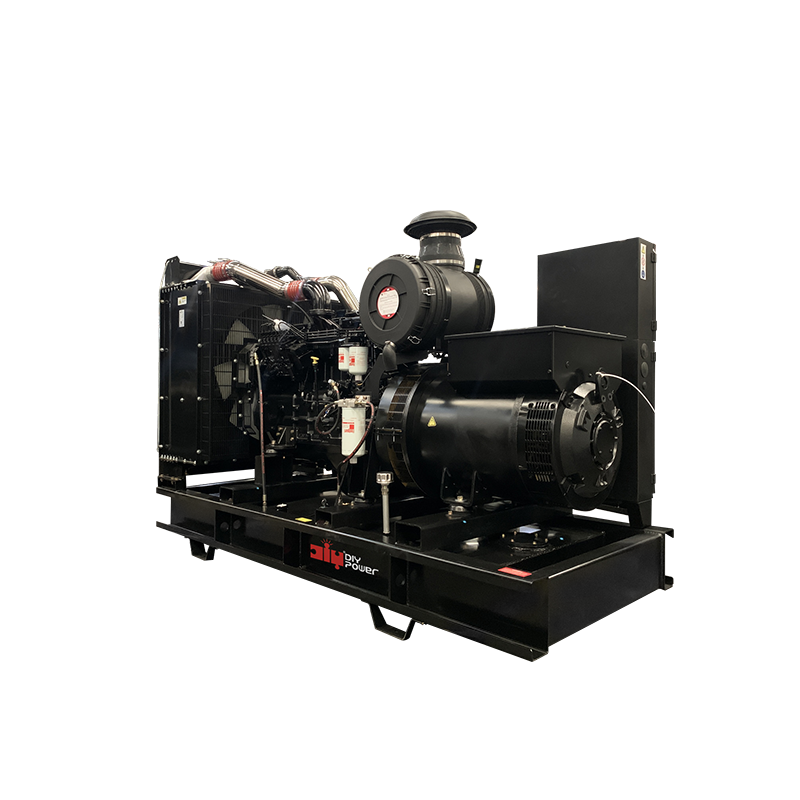
For high-demand scenarios requiring robust liquid fuel, commercial diesel generator systems offer a massive advantage. Take the Cummins 6LTAA9.5-G1 engine, for example. Operating at 250kW and 60Hz, this heavy-duty diesel architecture utilizes fuel that is inherently more stable than gasoline. Diesel does not evaporate into sticky varnish the way unleaded gas does, making seasonal maintenance significantly less labor-intensive while providing massive torque for industrial loads.
For the ultimate hands-off approach, natural gas is the undisputed king of standby power. A system like the JiChai natural gas high-voltage set utilizes the L20V190ZLT-2 engine to deliver a staggering 2000kW of continuous power. Because it connects directly to municipal utility lines, there are no tanks to fill, no stabilizers to mix, and absolutely zero fuel to drain before storage. The system remains perpetually ready for deployment without any of the chemical degradation risks associated with liquid fuels.
Once you pull the fuel from the machine, you must handle the extracted liquid responsibly. Old gasoline is a toxic, highly flammable substance that poses severe environmental risks.
If the extracted fluid is less than a month old, smells normal, and appears clear, it can usually be repurposed. The standard field method is dilution. Pour it into the nearly full tank of a daily commuter car. Modern automotive fuel injection systems burn through slightly aged, diluted gas rapidly without suffering the clogging issues common to small engines.
If the drained fluid is dark, smells sour like old paint thinner, or contains visible water droplets, it is completely unviable. Never dump degraded fuel onto the soil, into a storm drain, or into household trash. Doing so contaminates local groundwater. Transport the sealed container to a local Household Hazardous Waste collection facility for proper chemical processing.
Fuel management should integrate seamlessly into a broader post-storm mechanical inspection. After a severe weather event, machinery is often exposed to high winds, flying debris, and horizontal rain. For coastal applications, wind-driven saltwater spray accelerates metal oxidation rapidly.
Conduct a thorough visual sweep of the frame and engine block. Clear out wet leaves, mud, or debris packed into the cooling fins. Restricted airflow causes severe overheating under heavy loads. Check the steel frame for deep scratches, applying touch-up paint to bare metal to prevent rust propagation.
Achieving true emergency readiness requires addressing lubrication, electrical health, and physical environment.
Never store an engine with used oil in the crankcase. Combustion byproducts and microscopic carbon particulates turn engine oil acidic over time. If left sitting, these acids slowly etch away at internal bearings and cylinder walls. While the block is still slightly warm from the run-dry phase, drain the old oil and refill it with fresh, manufacturer-spec lubrication.
If your unit features an electric push-button start, it relies on a small onboard battery. Extended inactivity creates a natural parasitic electrical drain, eventually killing the battery cells. Disconnect the negative terminal before storage. Ideally, hook the battery to a smart trickle charger to maintain voltage health.
The physical location dictates the machine's condition upon retrieval. Store the unit in a dry, enclosed space like a detached garage. Avoid wrapping it tightly in a plastic tarp outdoors. Ground moisture evaporates, becomes trapped under the plastic, and creates a humid micro-climate that accelerates corrosion. Never store combustion equipment inside a living space due to severe fire and respiratory hazards.
Draining the gas from your generator is an absolute necessity for any storage period exceeding one month. Stale fuel attacks internal components, corrodes metal, and guarantees an operational failure when you need power the most. Taking fifteen minutes to siphon the tank, drain the bowl, and run the engine dry protects your investment from catastrophic varnish buildup. If you are looking to bypass these intense maintenance routines entirely, upgrading to reliable backup power solutions running on diesel or natural gas will ensure your facility remains powered with zero fuel degradation anxiety.
Untreated regular gasoline begins to chemically degrade and lose volatility in just 30 days. When exposed to oxygen and temperature swings, it oxidizes rapidly. Treating fresh fuel with a chemical stabilizer can extend its viability up to 12 months. However, for seasonal storage, physical removal remains the safest engineering practice.
Closing the shut-off valve and letting the engine stall is excellent for clearing the carburetor bowl and fuel lines. However, this action alone is incomplete. You must physically siphon the main tank first. Leaving the bulk volume of gas sitting in the main reservoir will still lead to phase separation and moisture accumulation.
For short-term storage under a month using a stabilizer, leave the tank 95 percent full to minimize condensation-causing air space. For long-term storage over a month, the entire system—tank, lines, and carburetor—must be completely empty and bone dry.
No, it is highly unlikely and dangerous to the engine. Two-year-old gasoline has lost almost all of its combustible volatility and has likely undergone severe phase separation. Attempting to run an engine on fuel this old will coat the internal valves in varnish, clog the carburetor instantly, and potentially bend pushrods if water is drawn into the combustion chamber.
You can identify bad gas through visual and olfactory inspections. Healthy gasoline is nearly clear or slightly yellowish and has a sharp, distinct chemical odor. Bad gas turns dark amber or brown, smells distinctly sour or like old varnish, and often features visible water bubbles resting at the bottom of the container.
If stale gas has varnished the internal jets, you must perform a manual teardown. Shut off the fuel valve, remove the bowl, and spray the main body with a specialized chemical solvent. Use a very thin, stiff wire to clear the microscopic jets of hardened resin. If the clogging is severe, ultrasonic cleaning or purchasing a replacement assembly is the most cost-effective solution.


 Energy Storage System