Views: 0 Author: Site Editor Publish Time: 2026-09-29 Origin: Site
Picture this. It is the middle of a freezing winter night. The electrical grid has just failed, and you find yourself trudging through the snow to refill a sputtering portable unit. It is a frustrating, labor-intensive, and potentially dangerous scenario. A sudden power outage demands a much more reliable solution.
Connecting a generator directly to a municipal fuel line provides a continuous, hands-off energy supply. This keeps your home or facility powered without interruption. In this comprehensive guide, we walk you through the exact engineering steps required for a successful connection. We cover critical pipe sizing, strict safety codes, essential plumbing materials, and the rigorous leak-testing procedures needed to guarantee a secure setup. Whether you are backing up a small residence or integrating reliable backup power systems for a massive industrial facility, getting the plumbing right is your first line of defense.
When evaluating backup power solutions, property owners and facility managers eventually face a distinct choice. Do you rely on portable units, or do you invest in permanent standby infrastructure? Upgrading to a dedicated connection offers highly measurable returns on investment. The primary benefits are operational reliability and long-term cost savings.
The most significant advantage is infinite runtime. A permanent line draws fuel directly from the underground utility grid. During severe winter storms or hurricane seasons, local fuel stations frequently lose power or completely run out of supplies. In contrast, subterranean lines remain pressurized and protected beneath the frost line. They safely sustain your heating systems, medical equipment, and food supplies without a single interruption.
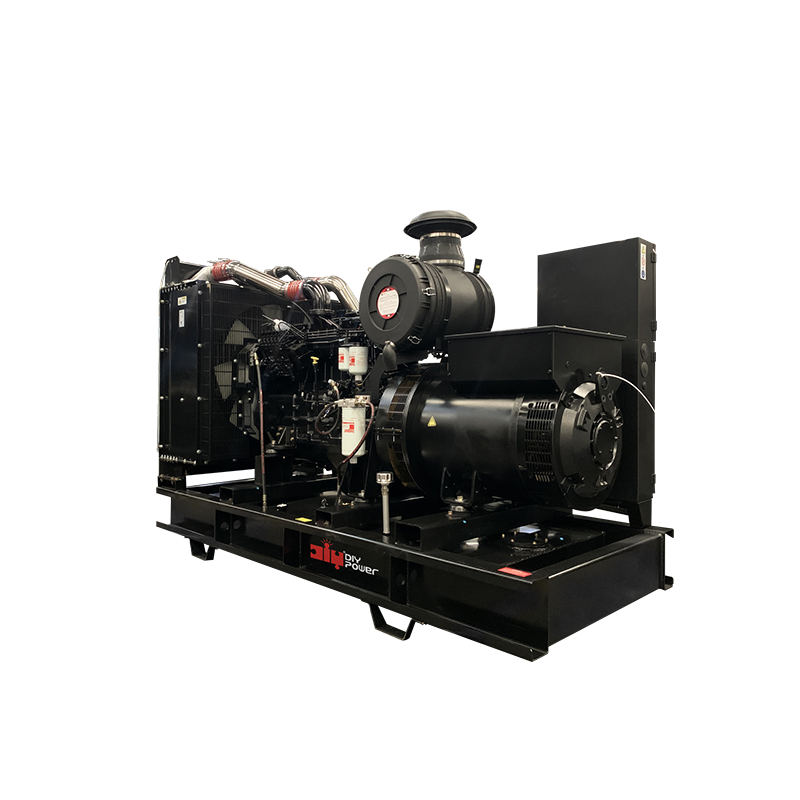
Practically speaking, this approach is highly cost-effective and remarkably convenient. Liquid fuels degrade over a few months, demanding chemical stabilizers and highly regulated storage solutions. Conversely, pipeline fuel requires zero on-site storage tanks. It also burns significantly cleaner, which directly reduces internal engine wear and maintenance frequency. However, if your facility lacks municipal grid access, investing in a robust diesel generator set like the Cummins 250kW 6LTAA9.5-G1 remains a powerful alternative for off-grid industrial reliability.
To clearly illustrate the operational differences, review the comparison table below.
| Feature | Permanent Standby System | Portable Liquid Fuel Unit |
|---|---|---|
| Fuel Source | Underground municipal pipeline | On-site storage tanks or jerry cans |
| Runtime | Virtually infinite | Limited to available stored fuel |
| Maintenance | Low. Clean combustion reduces engine wear. | High. Requires fuel stabilizers and frequent oil changes. |
| Best Application | Hands-off residential and heavy industrial base-loads | Remote job sites and temporary emergency power |
Recent years have exposed severe vulnerabilities in regional power grids. From unprecedented winter freezes in the South to intensifying hurricane seasons along the coasts, prolonged blackouts are becoming a frequent reality rather than a rare anomaly. Consequently, the backup power industry is witnessing a massive commercial shift away from surface-level liquid fuels toward permanent pipeline solutions.
Market analysis indicates that facility managers now prioritize hands-off reliability. Liquid fuels present logistical nightmares during regional emergencies due to supply chain disruptions. Roads flood, and refineries lose power. In contrast, subterranean networks bypass these surface-level supply chain failures. Furthermore, as environmental regulations tighten regarding emissions, cleaner combustion profiles make pipeline fuel the preferred choice for forward-thinking enterprises.
Working with combustible gases carries severe inherent risks. Before purchasing raw materials or attempting to alter your plumbing infrastructure, you must address several legal and safety prerequisites. Inspectors take these regulations incredibly seriously.
Almost all municipalities legally mandate a plumbing or mechanical permit to alter, extend, or tap into an existing line. Proceeding without this documentation can result in hefty municipal fines. It will void your homeowners insurance policy and cause failed safety inspections when attempting to sell the property later on.
While this guide outlines the mechanical steps of how a connection is physically made, we strongly advise hiring a licensed plumber or HVAC technician for the actual pipe threading and joint sealing. Understanding the process makes you an informed consumer. However, a certified professional ensures the pressure testing meets the strict guidelines of the National Fuel Gas Code.
Additionally, you must secure utility company approval. Adding a high-demand engine significantly increases your property total load. Contact your local provider to verify if your current meter possesses the volumetric capacity to handle the extra flow. If it falls short, the utility company will need to upgrade your meter before any installation begins.
Sizing your pipe correctly is non-negotiable. Go too narrow? Your engine starves. This causes stalling, erratic voltage, and fried alternators. Proper sizing remains the most critical technical aspect of this entire project.
To size the line correctly, you must first understand British Thermal Units. An engine requires a specific volume of fuel, measured in BTUs per hour, to run efficiently at full capacity. You will find this exact metric listed in the manufacturer specification sheet.
Next, consider the Water Column pressure. Residential fuel is typically delivered at a very low pressure, usually measured between 5 to 7 inches of water column. The newly installed pipe must maintain this exact pressure from the meter all the way to the fuel inlet.
The required pipe diameter is dictated by two intersecting factors. First is the total BTUs demanded by the engine. Second is the total linear distance of the pipe run. Simply put, the longer the distance, the wider the pipe must be to counteract pressure drops caused by internal friction. For massive industrial applications, the infrastructure demands are entirely different. A facility requiring megawatt-level backup might deploy a high-voltage industrial natural gas generator. Feeding a beast like that requires specialized commercial mains and heavy-duty regulators, not standard residential piping.
Using the correct, code-approved materials is absolutely essential. Standard water pipes, galvanized steel in most jurisdictions, or PVC can never be used for combustible applications.
Essential Materials:
Essential Tools:
Disclaimer: The following steps outline the standard industry procedure for educational purposes. Always defer to local building codes and rely on professional installers for hazardous plumbing.
Step 1: Isolate the Main Supply
Before making any cuts or unscrewing existing plumbing, the supply must be completely isolated. Locate the main meter outside. Using a large adjustable wrench, turn the main shut-off valve so that the rectangular tang sits perpendicular to the pipe. This action shuts off flow to the entire property. Verify the system is dead by attempting to light a stove inside the building.
Step 2: Install a T-Fitting
To supply the new unit, you must tap into the existing plumbing. It is highly recommended to install this T-fitting as close to the main meter as possible. Tapping in too far down the line often results in insufficient volume for the engine. Using two pipe wrenches, carefully break the seal and unthread the existing black iron. Apply yellow Teflon tape or brush pipe dope onto the male threads. Thread on the new T-fitting, using the wrenches to apply deep, secure torque.
Step 3: Route the Rigid Pipe
From the newly installed T-fitting, begin routing the rigid black iron toward the concrete pad. If routing above ground, the heavy pipe must be supported by specialized hangers at regular intervals to prevent sagging. Sagging stresses the threaded joints. If local codes mandate burying the line, you cannot use bare black iron because it will quickly corrode in the damp soil. Instead, you must use factory-coated underground piping buried at a specific trench depth, accompanied by a yellow tracer wire.
Step 4: Assemble the Sediment Trap and Valve
Once the rigid pipe reaches the immediate vicinity of the housing, two critical components must be integrated. First, install the manual brass shut-off valve. It must be easily accessible and located within direct line of sight of the unit. Directly downstream from the valve, assemble a sediment trap. This is constructed using a T-fitting where the flow enters horizontally and exits vertically upwards. The bottom port is fitted with a short nipple and a cap. Relying on gravity, this trap catches condensation and rust flakes, preventing them from destroying sensitive fuel injectors.
Step 5: Connect the Flexible Hose
Never connect rigid black iron directly to the engine inlet. When running under a heavy electrical load, these machines vibrate violently. A rigid, unyielding connection will eventually crack the threads or fracture the internal manifold, resulting in a catastrophic leak. Instead, thread a certified flexible hose from the top of the sediment trap directly to the fuel inlet. Ensure this hose is routed smoothly, avoiding sharp kinks or abrasive edges.
Once the physical plumbing is complete, the entire system must undergo rigorous testing before the engine is ever cranked.
The standard visual inspection is the Soap and Water Test. Mix a thick solution of liquid dish soap and water, or utilize a commercial leak detector fluid. Slowly turn the main valve at the meter back on to pressurize the newly built system. Generously brush the soapy solution over every single threaded joint you touched. Watch closely for several minutes. If you see bubbles actively forming and expanding like small balloons, you have a dangerous micro-leak. The main supply must be shut off, the system depressurized, and that specific joint disassembled, cleaned, re-doped, and tightened further.
While the soap test is excellent for spotting obvious flaws, professional installers rely on a manometer to guarantee absolute system integrity. A manometer measures highly precise pressure levels. The technician isolates the new line, pressurizes it with compressed air, and monitors the gauge for up to 30 minutes. If the needle drops even a fraction, a hidden leak exists. Local building inspectors almost always require a successful manometer test to pass the final permit inspection.
Establishing your infrastructure is a major milestone, but the physical components remain constantly exposed to the elements. Extreme weather, particularly harsh winter freezes, places immense stress on outdoor plumbing.
As temperatures plummet below freezing, metal pipes and brass fittings undergo microscopic thermal contraction. Over multiple freeze-thaw cycles, threaded joints can loosen imperceptibly. Routine visual verification is an essential safety practice. Furthermore, trace amounts of moisture inside the line can condense and freeze during extreme cold snaps. This highlights exactly why the sediment trap you installed is so vital for engine protection.
Facility managers and homeowners should conduct a visual inspection monthly. Check the black iron for chips in the paint or signs of aggressive rust. Ensure the flexible hose has not been pinched by debris. Most importantly, clear accumulating snow and ice away from the housing and exhaust ports to prevent fatal carbon monoxide buildup.
The sizing and piping guidelines detailed above apply perfectly to standard residential standby units. However, for commercial facilities, large agricultural operations, or massive data centers, a standard unit is vastly underpowered. When power demands scale into the hundreds or thousands of kilowatts, the engineering requirements change dramatically.
Industrial operations require continuous, base-load capable generation that can sustain heavy electrical loads for weeks without faltering. For organizations demanding uncompromising stability, the JiChai Nature Gas Generator Set represents the pinnacle of heavy-duty engineering. Moving far beyond simple emergency backup, this equipment enters the realm of primary power generation.
When evaluating industrial engines, decision-makers must look at objective mechanical capabilities. Specifically, the JiChai L20V190ZLT-2 system provides distinct operational advantages. It outputs an astonishing 2000kW of continuous power. Unlike standard units that output low voltage, this heavy-duty set is designed to output high voltage directly. Options include 3.3kV, 6.3kV, or 10.5kV. This allows seamless integration with commercial grids to power heavy machinery without relying on massive, inefficient step-up transformers.
Furthermore, its V-type, 20-cylinder configuration ensures the engine can handle sudden, massive electrical load steps without experiencing severe frequency drops. Built with reinforced blocks and advanced liquid cooling, these units are rated for continuous operation. While investing in a high-voltage system is a significant capital expenditure, the return on investment is undeniable for facilities where an outage means thousands of dollars in lost revenue per minute.
Yes, but it requires highly specific equipment. You cannot connect a standard gasoline-only portable unit directly to a municipal line. You must either purchase a model explicitly manufactured as a tri-fuel unit, or install an aftermarket conversion kit. Additionally, you must install a secure quick-disconnect fitting on your plumbing, paired with a specialized hose rated for outdoor use.
Costs vary wildly based on your location, local labor rates, and the linear distance from your meter to the concrete pad. On average, expect to pay between $300 and $1,000 for the plumbing alone. While the raw materials are relatively inexpensive, the bulk of the cost comes from hiring a licensed plumber to ensure the system is properly sized, threaded, pressure-tested, and fully compliant with municipal codes.
Corrugated Stainless Steel Tubing is popular for indoor appliance routing, but it has strict limitations for outdoor generator use. Most codes prohibit running exposed CSST outside because it is easily damaged by weed whackers, weather, and UV degradation. If used, it must be properly sleeved or routed indoors until it breaches the exterior wall near the engine. Always verify with your local inspector, as many jurisdictions strictly require rigid black iron or approved underground poly pipe for the main outdoor run.
Technically, you can place the unit quite far from the meter, sometimes up to 100 feet or more. However, as the distance increases, the internal friction inside the pipe causes the pressure to drop. To compensate for a long run, you must increase the diameter of the pipe significantly. A run that requires a 1-inch pipe at 20 feet might require a 1.5-inch or 2-inch pipe at 80 feet to deliver the same BTUs. Longer runs exponentially increase your material and labor costs.
Absolutely. One of the primary benefits of this fuel type is that the utility infrastructure relies on subterranean pipelines and systemic pressure. This operates independently of the overhead electrical grid. Even during widespread, multi-day blackouts, underground pressure usually remains completely stable, allowing your system to run continuously.
In many cases, yes. A standard home meter is typically rated for about 250,000 BTUs per hour. If your property already utilizes fuel for a furnace, water heater, and kitchen stove, adding a massive engine will easily exceed the meter maximum capacity. You must contact your local utility provider before installation so they can upgrade the meter to ensure adequate pressure for all appliances simultaneously.
Ready to secure your facility against unpredictable grid failures? Stop relying on temporary fixes and invest in permanent, industrial-grade stability. Explore our complete lineup of heavy-duty engines, high-voltage systems, and expert engineering resources at DIYPowers today to find the exact configuration your operation demands.


 Energy Storage System