Views: 0 Author: Site Editor Publish Time: 2026-10-26 Origin: Site
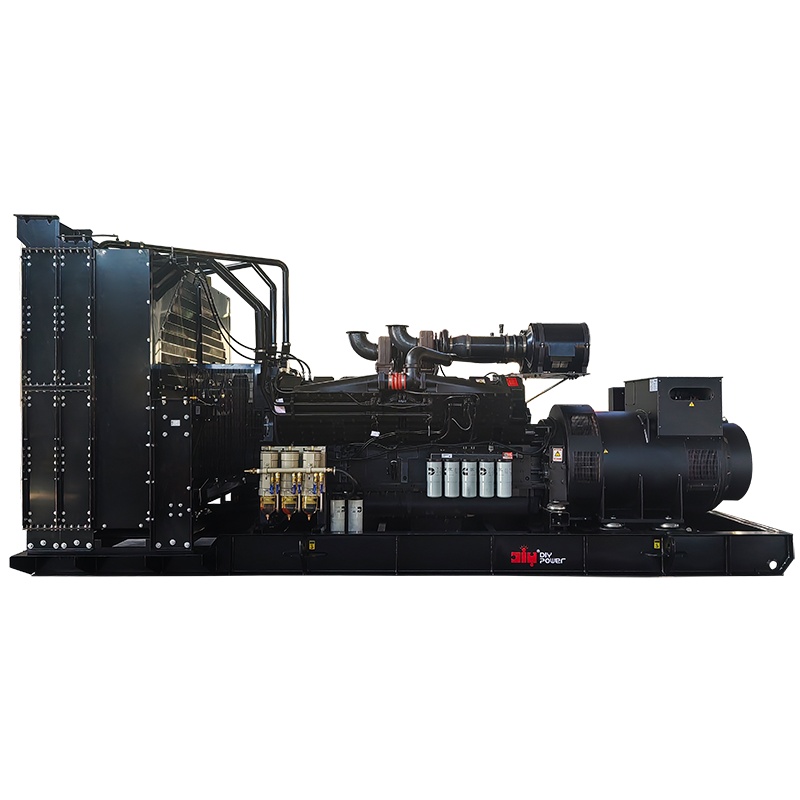
Low voltage diesel generator units are diesel-powered generating systems that produce electricity at low-voltage distribution levels, commonly 400V, 415V, or 480V for industrial three-phase applications. They provide standby, prime, or continuous power when appropriately rated and configured for the intended operating conditions.
These generator units are widely used in manufacturing plants, construction projects, mining operations, commercial buildings, and industrial power stations.
Compared with medium-voltage generation systems, low-voltage diesel generators can provide a more direct connection to compatible low-voltage loads. However, larger installations may require substantial cabling, switchgear, and electrical protection due to higher operating currents.
This guide explains the voltage ratings, operating principles, generator configurations, and industrial applications of low voltage diesel generator units. It also examines their differences from medium-voltage systems and the technical requirements involved in industrial power projects.
Table of Contents
A low voltage diesel generator unit is a power generation system that combines a diesel engine, an alternator, and supporting electrical equipment to produce low-voltage AC electricity.
The diesel engine supplies mechanical energy, while the alternator converts that energy into electricity. The generated power is then delivered to electrical loads through appropriate protection and distribution equipment.
Under IEC terminology, low-voltage electrical equipment generally operates with an AC supply or output voltage not exceeding 1,000V. The IEC low voltage equipment definition includes electrical generation and distribution equipment within its scope.
Output Voltage | Frequency | Typical Application |
|---|---|---|
380V | 50Hz | Industrial distribution in selected markets |
400V | 50Hz | Manufacturing facilities and commercial buildings |
415V | 50Hz | Industrial and commercial power systems |
440V | 50/60Hz | Selected industrial applications |
480V | 60Hz | North American industrial distribution systems |
690V | 50Hz | Selected large industrial equipment and power systems |
These voltage and frequency combinations are illustrative. Actual availability depends on the alternator, generator model, and electrical system requirements.
Industrial low voltage generators can supply electricity directly to compatible loads or connect to a larger distribution system.
For specific generator configurations and project requirements, explore DIYPOWER Low Voltage Diesel Generator Units.
Low voltage diesel generators convert the chemical energy stored in diesel fuel into electrical power.
The operating process involves four main stages.
Diesel fuel is injected into the engine cylinders and ignited through compression heat. Combustion produces mechanical force that rotates the engine crankshaft.
The engine drives the alternator at the speed required to produce the specified electrical frequency.
For example, a four-pole alternator normally operates at:
1,500 rpm for 50Hz
1,800 rpm for 60Hz
Other alternator pole configurations use different operating speeds.
The alternator converts rotational mechanical energy into AC electricity through electromagnetic induction.
An automatic voltage regulator (AVR), where fitted, adjusts excitation to help maintain voltage within the generator's specified operating limits.
The generator controller monitors important operating conditions, including voltage, frequency, engine speed, cooling temperature, and oil pressure.
Depending on the controller, it can also manage automatic starting, shutdown, alarms, and protective functions.
The generated electricity is supplied to the connected electrical system through appropriately rated switching and protective equipment.
For a single-generator standby installation, an automatic transfer switch may transfer designated electrical loads from utility power to generator power.
Large industrial power stations may use multiple generator sets with synchronization and load-sharing controls.
A complete low voltage diesel generator includes mechanical equipment, electrical generation components, and control systems.
Component | Main Function |
|---|---|
Diesel Engine | Produces mechanical power |
Alternator | Converts mechanical energy into AC electricity |
Automatic Voltage Regulator | Supports voltage regulation |
Generator Controller | Monitors and controls generator operation |
Fuel System | Stores and delivers diesel fuel |
Cooling System | Removes excess engine heat |
Lubrication System | Protects moving engine components |
Starting System | Initiates engine startup |
Circuit Breaker | Provides switching and electrical protection |
Base Frame | Supports the engine and alternator assembly |
Additional components may include battery chargers, fuel transfer equipment, exhaust silencers, acoustic enclosures, and remote monitoring systems.
A standalone low voltage diesel generator produces electricity and delivers it to a designated electrical circuit.
A complete diesel power station may integrate several generator units with:
Generator paralleling controls
Low-voltage switchgear
Electrical protection devices
Centralized monitoring
Power distribution equipment
Auxiliary systems
The exact arrangement depends on the required capacity, operating conditions, and electrical distribution design.
Low-voltage and medium-voltage diesel generators perform the same basic function, but their output voltages affect current, electrical infrastructure, and distribution requirements.
Feature | Low Voltage Diesel Generator | Medium Voltage Diesel Generator |
|---|---|---|
Typical Output Voltage | 400V, 415V, 480V, 690V | 3.3kV, 6.6kV, 11kV |
Current at Equal kVA | Higher | Lower |
Distribution Equipment | LV switchgear | MV switchgear |
Power Distribution Distance | Often suitable for local distribution | Can be advantageous for longer-distance distribution |
Cabling Requirements | Higher current can require larger or parallel conductors | Lower current can reduce conductor requirements |
Protection System | LV protection devices | MV protection and insulation systems |
Typical Applications | Buildings, factories, localized industrial loads | Large power stations, extensive industrial networks |
Engineering Complexity | Often simpler for compatible LV systems | Additional MV design and operational requirements |
For balanced three-phase power systems:
Current (A) = Apparent Power (VA) ÷ (√3 × Line-to-Line Voltage)
Consider a 1,000 kVA generating system.
At 400V:
1,000,000 ÷ (1.732 × 400) ≈ 1,443A
At 6,600V:
1,000,000 ÷ (1.732 × 6,600) ≈ 87A
Although both systems provide the same apparent power, the medium-voltage system operates at a substantially lower current.
This difference affects conductor sizing, electrical protection, power losses, and distribution equipment.
However, medium-voltage equipment generally requires additional insulation, protection, and specialist installation considerations.
Electrical equipment must meet the standards and regulatory requirements applicable to the intended installation and market.
For example, the European Commission's Low Voltage Directive addresses specified electrical equipment operating within the range of 50–1,000V AC or 75–1,500V DC.
The directive's applicability to a particular generator package or component must be assessed separately. A product's voltage alone does not establish regulatory compliance.
For industrial projects requiring higher generator output voltages, buyers can also review DIYPOWER's Diesel Medium Voltage Power Station category.
Low voltage diesel generator units are available in different mechanical and electrical configurations.
Each configuration serves different installation and operating requirements.
Open-type diesel generators consist of an engine-alternator assembly mounted on a base frame without a complete acoustic enclosure.
They are commonly installed in generator rooms or dedicated equipment spaces with suitable ventilation, exhaust arrangements, and safety provisions.
Typical applications: Industrial plants, generator rooms, and equipment facilities.
Silent or sound-attenuated diesel generators incorporate acoustic enclosures to reduce operating noise.
They are commonly considered for applications where noise exposure or environmental restrictions are important.
Typical applications: Commercial buildings, outdoor standby installations, and infrastructure facilities.
Actual sound levels depend on the enclosure design, generator load, measurement distance, and operating environment.
Containerized diesel generator systems integrate power generation equipment into a transportable enclosure.
The system may include ventilation, exhaust arrangements, internal lighting, equipment access, and relevant safety provisions.
Typical applications: Mining operations, remote industrial sites, and infrastructure projects.
Some industrial projects require more power than a single generating set can efficiently provide.
Multiple generators can be installed as an integrated system with suitable synchronization controls, load-sharing functions, electrical protection, and distribution equipment.
Typical applications: Large industrial facilities, remote power generation projects, and facilities requiring flexible generating capacity.
A multi-unit system may also support staged loading and maintenance flexibility, depending on its design.
Low voltage diesel generator units support a wide range of commercial and industrial power requirements.
Factories may use diesel generators to supply electricity during grid interruptions or to support essential industrial operations.
Typical electrical loads include:
Production machinery
Pumps and compressors
Conveyors
Ventilation and cooling equipment
Industrial control systems
The electrical design must account for motor starting, load restoration, and generator response to sudden load changes.
Construction sites often require temporary electricity before permanent grid connections become available.
Low voltage diesel generators can support site lighting, machinery, temporary offices, and pumping systems.
Mining facilities may operate in locations where utility electricity is unavailable or unreliable.
Diesel generator units can provide power for processing equipment, workshops, accommodation facilities, and other supporting infrastructure.
Multi-unit arrangements may be suitable where site loads change significantly during operation.
Commercial facilities may use diesel generators to provide standby power for designated essential loads, including emergency lighting, communications, ventilation, and water pumps.
These systems must be integrated with appropriate electrical protection and transfer equipment.
Water treatment plants and pumping stations often contain large electric motors.
Generator performance should be evaluated against motor-starting requirements, voltage dips, and the intended operating sequence.
Diesel generators are commonly used as part of emergency standby power systems for critical facilities.
A complete power continuity system may include generators, automatic transfer switches, UPS equipment, and coordinated distribution systems.
A diesel generator alone does not necessarily provide an uninterrupted power supply.
Diesel generator capacity is usually expressed in kilowatts (kW) and kilovolt-amperes (kVA).
The relationship is:
kW = kVA × Power Factor
For example, a generator rated at 500 kVA with a rated power factor of 0.8 has an active power rating of:
500 × 0.8 = 400 kW
However, generator power ratings must also reflect the operating duty.
Power Rating | Meaning | Typical Application |
|---|---|---|
Emergency Standby Power (ESP) | Power available under defined emergency operating conditions | Backup during utility outages |
Prime Power (PRP) | Power available for variable-load operation within specified rating conditions | Primary power for industrial or remote applications |
Continuous Operating Power (COP) | Power available continuously at a defined constant load under specified conditions | Continuous generation at a constant load |
The ISO 8528-1 generator ratings and performance standard provides classifications for reciprocating engine-driven AC generating sets, including their applications and rating conditions.
Generator operating limits must be checked against the manufacturer's datasheet.
An emergency standby rating does not automatically authorize unrestricted continuous operation.
The appropriate generator capacity depends on:
Maximum expected electrical demand
Motor-starting loads
Load variation and operating cycles
Required voltage and frequency stability
Ambient temperature and altitude
Standby or primary power operation
Future system expansion
For large industrial applications, the generator and electrical distribution system must be engineered together.
A complete low voltage diesel power station may include several integrated electrical systems.
An automatic transfer switch transfers designated electrical loads between normal and alternative power sources according to its control logic.
In standby applications, the ATS can coordinate automatic generator startup when utility power fails.
For a more detailed comparison of generator transfer arrangements, read Automatic Transfer Switch vs Interlock: Which Is Best?.
Low-voltage switchgear provides switching, isolation, and protection for electrical circuits.
The equipment must be rated for the relevant voltage, load current, and available fault conditions.
When multiple generators operate in parallel, their voltage, frequency, and phase relationships must be synchronized before connection to a common bus.
Load-sharing controls help distribute electrical demand among operating generators.
Control systems may monitor operating parameters such as generator voltage, frequency, engine temperature, operating hours, and protective alarms.
Remote monitoring can support operating visibility and maintenance planning where compatible equipment is installed.
Grounding, neutral arrangements, and protective-device coordination depend on the system design and applicable electrical regulations.
These elements must be evaluated by qualified electrical professionals.
Industrial buyers need to provide more than a general power capacity when requesting a diesel generator quotation.
A complete technical specification helps manufacturers and project engineers determine suitable equipment.
Technical Requirement | Information to Specify |
|---|---|
Generator Capacity | Required kW and kVA |
Output Voltage | 380V, 400V, 415V, 480V, or project-specific |
Frequency | 50Hz / 60Hz |
Phase | Single-phase / Three-phase |
Power Rating | ESP / PRP / COP |
Generator Quantity | Single or multiple units |
Load Characteristics | Motors, pumps, industrial equipment, electronic loads |
Installation | Indoor / Outdoor / Containerized |
Operating Environment | Temperature, altitude, dust, humidity |
Control System | Manual, automatic, or parallel operation |
Electrical Protection | Circuit breakers, switchgear, grounding |
Monitoring Requirements | Local or remote monitoring |
Regulatory Requirements | Applicable electrical, safety, and emissions requirements |
The ISO 8528-7 technical specifications standard addresses technical declarations and design requirements for reciprocating engine-driven generating sets.
Accurate project information helps manufacturers identify suitable generator configurations and clarify the engineering requirements before procurement.
Consider a manufacturing facility requiring a 400V, 50Hz three-phase diesel generating system.
The project team should confirm:
Maximum operating load in kW and kVA.
Motor-starting and load-step requirements.
Expected operating hours and generator duty rating.
Required voltage and frequency performance.
Whether the generator will operate independently or in parallel.
Electrical protection and transfer arrangements.
Site conditions and enclosure requirements.
These specifications support a more accurate technical assessment than selecting a generator based only on its nameplate kVA.
A generator with sufficient rated kVA may still experience excessive voltage or frequency deviations when starting large motors.
Load characteristics must be considered alongside rated capacity.
Large low-voltage generator systems may operate at high current levels.
Cable sizing, switchgear ratings, protective coordination, and electrical losses should be evaluated early in the design.
Using a standby-rated generator for an unsuitable continuous operating profile can affect reliability and equipment life.
The selected rating must match the intended duty.
High ambient temperatures, altitude, dust, and restricted ventilation can affect generator performance.
Equipment configuration and available power must be verified for actual site conditions.
Generator performance, transfer equipment, protection, grounding, and distribution must be coordinated.
An appropriate generator model alone does not guarantee a reliable power system.
DIYPOWER supplies diesel generator products and develops power generation solutions for commercial and industrial applications.
Project requirements may involve different engine and alternator configurations, generator capacities, electrical controls, enclosure arrangements, and distribution interfaces.
For low voltage diesel generator projects, buyers can provide their electrical and operating requirements for technical evaluation.
Useful information includes:
Required generator capacity
Output voltage and frequency
Standby or prime power application
Number of generating units
Installation environment
Electrical distribution requirements
Automatic transfer or synchronization needs
This information helps establish a practical generator configuration and identify the electrical system components required for the application.
Discuss Your Industrial Power Project with DIYPOWER
A low voltage diesel generator unit is an engine-driven generating set that produces electricity at low-voltage distribution levels. It combines a diesel engine, alternator, controls, and supporting equipment to supply electrical power.
Common industrial output voltages include 380V, 400V, 415V, and 480V. Other configurations may be available depending on the alternator design, generator model, and project requirements.
In common IEC-based AC classifications, the upper boundary of low voltage is generally 1,000V. Specific equipment standards and regional regulations may use defined voltage ranges for particular applications.
The main difference is the output voltage. For the same apparent power, a medium-voltage generator operates at lower current, which can benefit large power distribution systems. Low-voltage generators are often practical where loads use compatible low-voltage distribution.
Yes. Compatible diesel generator units can operate in parallel when equipped with suitable synchronization, load-sharing, protection, and control systems.
Yes, if the generating set has an appropriate rating for the intended duty. Generator operating conditions, maintenance requirements, and manufacturer limits must be followed.
No. An ATS is commonly used for automatic standby power transfer. Dedicated off-grid generation systems may use other switching and distribution arrangements.
Yes. They can provide standby or primary electricity for industrial facilities when properly rated and integrated with compatible electrical distribution equipment.
It may be technically possible, but the distribution system could involve high currents, large conductors, and extensive switchgear. Medium-voltage distribution may be more practical in certain large-scale installations.
Buyers should specify the required kW or kVA, output voltage, frequency, operating duty, load characteristics, installation conditions, generator quantity, and relevant electrical system requirements.
Low voltage diesel generator units provide an important power generation solution for industrial facilities, commercial buildings, construction sites, and integrated power stations.
Their advantages include compatibility with common industrial distribution voltages and flexibility in generator configuration.
However, successful system design depends on more than generator capacity. Voltage selection, operating ratings, load characteristics, electrical protection, control systems, and site conditions must be evaluated together.
For industrial power projects, DIYPOWER offers diesel generator solutions designed around different electrical and operational requirements. Buyers can share their project specifications to discuss suitable generator configurations and system integration needs.


 Energy Storage System