Views: 0 Author: Site Editor Publish Time: 2026-09-07 Origin: Site
The transition toward hybrid energy solutions is accelerating fast. Rising utility rates and grid instability push property owners to seek reliable backup power. Yet, the upfront capital expenditure remains a black box. Homeowners struggle to calculate the realistic complete installation expenses for these setups. People frequently conflate them with standard grid-tied solar or fully off-grid configurations. Furthermore, unrealistic social media ads promising free solar mislead buyers, leading to inaccurate budgeting and misaligned expectations. Understanding the true home hybrid energy system cost requires looking past the marketing fluff.
This guide deconstructs the hardware, installation, and hidden expenses of hybrid energy systems. We provide an evidence-based framework to help you evaluate whether the investment aligns with your specific energy resilience goals. By breaking down the individual components and labor requirements, you can approach contractors with realistic expectations and avoid mid-project surprises.
Hardware Baseline: Expect hybrid inverters to range from $1,000 to $3,000, with battery storage adding $2,000 to $7,000+ depending on capacity and chemistry.
Scale Dictates Price: Small essential-load setups start around $10,000 to $15,000, while comprehensive 30kW whole-home systems can range from $74,100 to over $129,000 before tax incentives.
The Hybrid Premium: Hybrid systems carry a 20% to 30% premium over standard grid-tied systems due to the necessity of battery banks, smart gateways, and complex electrical integration.
Hidden Installation Costs: Permitting, grid-interconnection fees, and required main panel upgrades (MPU) frequently add $2,000 to $5,000 to the final installation bill.
Table of Contents
The shift to Household Hybrid Power depends heavily on what you actually want the equipment to do. Unlike simple grid-tied solar panels that just push electricity back to the utility, a hybrid setup actively manages power flow between your roof, your battery bank, your home electrical panel, and the utility grid. This dynamic management requires specialized, intelligent hardware.
A true hybrid architecture remains connected to the utility grid but utilizes a specialized hybrid inverter and battery storage to manage generation, storage, and consumption dynamically. The hybrid inverter acts as the brain of the operation. It takes direct current (DC) from solar panels or wind turbines, converts it to alternating current (AC) for your home, and manages the complex charging and discharging cycles of your battery bank.
The most frequently under-budgeted component in this architecture is the smart gateway, also known as an automatic transfer switch (ATS) or backup interface. When the utility grid fails, electrical codes mandate that your system must immediately stop exporting power to the grid to protect utility line workers from electrocution. The smart gateway physically severs the connection to the grid in milliseconds. This isolates your home and allows the hybrid inverter to form its own microgrid using battery and solar power. Without this gateway, your batteries cannot legally or safely power your home during a blackout.
In the field, installing this gateway often requires intercepting the main service feed. If you have an underground service lateral, the electrician might need to dig up the yard to intercept the conduit before it hits the main panel, or perform a complete meter combo swap. This adds significant labor hours to the project.
Before gathering quotes, you must define your primary objective. Your answer directly dictates the size of the battery bank, which is the single largest expense in the entire project.
If your goal is Time-of-Use (TOU) arbitrage—storing cheap solar power during the day to use during expensive evening hours—you only need enough battery capacity to cover your evening consumption. If you want essential load backup, you need enough capacity to run your refrigerator, internet router, and a few lights for 12 to 24 hours. If you want true whole-home backup to run air conditioning, well pumps, and electric ovens during a multi-day outage, you will need massive battery banks and multiple stacked inverters.
System Goals and Hardware Requirements | ||
Primary Objective | Battery Sizing Strategy | Hardware Impact |
|---|---|---|
TOU Arbitrage | Sized for evening consumption only (typically 5-10 kWh). | Single inverter, small battery bank, standard gateway. |
Essential Load Backup | Sized for 24-hour critical appliance run time (10-20 kWh). | Single inverter, dedicated critical loads sub-panel required. |
Whole-Home Backup | Sized for multi-day autonomy with heavy motor loads (30+ kWh). | Stacked inverters, massive battery racks, heavy-duty 200A gateway. |
To understand the final number on an installer's invoice, you need to isolate the core hardware components. Each piece of equipment carries its own baseline expense. Upgrading any single component often requires upgrading the others to handle the increased electrical load.
Hybrid inverters typically range from $1,000 to $3,000. The variance depends on the continuous AC output rating and the surge capacity. Surge capacity is vital for starting heavy electric motors, like those found in well pumps or air conditioners. These motors require a massive, momentary spike in amperage to get spinning, known as Locked Rotor Amps (LRA). High-end hybrid inverters feature heavy-duty copper transformers capable of handling these surges without tripping offline.
The smart gateway adds another $1,000 to $2,500 to the hardware bill. This device sits between your utility meter and your main electrical panel. It houses the heavy-duty contactors that physically break the grid connection. The cost increases if you require a 200-amp gateway versus a 100-amp gateway, as the internal copper busbars and contactors must be significantly larger to handle the higher current.
Battery storage is where expenses escalate rapidly. Expect to pay between $2,000 and $7,000+ per battery module. Capacity is measured in kilowatt-hours (kWh). A standard residential battery module usually holds between 5kWh and 15kWh of energy.
Chemistry plays a massive role in both expense and longevity. Lithium Iron Phosphate (LiFePO4) is the current gold standard for residential stationary storage. Nickel Manganese Cobalt (NMC) batteries are lighter and more compact, making them popular in electric vehicles, but they degrade faster under heavy daily cycling.
Battery Chemistry Comparison | ||
Feature | Lithium Iron Phosphate (LiFePO4) | Nickel Manganese Cobalt (NMC) |
|---|---|---|
Cycle Life | 6,000 to 8,000 cycles | 4,000 to 5,000 cycles |
Thermal Safety | High stability, low fire risk | Lower stability, requires strict thermal management |
Physical Weight | Heavy and bulky | Lightweight and compact |
Installation Needs | Requires heavy structural wall blocking or floor mounting | Easier to wall-mount on standard framing |
The generation side of the equation is more predictable. Standard residential solar arrays currently average $2.50 to $3.50 per watt installed, before incentives. A typical 8kW solar array will run between $20,000 and $28,000 fully installed. This includes the monocrystalline panels, aluminum racking systems, roof penetrations, and wiring.
Some property owners explore Solar+Wind hybrid setups to generate power during stormy, overcast days. Residential wind turbines start around $1,800 for the turbine itself, but the actual installation cost is much higher. Wind turbines require a tall, engineered mast to reach clean, non-turbulent air above the tree line. They also require specific zoning approvals, massive concrete footings, and specialized dump-load controllers to prevent battery overcharging during high wind events. Unless you live on a large rural property with verified, consistent wind speeds averaging over 12 mph, the added complexity and expense of residential wind rarely justify the return on investment.
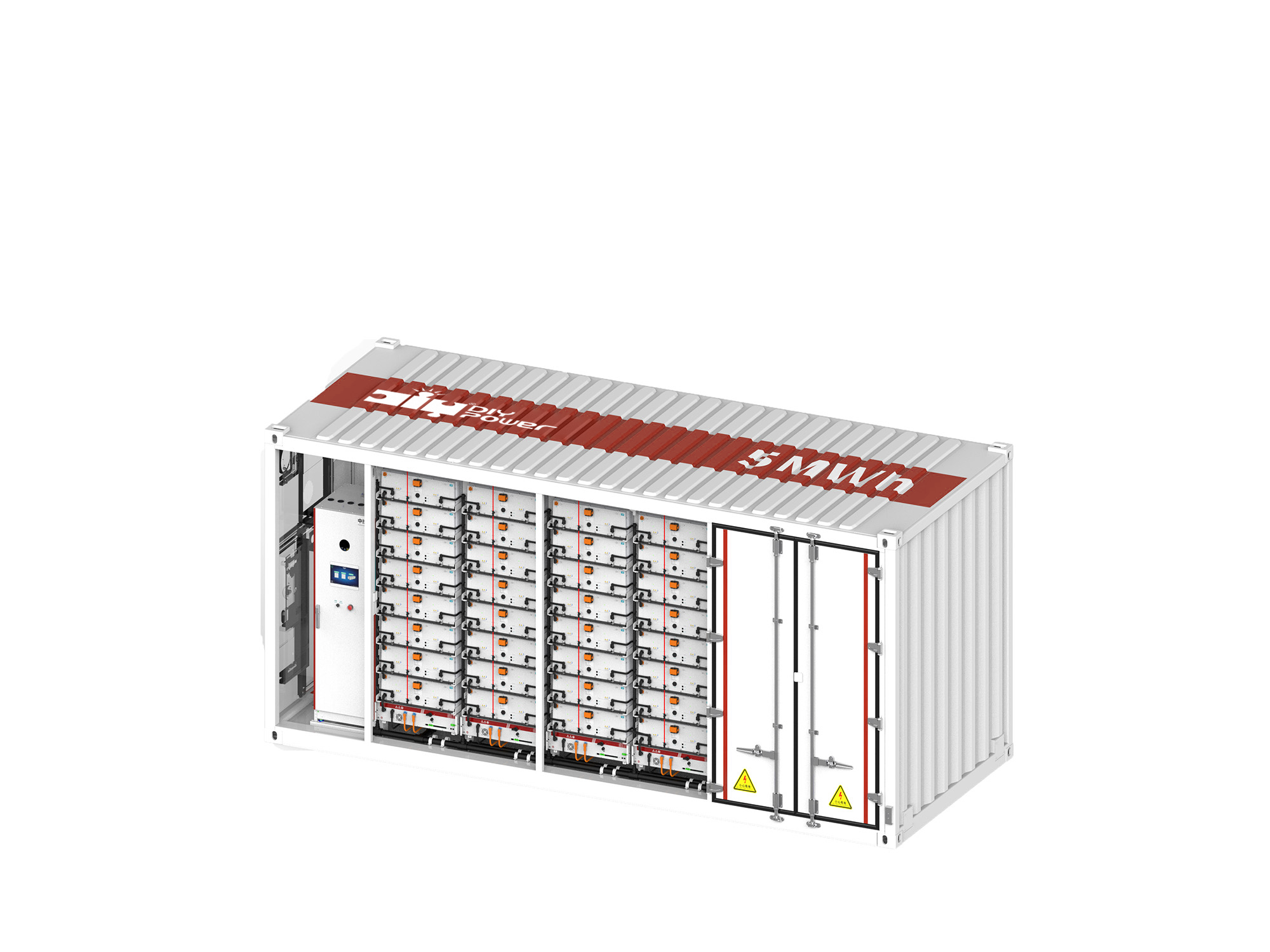
Combining the hardware components with professional installation labor gives a clearer picture of the final invoice. Installers categorize projects based on the electrical load the system must support during a grid failure. These estimates represent pre-incentive, fully installed costs.
An essential load backup system is designed for homeowners who want to keep the absolute basics running during a blackout. The target profile includes refrigerators, internet routers, security cameras, device charging, and select LED lighting circuits. It deliberately excludes heavy 240V appliances like air conditioners, electric dryers, and electric water heaters.
The estimated cost range for this tier is $15,000 to $25,000. The hardware profile typically includes a single 5kW to 8kW hybrid inverter, one or two battery modules providing 10kWh to 15kWh of storage, a modest solar array, and a smart gateway. To make this work, the electrician will install a dedicated critical loads sub-panel. They will physically move the breakers for your essential circuits out of your main panel and into this sub-panel. During an outage, only the sub-panel receives power from the inverter. This requires pulling new wire through conduit and re-routing existing Romex, which adds specific labor charges.
This is the most common tier for suburban homeowners who want to maintain their standard of living during extended outages. The target profile includes running central HVAC systems, well pumps, microwave ovens, and all general lighting and outlet circuits.
The estimated cost range jumps to $30,000 to $50,000. Backing up heavy loads requires significant hardware upgrades. You will likely need stacked hybrid inverters wired in parallel to double the AC output. You will also need three to four battery modules providing 30kWh to 40kWh of storage. At this level, the smart gateway is installed ahead of your main electrical panel, meaning the entire house is backed up without the need for a separate critical loads sub-panel. Installers will also add soft-start devices to your air conditioning compressors to reduce the massive startup surge that could otherwise trip the inverters.
Large estates, agricultural properties, or multi-generational homes with high baseline consumption require industrial-grade solutions. These properties demand near off-grid autonomy while maintaining grid ties to cover the vast majority of their electricity needs and to export massive amounts of excess solar power.
The estimated cost range for these massive setups spans from $74,100 to over $129,600. The hardware profile resembles a small commercial microgrid. It involves three or more heavy-duty hybrid inverters, extensive battery racks providing 60kWh to 100kWh+ of storage, and maximum roof or ground-mounted generation arrays. These setups often integrate secondary mechanical generators directly into the hybrid inverter's auxiliary port. The inverter's software automatically starts the mechanical generator via a 2-wire start circuit if the battery bank drops below a critical threshold during a prolonged winter storm with zero solar production.
Understanding where hybrid systems sit on the financial spectrum requires comparing them directly to the two extremes: standard grid-tied solar and fully off-grid setups. Each architecture offers a distinct trade-off between upfront capital expenditure and energy resilience.
Architecture Comparison | |||
System Type | Capital Expenditure | Resilience Level | Primary Drawback |
|---|---|---|---|
Standard Grid-Tie | Lowest | Zero (Shuts down during outages) | No backup power capability. |
Hybrid Architecture | Medium (20-30% Premium) | High (Seamless backup power) | Requires complex electrical integration. |
Fully Off-Grid | Highest | Maximum (Total autonomy) | Cannot monetize excess summer generation. |
Standard grid-tied solar represents the lowest capital expenditure. These setups rely on standard string inverters or microinverters mounted under each panel. Because there are no batteries and no smart gateways, the installation is straightforward and fast. The primary goal is purely financial: lower the monthly utility bill through net metering.
The major trade-off is zero resilience. By law, a standard grid-tied system must shut down the moment the utility grid fails. Even if the sun is shining brightly at noon, your solar panels will produce zero power during a blackout. The system remains dead until utility workers restore the grid. You trade security for a lower initial investment.
Hybrid architecture represents the middle ground, offering a balance of financial return and physical resilience. You can expect to pay a 20% to 30% premium over a standard grid-tied system of the same solar capacity. This premium covers the complex hybrid inverter, the heavy battery bank, the smart gateway, and the extensive electrical rewiring required to integrate them safely.
You gain absolute protection against TOU peak rates and seamless backup power. When the grid drops, the transition is often so fast that digital clocks do not even reset. You maintain your quality of life and protect your home from the consequences of prolonged power loss, such as frozen pipes or spoiled food.
Fully off-grid systems demand the highest capital expenditure. Severing the tie to the utility company completely means you must size your system for the absolute worst-case scenario. You cannot rely on the grid as a backup during the shortest, cloudiest days of the winter solstice.
This requires massively oversized solar arrays, enormous battery banks, and a mandatory secondary mechanical generator to survive weeks of poor weather. You lose the ability to monetize excess summer generation via net metering. For most suburban properties, going fully off-grid is financially irrational compared to a robust hybrid setup.
The numbers quoted on a contractor's initial proposal rarely represent the final check you will write. Site-specific electrical realities, municipal bureaucracy, and supply chain nuances introduce hidden expenses that can derail a project budget if not identified early.
The solar industry is currently plagued by deceptive social media marketing. Ads on platforms like Facebook frequently promise free hybrid systems or whole-home backup for impossibly low monthly payments. These lead-generation tactics are designed to get a salesperson into your home.
These low-ball quotes usually represent a bare-minimum grid-tied system leased over 25 years. When evaluating real-world quotes, you must demand an itemized bill of materials. Ensure the quote explicitly lists a hybrid inverter, a smart gateway, and the exact kWh capacity of the battery bank. If a quote for a battery backup system comes in under $15,000 for a whole house, the contractor is likely omitting the gateway or quoting a battery so small it will only run your lights for an hour.
Modern hybrid systems push massive amounts of electrical current. If you live in an older home with a 100-amp or 125-amp main electrical panel, you will almost certainly need a Main Panel Upgrade (MPU) to a 200-amp or 220-amp service. The existing busbars in older panels simply cannot handle the combined backfeed from the utility grid and a powerful hybrid inverter.
Electricians must adhere to the National Electrical Code (NEC) 120% rule. This rule dictates that the sum of the main breaker rating and the solar backfeed breaker cannot exceed 120% of the panel's busbar rating. If your hybrid inverter pushes 60 amps into a standard 200-amp panel with a 200-amp main breaker, you violate the code. You must either derate the main breaker to 175 amps or upgrade the entire panel. Expect an MPU to add $2,000 to $4,500 to your total project cost.
Hardware and labor only account for part of the installation process. Soft costs include structural engineering stamps to prove your roof can handle the weight of the solar panels, single-line electrical diagrams drawn by a master electrician, municipal building permits, and utility interconnection application fees.
Depending on your jurisdiction, these soft costs can add $1,000 to $3,000. To mitigate this risk, insist that your installer provides a turnkey quote. A turnkey contract explicitly states that the installer absorbs all permitting fees, engineering costs, and utility coordination expenses. Never sign a contract that leaves permitting fees open-ended or passes them directly to you after the fact.
The renewable energy hardware market is highly volatile. Numerous white-label battery and inverter brands have flooded the market, offering steep discounts. If a manufacturer goes bankrupt three years from now, your 10-year warranty becomes worthless. You are left with orphaned hardware that no local technician knows how to fix.
Prioritize tier-1 manufacturers with proven track records and robust financial backing. Look for equipment that offers a minimum 10-to-15-year warranty on both the hybrid inverter and the battery cells. Paying a slight premium for a reputable brand ensures that firmware updates will continue and replacement parts will be available a decade down the line.
While the initial capital outlay is substantial, federal and state incentives significantly reduce the net expense. Evolving utility rate structures are making hybrid systems increasingly necessary to achieve a reasonable return on investment.
The most significant financial lever is the Federal Investment Tax Credit (ITC). Under current legislation, homeowners can claim a 30% tax credit on the entire cost of the hybrid system, including hardware, labor, and even necessary electrical upgrades like an MPU. The ITC now applies to standalone battery storage installations as well, meaning you can add batteries to an existing solar array and still claim the 30% credit.
State-level incentives can stack on top of the federal ITC. California's Self-Generation Incentive Program (SGIP) provides substantial cash rebates based on the kWh capacity of the battery installed, specifically targeting areas prone to wildfires and public safety power shutoffs (PSPS). These combined incentives can drastically reduce the net expense of the installation.
The financial math of solar is changing rapidly. Historically, 1:1 net metering allowed homeowners to export excess solar power to the grid during the day and receive full retail credit for it. Under new frameworks like California's NEM 3.0, the export compensation rate has been slashed by up to 75%. Exporting power to the grid is now financially inefficient.
Hybrid systems solve this problem through TOU arbitrage. Instead of exporting cheap daytime solar power, the hybrid inverter routes that energy into your battery bank. When the sun goes down and the utility company shifts to expensive evening peak rates, the hybrid system discharges the battery to power your home. You avoid buying expensive grid power entirely. In states with degraded net metering policies, a hybrid system with battery storage accelerates your ROI compared to a standard grid-tied system.
To move forward effectively and secure a reliable hybrid energy system, execute the following steps:
Audit your monthly kWh consumption: Review your past 12 utility bills to establish your baseline energy needs before contacting any contractors.
Identify your critical backup loads: List heavy appliances like well pumps or medical equipment to determine the exact surge amperage your hybrid inverter must handle.
Prioritize scalable hardware ecosystems: Select equipment that allows you to start with a single battery module today and plug in additional capacity later as your budget allows.
Request itemized, turnkey quotes: Contact at least three NABCEP-certified local installers to compare hardware recommendations and ensure robust, high-amperage smart gateways are included.
A: A standard 10kW hybrid system typically costs between $25,000 and $35,000 before tax incentives. This estimate includes the hybrid inverter, a moderate battery bank, a 10kW solar array, the smart gateway, and standard installation labor. Prices fluctuate based on local permitting fees and whether your home requires a main electrical panel upgrade.
A: Yes, through AC coupling. An installer can add a hybrid inverter and battery bank to your existing setup. The new hybrid inverter manages the battery and forms the microgrid during an outage, while your existing grid-tied inverters continue to produce solar power. This requires adding a smart gateway to isolate your home from the utility grid.
A: Modern Lithium Iron Phosphate (LiFePO4) batteries are rated for 6,000 to 8,000 cycles. This translates to roughly 12 to 15 years of daily charging and discharging. Nickel Manganese Cobalt (NMC) batteries generally have a slightly shorter lifespan of 4,000 to 5,000 cycles. Most tier-1 manufacturers provide a standard 10-year warranty guaranteeing the battery retains at least 70% of its original capacity.
A: Yes, provided a smart gateway is installed. The gateway physically disconnects your home from the dead utility grid. Once isolated, the hybrid inverter uses battery power and active solar generation to keep your home's electrical circuits running safely. This prevents your system from backfeeding dangerous voltage to utility workers repairing the lines.
A: It can eliminate your energy usage charges, but most utility companies still charge a mandatory fixed monthly connection fee. By utilizing battery storage to avoid expensive peak rates, a properly sized hybrid system reduces your variable energy costs to near zero. You will still receive a small monthly bill for grid connection.
A: A smart gateway is a heavy-duty electrical switch installed between your utility meter and your main breaker panel. It is legally required for backup power. When the grid fails, it instantly severs the connection to the utility lines. This creates a safe, isolated microgrid for your hybrid inverter to power your home.


 Energy Storage System