Views: 0 Author: Site Editor Publish Time: 2026-09-07 Origin: Site
Decarbonizing backup and prime power systems requires practical solutions, avoiding the immediate replacement of expensive existing infrastructure. Facility managers and engineers face mounting regulatory pressure to lower emissions across their sites. The core problem is determining if transitioning to alternative fuels will compromise equipment reliability, void OEM warranties, accelerate engine wear, or incur hidden maintenance costs. Implementing a new fuel strategy demands rigorous technical evaluation rather than assumptions based on marketing sheets. We will examine how standard diesel engines interact with biodiesel, the critical differences between fuel blends, and the evidence-based framework required to safely operate a biodiesel generator setup. You need hard data to make this transition work without dropping critical loads. This guide breaks down the mechanical realities of alternative fuels.
Evaluating alternative fuels requires a strict understanding of their chemical properties. Traditional biodiesel consists of Fatty Acid Methyl Esters (FAME). Producers create FAME through transesterification, a process that reacts lipids like vegetable oils or animal fats with an alcohol, typically methanol. This chemical composition interacts with internal combustion engines differently than standard petroleum diesel. The oxygenated nature of FAME alters combustion characteristics, impacting everything from ignition delay to particulate matter formation inside the cylinder.
When you introduce FAME into a combustion chamber designed for petroleum hydrocarbons, the flame propagation changes. The built-in oxygen content of biodiesel allows for a more complete burn of the fuel droplet, which reduces unburned hydrocarbons and carbon monoxide emissions. However, this same oxygen content slightly alters the peak combustion temperature, which can marginally increase nitrogen oxide (NOx) emissions depending on engine timing and load.
Engine operators rarely use pure biodiesel. The industry categorizes this fuel by its blend ratio with standard petroleum diesel. Understanding these ratios dictates operational limits and hardware requirements.
Facility engineers often confuse biodiesel with renewable diesel, but they are fundamentally different products. Biodiesel relies on esterification, resulting in FAME. Renewable diesel utilizes hydrogenation, a process that strips oxygen from the biomass and creates a pure hydrocarbon. This distinction dictates how the fuel behaves in your storage tanks and fuel lines.
Renewable diesel meets the strict ASTM D975 standards for petroleum diesel. It acts as a true drop-in replacement, bypassing the water absorption, material degradation, and viscosity risks associated with implementing a FAME-based fuel strategy. Because renewable diesel lacks oxygen, it does not suffer from the same rapid oxidation and degradation issues that plague FAME products. For facilities that require long-term fuel storage without constant polishing, renewable diesel offers a mechanically superior, albeit often less available, alternative.
| Fuel Type | Production Process | Oxygen Content | Drop-in Replacement? | Storage Stability |
|---|---|---|---|---|
| Petroleum Diesel (ULSD) | Refining (Crude Oil) | None | N/A (Baseline) | High (12-18 months) |
| Biodiesel (FAME) | Transesterification | ~11% | No (Requires blend limits) | Low (3-6 months) |
| Renewable Diesel | Hydrogenation | None | Yes (Meets ASTM D975) | High (12+ months) |
Running alternative fuels through existing equipment exposes mechanical vulnerabilities. The physical properties of FAME interact aggressively with specific materials used in older engine manufacturing. You cannot simply drop a B20 blend into a twenty-year-old standby unit and expect standard operation.
Biodiesel acts as a mild solvent. When introduced to legacy fuel systems, it actively degrades natural rubber, nitrile, and polyurethane components. Over time, these materials swell, become brittle, and eventually fail, leading to fuel leaks and loss of pressure. Upgrading to a true Biodiesel Generator requires replacing vulnerable soft parts with synthetic elastomers.
Materials like Viton, Teflon, and specific grades of nylon resist the solvent effects of FAME, ensuring long-term system integrity. If you are retrofitting an older unit, you must trace the entire fuel path from the bulk tank to the injector return lines. A single nitrile O-ring in a fuel transfer pump can cause a catastrophic leak if exposed to high concentrations of FAME over several months.
Modern diesel engines rely on high-pressure common-rail (HPCR) injection systems to maximize efficiency. These systems push fuel through microscopic injector nozzles at extreme pressures, often exceeding 30,000 PSI. Biodiesel possesses a higher kinematic viscosity than petroleum diesel. This increased thickness impacts fuel atomization inside the combustion chamber.
Poor atomization leads to incomplete combustion, which subsequently causes injector coking—the buildup of hard carbon deposits on the injector tips. Over time, coking disrupts the spray pattern, reducing engine efficiency and increasing exhaust smoke. In severe cases, the injector pintle can stick, causing the cylinder to run rich and wash down the cylinder walls with unburned fuel, diluting the engine oil.
Equipment age serves as a primary indicator of compatibility. Generators manufactured after 2007 generally feature upgraded fuel system materials and advanced electronic control modules (ECMs). These modern systems are better equipped to handle B20 blends. Legacy systems built before 2007 present a higher risk profile.
Operating older engines on B20 requires comprehensive mechanical audits and proactive replacement of fuel lines and seals. Regardless of the manufacturing year, OEM verification remains mandatory before altering the fuel supply. Do not rely on general manufacturing dates; check the specific serial number against the manufacturer's technical bulletins.
How a facility operates its equipment influences fuel compatibility. Biodiesel performs best under high-load, continuous operation. Prime power applications maintain high combustion temperatures, ensuring complete burn-off of the heavier FAME molecules. The high cylinder temperatures prevent the accumulation of unburned fuel.
Conversely, light-duty cycles and prolonged idling create problems. Low cylinder temperatures during idle fail to fully combust biodiesel, leading to wet stacking, cylinder wash-down, and accelerated oil dilution. Operators must match the fuel blend to the specific duty cycle of the asset. If your generator primarily runs unloaded during weekly exercise cycles, high biodiesel blends will rapidly foul the exhaust system.
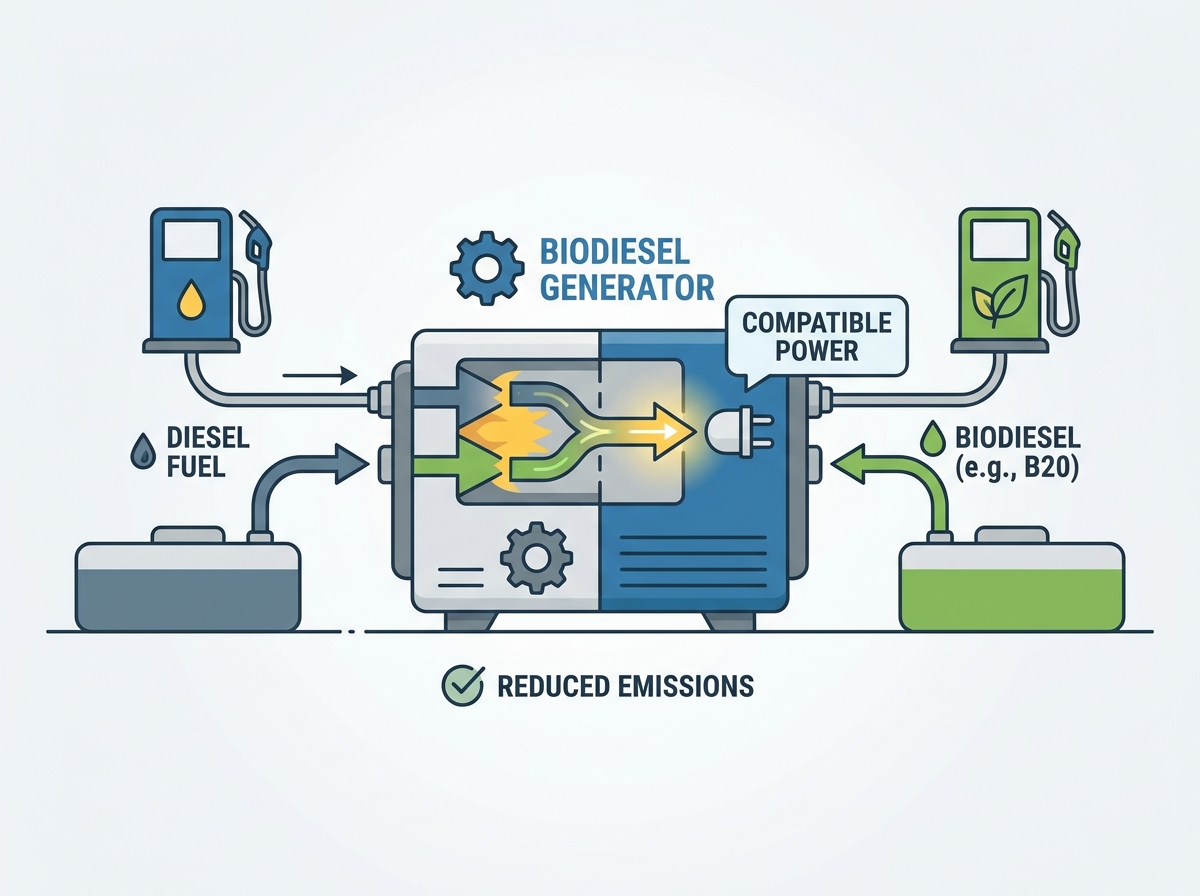
Transitioning away from petroleum diesel alters the mechanical output of the engine. Facility managers must account for these performance shifts when sizing equipment and calculating load capacities. You cannot assume a 1-to-1 performance ratio when changing fuel chemistry.
Petroleum diesel contains more energy per volume than biodiesel. Standard diesel yields approximately 138,000 BTUs per gallon, while B100 yields roughly 118,000 BTUs per gallon. When running a B20 blend, operators typically observe a 3% to 5% reduction in overall engine power and torque. This derating directly impacts facility load calculations.
If a facility operates a generator near its maximum rated capacity, switching to B20 might cause the system to struggle during peak load demands or transient step-loads. You must review your facility's peak kilowatt demand and compare it against the derated output of the generator. If the margin is too tight, you may experience voltage dips or frequency instability when large motors start.
Because biodiesel contains less energy, the engine must consume more fuel to maintain an equivalent kilowatt output. The volumetric fuel consumption rate increases proportionally to the blend ratio. Operators must adjust their fuel consumption models and delivery schedules to account for this decrease in fuel efficiency.
A tank that previously provided 48 hours of runtime on standard diesel will deplete faster when running a B20 blend under the same electrical load. This requires recalculating your emergency runtime capabilities and potentially increasing the frequency of fuel deliveries during extended grid outages.
Despite the power reduction, biodiesel offers a distinct mechanical advantage: superior lubricity. Modern environmental regulations require the use of Ultra-Low Sulfur Diesel (ULSD). The refining process used to remove sulfur also strips away naturally occurring lubricating compounds. This lack of lubricity accelerates wear on high-pressure fuel pumps and injectors.
Blending even a small amount of biodiesel (as low as B2) restores the necessary lubricity. This protective characteristic effectively extends the operational lifespan of critical fuel system components. The ester molecules in biodiesel bond to metal surfaces, creating a protective film that prevents metal-on-metal contact inside the tight tolerances of HPCR pumps.
Temperature management becomes critical when utilizing FAME. Biodiesel features a higher cloud point and pour point than petroleum diesel. In cold weather, the wax crystals in biodiesel precipitate out of solution much faster, leading to severe fuel gelling and blocked filters. Facilities operating in cold climates must implement robust mitigation strategies.
| Cold Weather Mitigation Strategy | Implementation Detail | Primary Benefit |
|---|---|---|
| Fuel Block Heaters | Install thermostatically controlled heaters on the primary fuel filter housing. | Prevents wax crystals from plugging the filter media during startup. |
| Heat Tracing | Wrap exposed exterior fuel lines with electrical heat trace tape and insulation. | Maintains fuel flow from the bulk tank to the day tank in sub-zero conditions. |
| Winterized Additives | Dose the bulk tank with cold flow improvers specifically formulated for FAME. | Lowers the pour point and modifies wax crystal formation in the fuel. |
Changing the fuel chemistry requires changing the maintenance manual. Facilities that treat biodiesel exactly like petroleum diesel will experience rapid equipment failure and compromised emergency power readiness. You must adapt your preventative maintenance schedules to match the behavior of the fuel.
The solvent nature of biodiesel creates immediate challenges during the initial transition. FAME actively dissolves existing petroleum deposits, varnishes, and sludge that have accumulated inside bulk storage tanks and fuel lines over years of operation. As these dissolved solids break loose, they travel directly into the engine's filtration system.
Operators will experience rapid and repeated fuel filter clogging during the first few weeks of adoption. Facilities must stock extra primary and secondary filters and schedule frequent replacements until the system is fully flushed. Monitor the vacuum restriction gauges on your primary fuel filters daily during the first month of a B20 transition.
Biodiesel is highly hygroscopic, meaning it actively absorbs moisture from the atmosphere. Water accumulation inside a fuel tank creates the perfect breeding ground for microbial growth, commonly known as the "diesel bug." These microbes feed on the hydrocarbons and excrete acidic byproducts.
This resulting fuel acidity aggressively corrodes engine internals, fuel lines, and storage tanks. Managing this risk requires installing advanced water-separation filters, utilizing desiccant breathers on bulk tanks, and conducting rigorous, scheduled microbial testing. You must drain water from the bottom of the fuel tanks and filter housings weekly.
Fuel stability dictates emergency readiness. Standard stabilized petroleum diesel can sit in a storage tank for 12 to 18 months without significant degradation. Biodiesel degrades much faster. A B20 or B100 blend typically features a maximum shelf life of only 6 months before oxidation compromises the fuel quality.
Oxidized biodiesel forms gums and insoluble sediments. This short shelf life presents a critical risk factor for standby and backup generators that sit idle for extended periods. Frequent fuel polishing and strict turnover schedules are mandatory. If your facility cannot consume the fuel within six months, you must implement a continuous fuel polishing system equipped with water separators and sub-micron filtration.
Fuel quality varies wildly among producers. Poorly refined biodiesel often contains unreacted glycerin, excess methanol, and baseline contaminants left over from the transesterification process. These impurities will destroy an engine. Facilities must strictly source their fuel from BQ-9000 certified producers and marketers.
The BQ-9000 program enforces rigorous quality control standards, ensuring the delivered product meets exact specifications and is free of the contaminants that cause injector failure and filter plugging. Always demand a Certificate of Analysis (CoA) for every bulk fuel delivery to verify the fuel meets the required specifications before it enters your tanks.
Navigating the legal and technical frameworks of alternative fuels protects the facility from catastrophic liability. Operators must understand where OEM responsibility ends and facility responsibility begins.
The Engine Manufacturers Association provides the technical consensus for the industry. The EMA acknowledges that biodiesel blends up to B5 generally pose no significant risk to engine durability or performance. However, the EMA clearly outlines that blends exceeding B5 require careful consideration.
The guidelines establish the threshold where OEM liability typically ends and operator liability begins, emphasizing the need for strict fuel quality management. The EMA stresses that operators must monitor fuel condition continuously and adhere strictly to ASTM standards to prevent mechanical failures.
A common and dangerous misconception exists regarding equipment warranties. Engine manufacturers warranty the engine against defects in materials and workmanship. They do not warranty the fuel. If a facility runs out-of-spec biodiesel, and that fuel causes injector failure or seal degradation, the OEM will deny the warranty claim.
The liability falls entirely on the operator and the fuel supplier. Securing written approval from the OEM for specific blend ratios is a necessary administrative step before implementation. Keep detailed logs of fuel deliveries, filter changes, and fuel testing results to prove that you maintained the fuel within acceptable parameters in the event of a mechanical failure.
Regulatory compliance relies on standardized testing. Any biodiesel introduced into a facility must strictly adhere to American Society for Testing and Materials (ASTM) standards. The pure B100 blending stock must meet ASTM D6751. Once blended with petroleum diesel to create a B6 through B20 mixture, the final product must meet ASTM D7467.
Requesting and verifying the Certificate of Analysis (CoA) from the fuel supplier ensures the delivered product complies with these mandatory specifications. Pay specific attention to the oxidation stability and water content metrics on the CoA, as these directly impact generator reliability.
Transitioning fuel sources requires a calculated risk assessment. Facilities must weigh the environmental mandates against the mechanical realities of their specific infrastructure. You must build a framework based on operational data.
A successful transition requires defining clear operational goals. Facility managers must determine if they can meet corporate ESG targets without dropping critical electrical loads. The primary success criterion is maintaining greater than 99.9% uptime.
If utilizing an alternative fuel jeopardizes emergency readiness or pushes maintenance budgets beyond acceptable limits, the transition fails, regardless of the emission reductions achieved. You must evaluate your site's tolerance for increased maintenance intervals and the physical space available for upgraded fuel polishing equipment.
Evaluating the transition requires comparing the distinct benefits against the operational burdens. The following table outlines the primary dimensions facilities must analyze.
| Evaluation Dimension | Primary Benefits | Operational Realities & Burdens |
|---|---|---|
| Environmental Impact | Reduced particulate matter, lower unburned hydrocarbons, lower lifecycle CO2 emissions. | Requires strict adherence to ASTM standards to guarantee emission profiles. |
| Mechanical Health | Increased fuel lubricity protects high-pressure pumps and extends injector life. | 3-5% power derating; potential degradation of legacy rubber seals and hoses. |
| Maintenance & Storage | Dissolves existing tank sludge, initially cleaning the fuel delivery system. | Increased OPEX for frequent filter changes, fuel polishing, and microbial testing due to 6-month shelf life. |
Operators choosing to proceed with a B20 blend must implement a structured mitigation plan to protect their assets. Follow these specific steps to ensure a safe transition.
Standard diesel generators can run on biodiesel, but viability is strictly dictated by the blend ratio, engine age, duty cycle, and the operator's tolerance for increased maintenance. Transitioning away from petroleum requires treating the fuel system as an active, evolving component rather than a static storage tank. Facilities must align their environmental goals with the mechanical limitations of their existing infrastructure.
To initiate a safe transition, execute the following next steps:
A: Using a B5 blend is universally accepted and will not void warranties. Blends like B20 require specific OEM approval based on the engine model. Manufacturers warranty the engine against defects, not the fuel. Any damage caused by out-of-spec or degraded biodiesel is never covered by the OEM warranty.
A: Biodiesel blends like B20 have a maximum shelf life of approximately 6 months, significantly shorter than the 12 to 18 months typical of stabilized petroleum diesel. Because it absorbs water and oxidizes quickly, standby applications require aggressive fuel polishing and strict turnover schedules to prevent degradation.
A: Running a B5 blend requires no modifications. Transitioning to B20 or higher in older generators requires replacing natural rubber and nitrile seals with synthetic materials like Viton. You will also need upgraded water-separation filters and potentially fuel block heaters to manage cold weather gelling.
A: Yes. Biodiesel has a lower energy density than petroleum diesel. Operating on a B20 blend typically results in a 3% to 5% reduction in overall engine power and torque. You must factor this derating into your facility's load calculations to prevent stalling during peak demand.
A: Yes, in specific components. The refining process for Ultra-Low Sulfur Diesel (ULSD) removes natural lubricants. Blending even small amounts of biodiesel restores this lost lubricity. This protects high-pressure fuel pumps and injectors from premature wear, effectively extending their operational lifespan.
A: Biodiesel (FAME) is produced via esterification, retains oxygen, absorbs water, and has a short shelf life. Renewable diesel is produced via hydrogenation, resulting in a pure hydrocarbon that meets standard petroleum specifications (ASTM D975). Renewable diesel is a highly stable, true drop-in replacement.
A: Yes, if improperly managed. The solvent properties degrade legacy seals and clog filters with dissolved tank sludge. Its tendency to absorb water promotes microbial growth, producing acids that corrode engine internals. High viscosity can also lead to injector coking if combustion temperatures remain too low.


 Energy Storage System