Views: 0 Author: Site Editor Publish Time: 2026-09-07 Origin: Site
When grid power fails, your backup system must take the facility load immediately. Catastrophic generator failures rarely stem from manufacturing defects. They almost always result from deferred, inconsistent, or poorly executed maintenance. Facility managers frequently face conflicting advice regarding maintenance schedules. Some manuals recommend basic checks every 150 hours, while field technicians might suggest 500-hour intervals or strict annual reviews. Relying on generic guidelines rather than application-specific data introduces severe operational risk to your infrastructure.
You need a structured, data-driven approach to determine the correct diesel generator service interval based on actual operational hours, application type, and specific environmental factors. Shifting your operational focus from reactive emergency repairs to proactive reliability ensures your equipment performs flawlessly during critical outages. A precise maintenance strategy eliminates guesswork, secures warranty coverage, and guarantees that your backup power is ready the exact second the grid goes dark.
Dual-Metric Tracking: A reliable diesel generator service interval relies on both calendar time (e.g., annual) and operational hours (e.g., 150-200 hours), whichever comes first.
Application Dictates Frequency: Prime power generators require significantly shorter service intervals than emergency standby units, necessitating distinct maintenance contracts.
Engine & Parts Prioritization: Routine servicing must prioritize the degradation of consumables—specifically fuel, oil, and filters—which are the primary culprits in start failures.
Compliance and Liability: Adhering to OEM-specified and regulatory (e.g., NFPA 110) service intervals is critical for maintaining warranties, passing facility audits, and mitigating liability.
Table of Contents
The ultimate goal of any maintenance schedule is 100% start reliability and optimal load capacity during a power outage. When a loss event occurs, the system must transition seamlessly to carry the electrical load within ten seconds. Achieving this requires moving beyond reactive fixes and visual assumptions. A well-defined maintenance plan prevents minor component wear from escalating into major mechanical failures. Success is measured by the engine's ability to hit rated speed and voltage instantly, maintaining stable power delivery without frequency dips until utility power returns. You must establish a baseline that accounts for your specific site conditions, ambient temperatures, and load profiles.
Industry standards dictate minor services every six months or 100 to 200 hours of operation. Major services should occur annually or every 400 to 500 hours. Low-hour standby generators still require strict annual servicing. Fluid degradation and battery drain happen regardless of actual run time. Even if a unit only runs for a few hours during weekly exercises, condensation builds up in the crankcase oil, and fuel slowly breaks down in the storage tank. Tracking both calendar days and engine hours ensures you never push consumables past their chemical lifespan.
Application Type | Minor Service Interval | Major Service Interval | Primary Wear Factors |
|---|---|---|---|
Emergency Standby | 6 Months / 150 Hours | 12 Months / 400 Hours | Fluid degradation, battery drain, wet stacking from light loads. |
Prime Power | 3 Months / 250 Hours | 6 Months / 500 Hours | Filter loading, continuous heat cycles, mechanical vibration. |
Continuous Power | Monthly / 200 Hours | 3 Months / 500 Hours | Rapid oil oxidation, belt wear, alternator bearing fatigue. |
Modern generators feature advanced sensor-driven maintenance alerts. These digital diagnostics monitor fluid pressures, exhaust temperatures, and battery voltage in real time. Digital readouts do not replace physical baseline inspections. Sensors cannot detect a fraying fan belt, a weeping water pump seal, or a rodent nest in the alternator housing. Legacy systems rely entirely on manual checks and strict adherence to calendar schedules. Both modern and legacy systems require a technician to physically inspect the enclosure and mechanical components for wear that electronic sensors simply cannot see. Relying solely on a control panel green light is a guaranteed path to an eventual start failure.
Operational differences fundamentally alter the required service frequency. Prime power generators run continuously, carrying heavy facility or site loads. They accumulate hours rapidly and require frequent fluid changes, filter swaps, and mechanical adjustments. Standby units sit idle the majority of the time. They experience frequent, short-duration runs during automated weekly tests. These short runs rarely allow the engine block to reach optimal operating temperature. This leads to wet stacking, a damaging condition where unburned fuel and carbon accumulate in the exhaust system. Wet stacking requires specific mitigation strategies like routine load bank testing to burn off the carbon deposits.
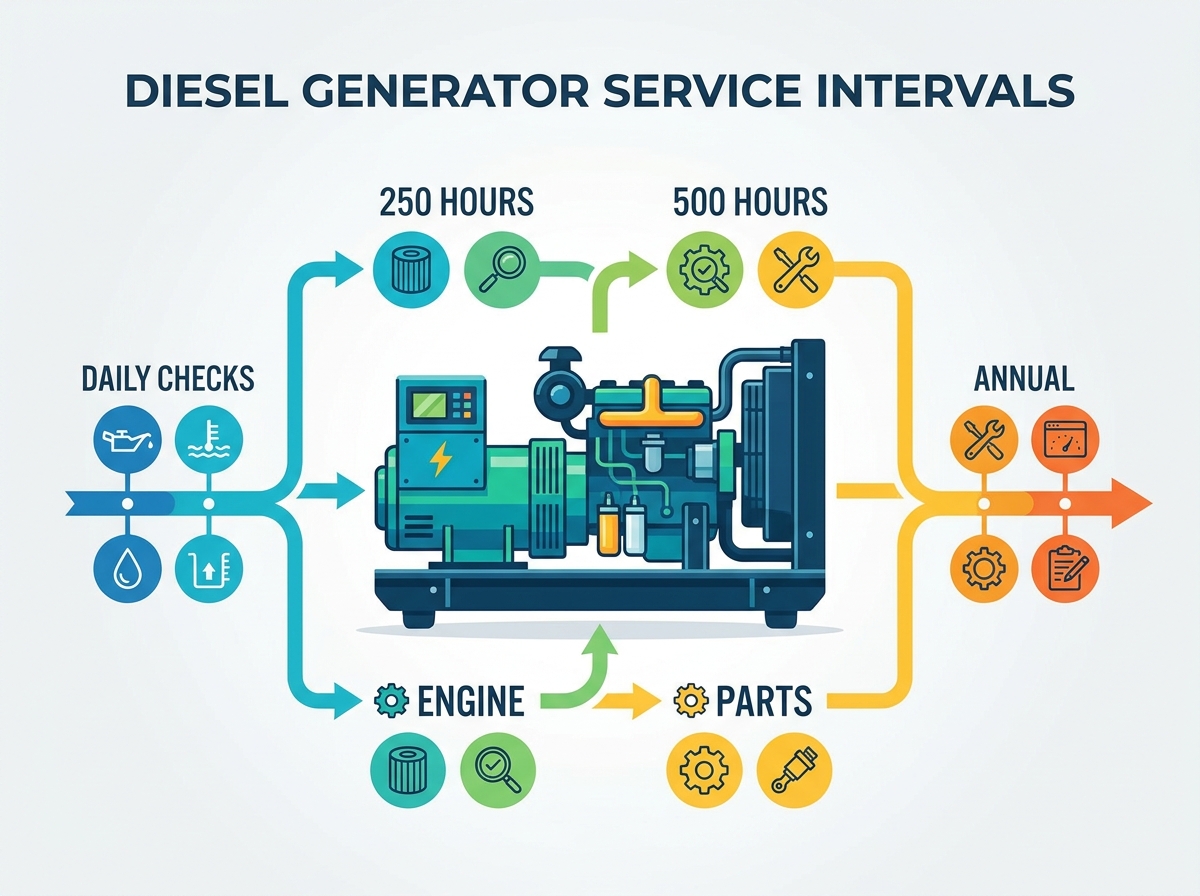
Routine visual checks form the first line of defense against unexpected equipment failures. Facility staff can perform these baseline inspections without specialized tools or advanced mechanical training. Documenting these checks creates a historical record that helps identify slow leaks or gradual performance drops.
Conduct visual walk-arounds to check for fluid leaks, loose battery connections, and unusual odors around the equipment base.
Clean the exterior enclosure to prevent dust, debris, and pest ingress from blocking critical cooling vents and radiator fins.
Verify jacket water block heater operation. The engine block should feel warm to the touch (typically between 90°F and 120°F), ensuring rapid starting in cold conditions.
Review the digital control panel for any active warning alarms, unacknowledged fault codes, or abnormal voltage readings.
Confirm automated weekly exercise cycles run correctly. Check oil levels immediately after these cycles to ensure accurate dipstick readings.
Inspect the fuel tank level to ensure it remains above the 75% mark, preventing excessive condensation buildup on the inner tank walls.
The mid-year inspection focuses heavily on preventing component degradation from causing a failure to start during an emergency. This requires a deeper dive into the electrical and cooling systems.
Assess battery health by checking electrolyte specific gravity (aiming for 1.265 at 80°F), cleaning terminal corrosion, and verifying charger output voltage under load.
Test coolant levels, antifreeze concentration, and Diesel Cooling Additive (DCA) levels to prevent internal cylinder liner cavitation.
Inspect drive belt tension using a gauge and look for microscopic signs of cracking, glazing, or edge fraying.
Drain condensation from exhaust systems and empty fuel water separators to protect the high-pressure injection system.
Inspect all flexible rubber hoses for bulging, brittleness, or clamp degradation, replacing any that show signs of weeping.
Verify the operation of all air intake louvers and motorized dampers to ensure they open fully during engine operation.
This comprehensive service requires certified technicians to perform deep mechanical and electrical evaluations on the power system. This is the most critical intervention in the equipment's lifecycle.
Execute comprehensive fluid and filter replacements, including engine oil, primary and secondary fuel filters, air elements, and coolant filters.
Perform mechanical tune-up procedures, including valve clearance (lash) adjustments, to ensure optimal engine timing and combustion efficiency.
Run electrical system diagnostics, clean the alternator stator assembly, and torque all critical power connections to factory specifications.
Conduct resistive load bank testing for a minimum of two hours to verify output capacity, clear carbon deposits, and evaporate accumulated moisture from the exhaust system.
Test all safety shutdown sensors, including low oil pressure and high coolant temperature switches, to ensure engine protection mechanisms function correctly.
Pull oil and coolant samples for independent laboratory analysis to detect microscopic wear metals like iron, copper, and chromium.
Inspect the turbocharger for excessive bearing play, oil leaks, and smooth turbine rotation.
Connecting specific component health to overall system reliability is essential for facility management. A single degraded filter or a loose wire can shut down a massive backup power system. Evaluating Engine & Parts condition during every inspection ensures you catch minor wear before it causes a catastrophic shutdown. Every component must be assessed not just for current functionality, but for its ability to survive a prolonged, multi-day grid outage under full load. You are inspecting for endurance, not just immediate operability.
Oil acts as the engine's lifeblood, providing a critical barrier between rapidly moving metal surfaces. Over time, oil loses viscosity and its protective chemical properties, even if the generator remains completely idle. Weekly no-load exercise cycles pose a hidden, compounding danger. Because the engine rarely reaches full operating temperature during a brief ten-minute test, condensation forms inside the crankcase. This moisture builds up in the oil, creating sulfuric acids that degrade its lubricating capabilities and attack internal bearings. Technicians must replace oil filters annually and pull fluid samples for wear metal analysis. Monitoring the Total Base Number (TBN) of the oil tells you exactly how much acid-neutralizing capacity remains.
Diesel fuel degrades rapidly in storage tanks. Microbial growth, water accumulation, and oxidation naturally occur within a 6 to 12-month period. Degraded fuel creates asphaltene sludge that clogs filters and destroys sensitive, high-pressure fuel injectors. Maintaining fuel system integrity requires regular draining of water separators and strict adherence to fuel filter replacement schedules. Periodic fuel polishing removes sludge, particulate matter, and suspended water down to 2 microns. This process ensures the engine receives clean, highly combustible fuel during an emergency, preventing sudden stalling under load. You must also treat the tank with biocides to kill off diesel bug infestations before they multiply.
Fuel Degradation Sign | Root Cause | Required Action |
|---|---|---|
Dark, cloudy fuel | Asphaltene agglomeration / Oxidation | Fuel polishing and chemical stabilization. |
Slime on filters | Microbial growth (Diesel Bug) | Shock treatment with biocide and tank cleaning. |
Free water at tank bottom | Condensation from temperature swings | Drain water separators, pump tank bottom. |
Heavy-duty diesel engines require massive amounts of clean air for efficient combustion. Technicians must check air filter restriction indicators regularly using a Magnehelic gauge. Replace filter elements based on environmental dust and debris levels rather than relying solely on calendar dates. The exhaust system requires equal attention during inspections. Inspect the piping for leaks, rust, and signs of wet stacking. Unburned fuel accumulation in the exhaust indicates the unit is running too cold, usually due to insufficient load during testing. Proper ventilation ensures the system breathes correctly, dissipates heat effectively, and prevents dangerous exhaust gases from entering the facility. Ensure all rain caps on vertical exhaust stacks operate freely to prevent water ingress.
Facility managers must decide how to handle routine and complex maintenance tasks. The approach generally falls into managing maintenance internally with existing staff or outsourcing the work to a specialized generator service provider. Choosing the right path depends entirely on your internal technical resources, budget constraints, and the overall criticality of your backup power infrastructure. A hybrid approach often works best, where on-site staff handle daily visual checks while certified contractors execute the heavy mechanical work.
Assess the internal technical competency of your maintenance staff honestly. In-house teams can easily handle minor visual checks, fluid level verification, block heater testing, and basic exterior cleaning. Major servicing and complete engine tune-ups require specialized training and tools. In-house teams often lack the heavy equipment required for load bank testing, the mechanical expertise for precise valve lash adjustments, and the proprietary software for advanced digital diagnostics. Outsourced service agreements bridge this technical gap by providing certified technicians equipped for deep mechanical evaluations and emergency repairs. Attempting to perform a 500-hour service without the proper diagnostic software often leaves hidden fault codes unresolved.
Selecting a reliable maintenance partner requires strict vetting and clear contractual expectations. Do not settle for a provider who merely changes the oil and wipes down the enclosure.
Demand guaranteed emergency response times and true 24/7 availability, including holidays and severe weather events.
Ensure the provider has direct access to OEM-certified components to maintain system compatibility and keep factory warranties intact.
Require comprehensive documentation practices. Detailed service logs are mandatory for regulatory compliance, passing facility audits, and validating insurance claims.
Verify the provider owns and operates their own load bank testing equipment rather than renting it, ensuring scheduling flexibility.
Confirm the technicians hold current certifications (such as EGSA) for your specific generator brand and control panel architecture.
Ask for sample fluid analysis reports to ensure they use accredited third-party laboratories for oil and fuel testing.
Decision-makers must weigh the upfront cost of a rigorous maintenance contract against the catastrophic financial impact of a facility power failure. Skimping on preventative maintenance saves a small amount of operating budget now but exposes the facility to massive operational losses, data corruption, and severe safety hazards during an outage. A reliable power system is an insurance policy. Funding its maintenance is the premium required to keep that policy active. Every dollar saved by skipping a filter change multiplies into thousands of dollars in emergency repair bills when the system fails under load.
Ignoring the maintenance schedule leads directly to severe mechanical consequences. Degraded oil causes spun bearings, scored cylinder walls, and catastrophic engine failure. Bad fuel destroys expensive injectors and high-pressure injection pumps, leading to repair bills that dwarf the cost of a decade of maintenance. Failing to document strict adherence to the official maintenance timeline instantly voids manufacturer warranties. If the engine destroys itself due to neglected oil changes, your facility will bear the full financial burden of replacing the entire generator set. You also face the hidden cost of failed compliance audits, which can shut down healthcare or data center operations entirely.
Executing a maintenance plan carries specific risks that require proactive mitigation strategies from facility management. You must manage the contractors just as tightly as you manage the equipment.
Risk: A service provider fails to identify a degrading component during a routine check, leading to an unexpected failure. Mitigation: Require detailed, standardized inspection checklists and independent fluid analysis reports for every major service visit.
Risk: Regulatory non-compliance leading to heavy fines or failed facility audits. Mitigation: Align the service schedule strictly with local fire codes, healthcare mandates like NFPA 110, or strict data center service level agreements.
Risk: Technicians use aftermarket parts that fail prematurely under heavy load. Mitigation: Mandate the exclusive use of OEM filters, belts, and fluids in the service contract language.
Risk: The generator fails to start after a service visit due to a technician leaving the control panel in the "Off" position. Mitigation: Implement a strict lock-out/tag-out return-to-service checklist that requires dual sign-off before the technician leaves the site.
Audit your current generator run hours and weekly exercise logs today to establish an accurate maintenance baseline.
Pull an oil and fuel sample this week for independent laboratory wear-metal and microbial analysis to determine internal engine health.
Schedule a 2-hour resistive load bank test to clear accumulated carbon, eliminate wet stacking, and verify alternator output capacity.
Review your existing service contract to ensure it explicitly mandates OEM-certified components and adheres to NFPA 110 compliance standards.
A: You must change the oil every 12 months or after 150 to 200 hours of operation, whichever comes first. Oil degrades chemically over time. It accumulates moisture and acids from short, weekly exercise cycles, losing its lubricating properties even if the generator rarely runs during actual outages.
A: A major service occurs annually or at 500 hours. It includes complete oil, coolant, and fuel filter replacements. Technicians perform mechanical tune-ups, adjust engine valve lash, run electrical system diagnostics, and conduct load bank testing to clear carbon deposits and verify maximum power output capacity.
A: Yes. Standby units require strict annual servicing regardless of outage hours. Weekly automated test cycles cause condensation buildup in the oil and drain the starting batteries. Diesel fuel also degrades in the tank over time. Annual maintenance addresses this chemical degradation before it causes a starting failure.
A: Untreated diesel fuel typically degrades within 6 to 12 months. Water accumulation, oxidation, and microbial growth create sludge that clogs filters and damages injectors. You must use water separators, apply chemical biocides, and schedule periodic fuel polishing to maintain fuel combustible integrity for emergency use.
A: Skipping intervals drastically increases the risk of the generator failing to start during a power outage. It leads to severe mechanical damage, such as spun bearings or destroyed injectors. Undocumented maintenance instantly voids OEM warranties, leaving you responsible for massive repair or replacement costs.
A: Facility staff should perform basic weekly visual checks, fluid level verifications, and exterior enclosure cleaning. Complex annual servicing, valve adjustments, electrical diagnostics, and load bank testing require certified professionals. Hiring experts ensures safety, maintains warranty compliance, and guarantees accurate mechanical evaluations.


 Energy Storage System