Views: 0 Author: Site Editor Publish Time: 2026-09-07 Origin: Site
Facility managers and procurement teams often face severe budget overruns because they fail to account for site preparation, electrical integration, long-term maintenance, and brand premiums in their initial projections. Relying solely on the upfront sticker price when budgeting for commercial or industrial backup power introduces massive financial and operational risks. The base equipment price is merely the starting point. To protect your facility from catastrophic downtime without draining capital reserves, you must understand every variable that impacts the final installation.
This guide serves as a comprehensive framework for calculating the true diesel generator cost. We will break down baseline capacity requirements, explore hidden installation expenses, evaluate long-term lifecycle logistics, and provide actionable strategies to mitigate implementation risks for enterprise power systems.
The upfront capital expenditure for a diesel generator set typically represents only 30-40% of the total installed cost.
Installation variables—such as Automatic Transfer Switch (ATS) integration, concrete pad pouring, and crane rigging—can double the initial equipment price.
Accurate load profiling is critical; over-sizing leads to "wet stacking" and wasted capital, while under-sizing risks catastrophic facility downtime.
Long-term financial evaluation must factor in fuel consumption rates, Tier 4 Final emissions compliance, and mandatory load bank testing over a 15-to-20-year lifecycle.
Strategic procurement, including leasing, financing, and leveraging tax depreciation, can significantly offset initial capital burdens.
Table of Contents
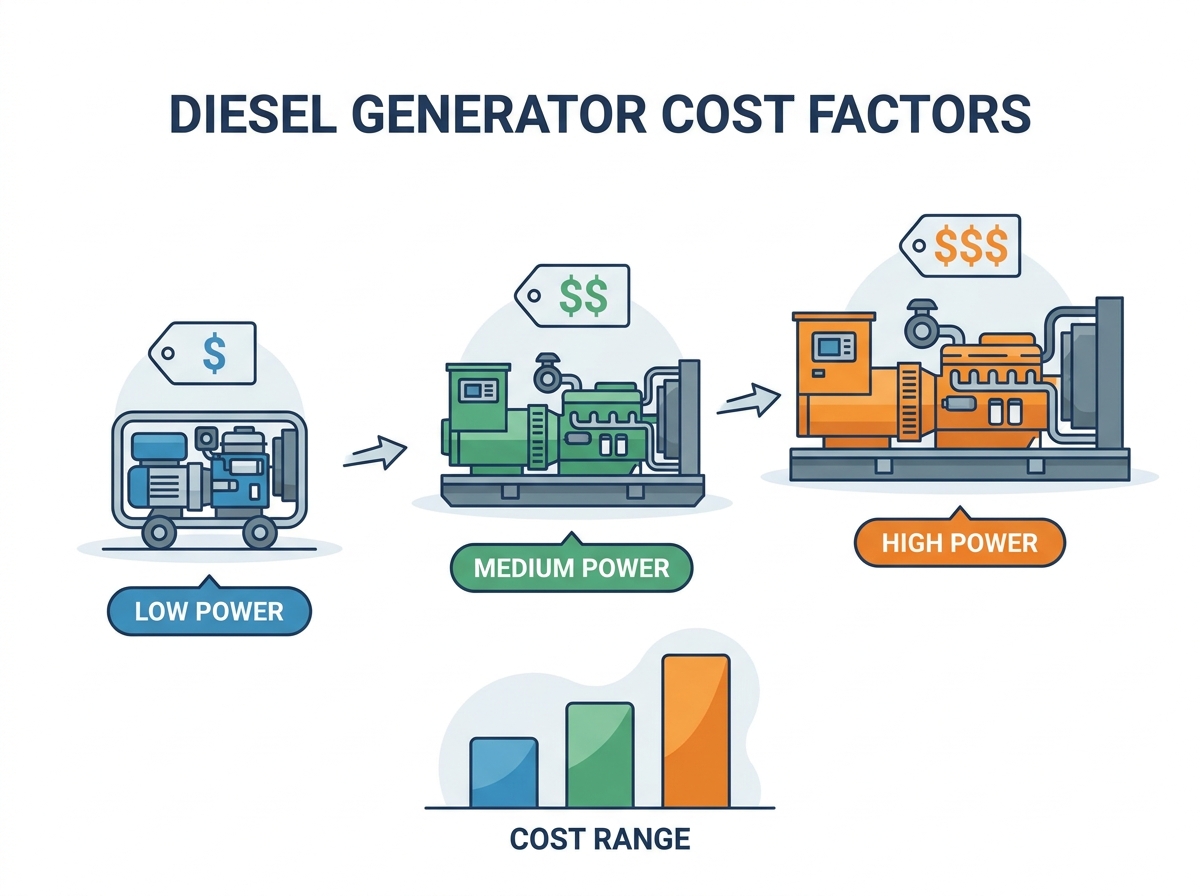
Power requirements dictate the baseline equipment tier. Establishing realistic budget expectations requires mapping your facility's critical load to the appropriate kilowatt (kW) or kilovolt-ampere (kVA) rating. Before factoring in installation, the physical size and output capacity of the unit serve as the primary baseline for your initial capital outlay. You cannot accurately forecast budgets without first locking in the required capacity.
Retail stores, small medical clinics, and light agricultural operations typically rely on systems within the 20kW to 50kW range. These units provide enough output to keep essential lighting, point-of-sale systems, and critical refrigeration running during grid outages. At this tier, the baseline equipment requires a moderate capital investment. Standard features usually include basic weather enclosures and integrated sub-base fuel tanks. However, these onboard tanks are often limited in capacity. Facilities requiring extended runtime during prolonged regional outages will need to invest in supplemental external storage tanks, which increases the footprint and the baseline expense.
Manufacturing facilities, mid-sized data centers, and commercial real estate buildings demand significantly more power. The 50kW to 250kW tier introduces a noticeable jump in the baseline diesel generator cost. This increase is driven by the inclusion of advanced alternators capable of handling heavy motor starting loads and heavier-duty engine blocks designed for prolonged operation under stress. These systems often feature sophisticated digital control panels for better integration with building management systems. The engineering required to manage heat dissipation, exhaust flow, and vibration at this scale also contributes to the higher baseline expense.
Hospital-grade facilities, heavy manufacturing plants, and utility-scale backup operations operate in the 250kW to 1MW+ range. Capital requirements at this enterprise tier are substantial. Off-the-shelf solutions rarely suffice for these applications. These systems demand custom engineering, including specialized paralleling switchgear to synchronize multiple units, advanced emissions control systems, and custom-built acoustic enclosures. The sheer volume of raw materials—copper, steel, and industrial-grade components—ensures that the baseline equipment price represents a major infrastructure investment.
Capacity Tier | Typical Applications | Key Baseline Features |
|---|---|---|
20kW - 50kW | Retail, Clinics, Agriculture | Standard weather enclosure, basic analog/digital controls, small sub-base tank. |
50kW - 250kW | Manufacturing, Commercial Real Estate | Heavy-duty engine block, advanced alternators, BMS integration capabilities. |
250kW - 1MW+ | Hospitals, Data Centers, Utilities | Custom acoustic enclosures, paralleling switchgear, advanced emissions controls. |
Beyond raw power output, specific physical configurations and market variables drive the base price up or down. Understanding these solution categories helps procurement teams align equipment specifications with actual site requirements, preventing over-specification and wasted capital.
The market is divided into premium, Tier-1 manufacturers and value-oriented or emerging brands. Opting for a Tier-1 brand involves paying a premium for proprietary technology, extensive global parts networks, and decades of proven reliability in harsh environments. While emerging brands offer a lower initial entry point, the long-term residual value and parts availability may be compromised. Facilities with zero-tolerance for downtime typically absorb the brand premium to guarantee rapid service response and component accessibility during regional power crises. You are paying for the supply chain infrastructure as much as the physical metal.
Electrical configuration heavily influences alternator pricing. Single-phase systems are generally less complex and require less capital, making them suitable for light commercial applications. Three-phase systems, required for heavy machinery and industrial HVAC units, utilize more complex alternators with higher copper content, increasing the equipment cost. Furthermore, specific voltage requirements—such as standard 120/240V versus industrial 277/480V—dictate the winding configuration of the alternator. High-voltage industrial configurations naturally command a higher price point due to the enhanced insulation and specialized manufacturing processes required to prevent arcing and ensure stable power delivery.
The physical housing of the unit is a major cost multiplier. Open-skid designs, intended for indoor installation within dedicated basement or rooftop mechanical rooms, represent the most economical option. However, outdoor installations require weather-proof enclosures to protect the engine and alternator from the elements. If the facility is located in a high-density urban area or adjacent to residential zones, local ordinances will mandate sound-attenuated enclosures. These custom housings utilize heavy-gauge steel and specialized acoustic foam to reduce decibel levels, adding a significant premium to the overall package.
Modern backup power systems rely heavily on their digital interfaces. Basic analog controls offer a lower price point but provide limited diagnostic capabilities. Upgrading to advanced digital paralleling switchgear allows multiple units to communicate, share loads, and seamlessly synchronize with the utility grid. Investing in remote monitoring systems, or telematics, introduces an additional upfront cost but delivers a strong return on investment. Telematics enable predictive maintenance by tracking fluid levels, battery health, and engine temperatures in real-time, preventing catastrophic failures before they occur.
A piece of heavy machinery sitting on a flatbed truck provides no value. The hidden integration costs required to turn that equipment into a fully functional, code-compliant backup power system often equal or exceed the initial purchase price. Site-specific variables dictate the final installation budget.
Heavy industrial equipment requires a highly engineered foundation. Site preparation begins with geotechnical surveys to ensure the soil can bear the dynamic load of a running engine. Excavation, soil compaction, and the pouring of reinforced concrete pads involve significant labor and material expenses. The concrete must be thick enough to accommodate vibration isolation mounts, which prevent engine vibrations from fracturing the pad over time. Additionally, spatial requirements and strict clearance regulations for exhaust routing and maintenance access often complicate site prep, requiring structural modifications to existing facility grounds.
Conduct geotechnical soil bearing tests.
Excavate and compact the installation footprint.
Install rebar grid and pour a reinforced concrete housekeeping pad.
Mount vibration isolators and anchor bolts.
The Automatic Transfer Switch (ATS) is a mandatory, high-cost component of any permanent installation. It acts as the brain of the system, sensing utility failure and safely transferring the facility's load to the generator. Depending on the amperage and whether the system requires an open or closed transition, the ATS itself represents a major line item. Beyond the switch, commercial electricians must route heavy-gauge copper conduit from the generator to the ATS and the main distribution panel. The hourly labor rates for certified electricians, combined with the volatile commodity price of copper wiring, make electrical integration one of the most expensive phases of the project.
Transporting heavy machinery requires specialized logistics. Flatbed freight charges are calculated based on mileage and the extreme weight of the unit. Once on-site, standard forklifts are rarely sufficient. Specialized crane rigging is often required to hoist the unit onto a prepared concrete pad or up to a rooftop mechanical room. Navigating tight clearances, coordinating street closures, and hiring certified crane operators add substantial logistical expenses that must be factored into the initial budget. You must also account for local traffic control permits if the crane blocks public roadways during the lift.
Managing cash flow is a priority for enterprise operations. Outright capital purchases are not the only path to securing reliable backup power. Exploring alternative financial strategies allows organizations to optimize their balance sheets while still protecting their facilities from grid instability.
Purchasing a system outright is a traditional Capital Expenditure (CapEx). It requires a massive upfront cash outlay but results in full ownership and adds an asset to the balance sheet. Conversely, entering a long-term lease agreement or a Power-as-a-Service model shifts the financial burden to an Operating Expenditure (OpEx). Leasing preserves capital liquidity and often bundles routine maintenance into a predictable monthly payment, removing the volatility of unexpected repair costs from the facility's budget.
For organizations that prefer ownership without the immediate cash drain, commercial financing offers a viable middle ground. Heavy industrial equipment financing allows facilities to spread the payments over several years. Structuring these payments to align with quarterly or annual facility operating budgets ensures that the acquisition does not disrupt daily cash flow. Interest rates for these structures depend heavily on corporate credit ratings and the perceived residual value of the specific manufacturer tier selected.
Commercial entities can legally offset a significant portion of their investment through strategic tax planning. In many jurisdictions, provisions similar to Section 179 deductions allow businesses to deduct the full purchase price of qualifying equipment during the tax year it is put into service. Furthermore, utilizing accelerated depreciation schedules allows organizations to recover the cost of the asset faster than traditional straight-line depreciation. Consulting with a corporate tax advisor is essential to maximize these benefits and lower the net impact on the bottom line.
Shifting focus from the initial purchase to a 20-year operational lifecycle reveals the true financial commitment of backup power. Ongoing operational expenses dictate the long-term viability of the system. Ignoring these recurring costs will destroy your facility maintenance budget.
Fuel costs are directly tied to the unit's load percentage. A system running at 100% capacity will consume diesel at a significantly higher rate than one running at 50% load. Calculating the gallons per hour required during an extended outage is critical for operational budgeting. Beyond consumption, storing diesel introduces its own expenses. External sub-base fuel tanks require regular inspection. Because diesel degrades over time, accumulating water and microbial growth, facilities must invest in fuel polishing systems and chemical treatments to ensure the fuel remains combustible during an emergency.
Mechanical reliability requires rigorous, scheduled maintenance. Annual budgets must account for heavy-duty oil changes, industrial filter replacements, and coolant flushes. More importantly, diesel engines run inefficiently when under-loaded, leading to a condition called "wet stacking" where unburned fuel accumulates in the exhaust system. To prevent this, facilities must pay for annual load bank testing. This process connects the system to an artificial electrical load, forcing the engine to run at full capacity to burn off carbon deposits and ensure compliance with strict life-safety codes.
Maintenance Task | Typical Frequency | Operational Impact |
|---|---|---|
Fluid and Filter Replacement | Annually or every 250 hours | Prevents engine wear and ensures clean combustion. |
Load Bank Testing | Annually | Burns off carbon deposits, prevents wet stacking, verifies output. |
Fuel Polishing | Bi-Annually | Removes water and microbial growth from stored diesel. |
Battery Inspection | Quarterly | Ensures starting reliability during sudden grid failures. |
Major component failures—such as a cracked engine block or a burnt alternator winding—carry catastrophic repair costs. Analyzing the cost-to-benefit ratio of purchasing extended warranties is a mandatory step in lifecycle planning. Upgrading to a 5-year or 10-year comprehensive coverage plan requires more upfront capital but acts as an insurance policy against volatile out-of-pocket repair bills. Facilities must carefully review warranty documentation to understand what is covered, as travel time for technicians and fluid replacements are often excluded from standard plans.
Operating heavy diesel machinery attracts strict regulatory oversight. Local air quality districts require expensive permits for installation and ongoing operation. Modern systems must adhere to stringent emissions standards, such as EPA Tier 4 Final regulations. Achieving this compliance often requires the integration of costly aftermarket exhaust aftertreatment systems, including Selective Catalytic Reduction (SCR) and Diesel Particulate Filters (DPF). Failure to maintain compliance results in heavy fines, making environmental adherence a non-negotiable line item in the lifecycle budget.
Procurement pitfalls can derail a project before the equipment even arrives on site. Understanding common implementation risks allows decision-makers to avoid costly mistakes during the buying process. A proactive approach to risk management protects the project timeline and the capital budget.
Guessing your facility's power requirements is the most expensive mistake you can make. Under-sizing the equipment guarantees that the unit will trip its breakers or suffer catastrophic mechanical failure during an outage, leading to facility downtime and voided warranties. Conversely, over-sizing the unit leads to chronic inefficiency, severe carbon buildup, and wasted capital on capacity you will never use. Hiring an electrical engineer to conduct a professional load profiling and power quality audit before requesting quotes is the only way to mitigate this risk.
The secondary market offers refurbished units at a steep discount compared to new models. While the upfront savings are attractive, buying used introduces substantial risk. Used equipment carries shorter lifespans, limited or non-existent warranties, and unknown operational histories. If you choose to explore the used market, strict vetting is required. You must demand hour meter verification, comprehensive maintenance logs, and recent load test reports to ensure you are not inheriting another facility's deferred maintenance problems.
Global supply chain constraints heavily impact the availability of industrial components. Custom-engineered enterprise systems often face lead times stretching from several months to over a year. Failing to factor these lead times into project timelines forces facilities to rely on temporary rental units to maintain compliance or operational readiness. Rental fees accumulate rapidly, destroying project budgets. Engaging vendors early and building realistic lead times into your procurement strategy is essential to avoid these emergency expenses.
Schedule a professional site walk with a certified electrical contractor to identify hidden installation hurdles, trenching requirements, and spatial limitations.
Commission an independent electrical engineer to perform a comprehensive load analysis, ensuring you procure the exact kW capacity required for your facility.
Solicit itemized quotes from authorized distributors that clearly separate the base equipment price from freight, rigging, and ATS integration labor.
Consult your financial team to compare the long-term benefits of capital purchasing versus leasing and to maximize available tax depreciation schedules.
A: A 100kW unit requires a moderate capital investment for the base equipment, typically suited for mid-sized commercial applications. Buyers must anticipate that site preparation, ATS integration, and electrical labor will effectively double that initial equipment baseline to reach the final installed price.
A: A standard industry rule of thumb dictates that installation costs will range from 50% to 100% of the initial equipment price. Variables such as concrete foundation pouring, complex conduit trenching, crane rigging, and the required Automatic Transfer Switch drive this expense.
A: Fuel consumption is directly proportional to the unit's kW capacity and the active electrical load. A system running at 100% load will consume significantly more gallons per hour than one operating at 50%. Exact consumption curves are provided by the manufacturer's specification sheets.
A: Yes. Commercial equipment financing allows facilities to spread payments over several years, preserving cash flow. Leasing options shift the financial burden from CapEx to OpEx. Outright purchases may qualify for substantial tax deductions under Section 179 or accelerated depreciation schedules.
A: While used equipment offers significant upfront savings, it carries hidden risks. Shorter lifespans, limited warranties, and potential deferred maintenance can quickly erase initial discounts. Buyers must rigorously vet used units by reviewing maintenance logs and demanding recent load bank test reports.
A: Annual maintenance requires a dedicated operational budget to cover heavy-duty oil changes, filter replacements, coolant flushes, and mandatory load bank testing. Facilities should expect a consistent yearly expense to maintain mechanical reliability and warranty compliance.
A: Yes. Commercial installations require multiple permits. You will need electrical and building permits for the physical installation and structural modifications. Local environmental and air quality districts also mandate strict operational permits to ensure compliance with emissions regulations.


 Energy Storage System