Views: 0 Author: Site Editor Publish Time: 2026-10-16 Origin: Site
Choosing between a Cummins and Perkins diesel generator depends on your project's power requirements, fuel efficiency, operating conditions, and maintenance needs.
Cummins offers a wide range of integrated power generation solutions, while Perkins provides reliable diesel engines for various generator applications.
So, which is better for your project? This guide compares their key differences to help you choose the right diesel generator.
In this guide, DIYPOWER compares Cummins and Perkins diesel generators across the technical and commercial factors that matter most to B2B buyers.
Table of Contents
Before examining individual performance factors, it is useful to understand the main differences between the two brands.
Comparison Factor |
Cummins Diesel Generator |
Perkins Diesel Generator |
|---|---|---|
Manufacturer focus |
Diesel engines and integrated generator systems |
Diesel engines for OEM generator integration |
Power range |
Broad range, including high-capacity applications |
Broad engine range, including compact and industrial applications |
Standby power |
Available across various capacities |
Available through suitable engine and genset configurations |
Prime power |
Available across various capacities |
Available through suitable engine and genset configurations |
Fuel consumption |
Depends on engine model and load |
Depends on engine model and load |
Transient response |
Depends on engine, alternator and controls |
Depends on engine, alternator and controls |
Physical size |
Model and package dependent |
Model and package dependent |
Noise level |
Depends on engine, enclosure and installation |
Depends on engine, enclosure and installation |
Maintenance |
Model-specific service intervals |
Model-specific service intervals |
Regional support |
Depends on local authorized service availability |
Depends on local authorized service availability |
Best selection approach |
Compare matching generator specifications |
Compare matching generator specifications |
Quick Answer: Cummins may be attractive for projects requiring particular integrated power generation configurations or higher-capacity systems. Perkins may be attractive where a suitable engine-powered generator offers the required capacity, installation flexibility, and lifecycle value. The final decision should be based on specific generator models rather than brand-wide assumptions.
A Cummins diesel generator uses a Cummins diesel engine to drive an alternator and produce electrical power.
Cummins manufactures both diesel engines and complete generator sets for different commercial, industrial, and critical power applications.
Its power generation portfolio includes standby, prime, and other application-specific configurations.
Depending on the model, Cummins-powered generator systems may offer:
A broad selection of rated output capacities
Integrated engine and generator control systems
Different voltage and frequency configurations
Standby and prime power options
Various alternator and enclosure arrangements
Remote monitoring and power management functions
Service and maintenance support through regional networks
Cummins also offers complete power generation packages with coordinated engine, alternator, and controller systems.
However, a generator set assembled by an independent manufacturer using a Cummins engine may have different alternator, control, enclosure, and warranty arrangements.
For model selection, explore our Cummins Diesel Generator Range.
You can also consult the official Cummins Generator Set Portfolio for manufacturer information.
A Perkins diesel generator is powered by a Perkins engine combined with an alternator, control system, and other generator set components.
Perkins is an established engine manufacturer and part of Caterpillar Inc.
Its engines are used by generator manufacturers in standby and prime power applications.
Depending on the specific engine and generator configuration, Perkins-powered generator sets may provide:
Multiple capacity options
Compact engine configurations in selected ranges
Different electronic control and fuel injection systems
Standby and prime power capabilities
Application-specific emissions configurations
Serviceable engine components
Generator package flexibility through OEM integration
Perkins offers engine families designed for different electrical power generation requirements.
The specific engine model determines its mechanical output, operating characteristics, and applicable emissions requirements.
Explore our Perkins Diesel Generator Range to review available configurations.
For additional technical information, visit the official Perkins Engine Product Range.
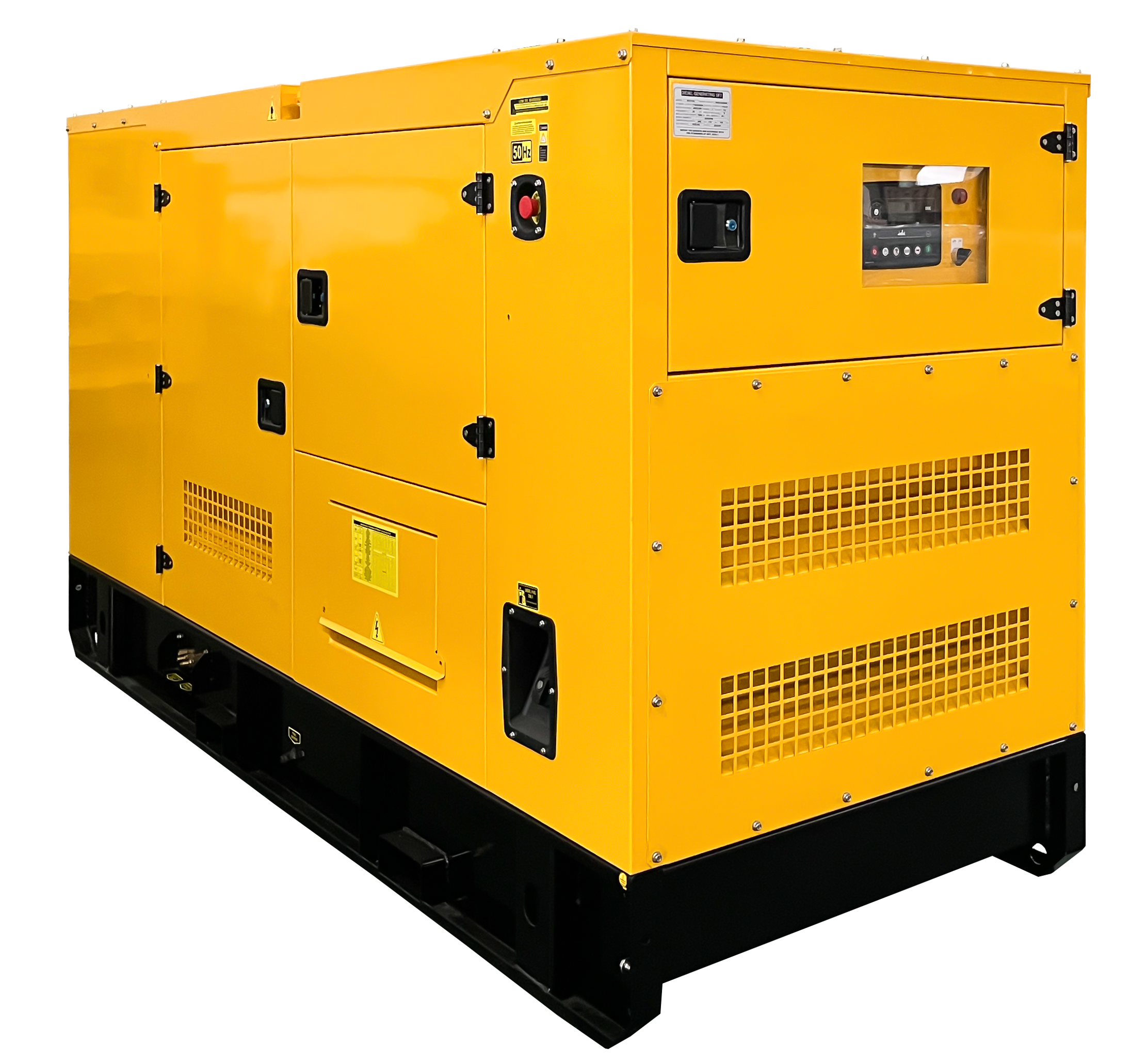
Generator capacity is one of the first technical factors to evaluate.
Both Cummins and Perkins provide equipment options across multiple power ranges, but the available configurations differ by model, frequency, region, and operating rating.
Diesel generators are commonly rated in:
kW: Real electrical power
kVA: Apparent electrical power
Power Factor: The relationship between kW and kVA
For a generator rated at 0.8 power factor:
kW = kVA × 0.8
For example, a 500 kVA generator rated at 0.8 power factor has a corresponding rated output of 400 kW.
However, the actual usable capacity also depends on the generator's operating rating and site conditions.
Two generator sets may have similar nameplate capacities but different standby and prime ratings.
Rating |
Typical Purpose |
Main Selection Consideration |
|---|---|---|
Emergency Standby Power (ESP) |
Backup electricity during normal power interruption |
Outage operation and permitted rating conditions |
Prime Power (PRP) |
Primary power for variable electrical loads |
Extended operation and defined load conditions |
Continuous Power (COP) |
Sustained constant electrical load |
Continuous rated output under defined conditions |
When comparing Cummins and Perkins generators, verify that both specifications use the same duty classification.
A Cummins generator rated at 500 kVA standby should not be compared directly with a Perkins generator rated at 500 kVA prime without reviewing the corresponding ratings.
For a more detailed selection process, read our Generator Set Selection Guide.
Fuel consumption is one of the most important factors affecting generator operating costs, especially in prime power applications.
However, it is inaccurate to claim that every Perkins generator consumes less fuel than a comparable Cummins generator, or vice versa.
Fuel efficiency depends on:
Engine displacement and design
Generator rated capacity
Operating load percentage
Engine speed
Fuel injection configuration
Environmental conditions
Auxiliary power requirements
Generator set efficiency
A meaningful comparison should use two generator sets with equivalent electrical ratings and operating duties.
Request manufacturer fuel consumption data at common load points, such as:
Load Level |
Cummins Generator |
Perkins Generator |
|---|---|---|
25% load |
Manufacturer data required |
Manufacturer data required |
50% load |
Manufacturer data required |
Manufacturer data required |
75% load |
Manufacturer data required |
Manufacturer data required |
100% load |
Manufacturer data required |
Manufacturer data required |
All fuel values should be compared using the same units, such as liters per hour (L/h), and under equivalent test conditions.
Comparisons should also account for whether fuel consumption is measured at the engine or complete generator set level.
For a simplified constant-load example:
Annual Fuel Cost = Fuel Consumption (L/h) × Annual Operating Hours × Diesel Price (per L)
Suppose one generator uses 65 L/h and another uses 62 L/h at an equivalent operating condition.
If the generator operates for 3,000 hours annually:
Fuel difference = 3 L/h
Annual fuel difference = 3 × 3,000 = 9,000 liters
The financial difference would then depend on local diesel prices.
These figures are illustrative, not published Cummins or Perkins performance values.
For variable load applications, annual fuel consumption should be calculated by combining consumption at the different load levels with the expected hours at each load level.
Industrial generators frequently supply electric motors, pumps, compressors, and other equipment that may create significant starting loads.
During motor startup, current demand can temporarily exceed normal running current.
The generator must maintain acceptable voltage and frequency throughout this process.
Important factors include:
Engine available torque and governing response
Alternator starting capability
Automatic Voltage Regulator (AVR)
Excitation system
Existing connected load
Motor starting method
Required voltage recovery performance
A diesel engine is only one component of the generator set.
Even when two systems use different engine brands, the alternator and controller can significantly influence the complete system's transient response.
Neither brand should automatically be considered superior.
A correctly configured Cummins generator may meet demanding motor starting requirements. A properly specified Perkins-powered generator may also meet the same requirements.
The final comparison should examine the complete generator set's motor starting kVA, voltage dip, frequency deviation, and recovery characteristics.
For projects with large motors or significant load steps, request performance data for the exact generator model.
Equipment dimensions can influence both installation costs and project feasibility.
A generator installed in a basement electrical room has different requirements from one installed outdoors at an industrial facility.
The total size and weight of a generator set depend on:
Engine model
Alternator frame size
Radiator and cooling system
Fuel tank arrangement
Open or enclosed construction
Exhaust and sound attenuation equipment
Control and auxiliary systems
Cummins and Perkins generator sets can both be available in compact or larger configurations.
It is therefore important to compare complete generator package drawings rather than engine dimensions alone.
Before purchasing, confirm:
Overall generator dimensions
Dry and operating weights
Required foundation and vibration isolation
Ventilation airflow
Exhaust routing
Fuel supply arrangement
Maintenance access clearances
Equipment delivery and installation access
For indoor or rooftop applications, structural and mechanical engineering verification may be required.
Noise and emissions requirements vary considerably depending on the project's country, operating environment, and generator application.
Noise is influenced by the engine, exhaust system, cooling fan, enclosure, operating load, and measurement distance.
When reviewing acoustic performance, compare sound pressure levels under equivalent operating conditions.
For example, a noise rating measured at 7 meters should not be directly compared with a rating measured at 1 meter.
Where relevant, also review the measurement standard, installation arrangement, and whether the generator is operating at the same load.
A soundproof enclosure can make a significant difference to the final generator package.
Cummins and Perkins both offer engines designed for different regional emissions requirements.
However, emissions compliance varies by model and destination market.
Not every engine is available with the same aftertreatment technology or certification.
Before ordering, verify:
Local emissions standards
Engine certification
Required exhaust aftertreatment
Fuel specifications
Site permitting requirements
For regulated markets, the supplier should confirm that the proposed engine configuration meets the applicable emissions requirements.
Long-term generator reliability depends heavily on scheduled maintenance, suitable spare parts, and access to qualified technicians.
Both Cummins and Perkins have established service arrangements, but the practical support experience depends on the project's location and the exact engine model.
Cummins engines may require model-specific diagnostic equipment, approved service procedures, and genuine or manufacturer-approved replacement parts.
Typical scheduled maintenance activities include:
Engine oil and filter replacement
Fuel filter inspection and replacement
Cooling system maintenance
Air filtration inspection
Battery and starting system checks
Control system diagnostics
Perkins engines also require scheduled maintenance based on the relevant operation and maintenance manual.
Maintenance procedures and intervals depend on the engine family, operating conditions, and application.
Typical requirements include oil and filter replacement, fuel system inspection, coolant checks, air filtration, and engine diagnostics.
For B2B projects, ask suppliers:
Is authorized support available in the installation country?
What are the maintenance intervals for the proposed model?
Which critical spare parts are stocked locally?
What is the expected delivery time for replacement components?
Are technicians trained for the specific engine series?
What warranty terms apply to the complete generator set?
A generator with accessible spare parts and qualified service support may provide better project value than a lower-priced alternative with extended repair lead times.
The initial purchase price is only one part of the cost of a commercial diesel generator.
To compare two technically suitable generator sets, evaluate the Total Cost of Ownership (TCO).
The purchase and installation costs may include:
Generator set
Alternator and control system
Soundproof enclosure
Fuel storage and supply
Electrical protection and distribution
Automatic Transfer Switch (ATS)
Transportation and installation
Commissioning and testing
For backup power systems, read our guide on Automatic Transfer Switch vs. Interlock.
Operating costs include:
Diesel fuel
Lubricants and filters
Preventive maintenance
Spare parts
Scheduled testing
Major overhaul provisions
Unplanned service and downtime
Cost Category |
Cummins Option |
Perkins Option |
|---|---|---|
Generator purchase |
Supplier quotation |
Supplier quotation |
Installation |
Project-specific |
Project-specific |
Annual fuel cost |
Calculated from load profile |
Calculated from load profile |
Annual maintenance |
Service quotation |
Service quotation |
Parts availability |
Check regional supplier |
Check regional supplier |
Overhaul planning |
Model-specific |
Model-specific |
Estimated lifecycle cost |
Calculate from project data |
Calculate from project data |
The better long-term investment is the option that meets performance requirements at a suitable total project cost, rather than necessarily the option with the lowest initial price.
Both Cummins and Perkins generators can be considered for industrial and commercial projects.
However, the choice should follow application requirements.
Manufacturing facilities may require generators capable of supplying pumps, compressors, production equipment, and industrial control systems.
Selection priority: motor starting capability, transient load response, operating duty, and maintainability.
Data centers may require standby generator systems integrated with UPS equipment, automatic transfer arrangements, and redundant electrical infrastructure.
Selection priority: verified system performance, load-step capability, availability, redundancy, and service support.
Neither engine brand alone guarantees uninterrupted power. The complete electrical system must be designed to meet the required continuity objectives.
Commercial properties may require backup power for emergency lighting, pumps, HVAC systems, communications, and other essential services.
Selection priority: capacity, automatic startup, noise restrictions, space requirements, and operating cost.
Agricultural installations may need generators for water pumps, processing systems, and other electrical machinery.
Selection priority: motor starting, fuel economy, environmental protection, and maintenance accessibility.
Remote facilities often depend on generator power for extended operating periods.
Selection priority: prime power ratings, part-load efficiency, fuel logistics, reliability, and local service availability.
The following selection process can help buyers evaluate suitable models.
Calculate the running kW and kVA demand of the connected equipment.
Identify large motor starting loads and determine whether equipment will start simultaneously or in stages.
Determine whether the generator is required for standby, prime, or continuous operation.
Compare generator ratings using the same operating classification.
Review engine response, alternator characteristics, controller functions, and starting load requirements.
Where necessary, request manufacturer performance data or complete generator sizing calculations.
Use published fuel consumption figures for equivalent output and operating conditions.
Calculate expected annual fuel cost using the project's actual load profile.
Confirm space, ventilation, exhaust, noise, foundation, fuel supply, and environmental requirements.
Check service intervals, replacement parts, authorized support, warranty coverage, and expected response times.
Before making a final decision, request a technical proposal containing the engine model, alternator, controller, rated output, fuel consumption, dimensions, and operating conditions.
At DIYPOWER, we provide diesel generator solutions using different engine configurations for commercial and industrial applications.
Customers can compare our Cummins Generator Range and Perkins Generator Range based on project requirements.
Neither brand is universally better. Cummins and Perkins both offer engines for dependable power generation. The correct choice depends on the specific generator model, required output, load characteristics, site conditions, operating costs, and service availability.
Fuel efficiency varies by engine model, power rating, load level, and operating conditions. Buyers should compare official fuel consumption data from similarly rated generator sets rather than assuming one brand is always more efficient.
Pricing depends on the engine model, generator capacity, alternator, controller, enclosure, emissions configuration, and supplier. Some Perkins-powered configurations may have a lower initial price, but this cannot be assumed across all capacity ranges.
Both brands provide engines suitable for extended power generation. The correct choice depends on the generator's prime or continuous rating, expected load profile, maintenance requirements, and operating environment.
Yes. Perkins is part of Caterpillar Inc. and supplies engines used in a variety of industrial and power generation applications.
Both have established support networks. Actual availability depends on the installation region, specific engine series, distributor inventory, and expected delivery times.
Generally, parts should not be assumed to be interchangeable between the two manufacturers. Replacement components must match the specific engine model and manufacturer's requirements.
Potentially, yes. Stamford alternators can be integrated into different generator configurations when the electrical and mechanical specifications are compatible. The engine-alternator combination must be properly engineered and verified.
Provide the required kW or kVA rating, voltage, frequency, power factor, operating duty, expected running hours, major electrical loads, installation location, environmental requirements, and any preferred engine brand.
The decision between a Cummins and Perkins diesel generator should be based on your project's actual technical and commercial requirements.
Cummins offers a broad portfolio of integrated power generation equipment, including large-capacity solutions. Perkins provides engines used in a wide variety of generator set applications.
Both can be suitable choices when correctly matched to the electrical demand, operating conditions, and maintenance requirements.
For B2B buyers, the most important factors are rated power, transient performance, fuel consumption, installation compatibility, service availability, and long-term cost.
At DIYPOWER, we help customers compare suitable generator configurations and select equipment according to their project specifications.
Explore our Cummins Diesel Generators and Perkins Diesel Generators, or contact DIYPOWER to discuss your required power capacity, application, and generator configuration.


 Energy Storage System